TV show creator backs drive for cancer research

 Cancer Research UK
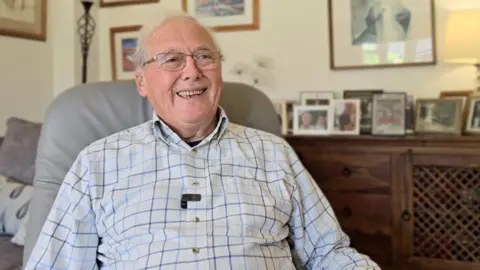
Former children's TV presenter Peter Tomlinson has said he probably would have died from cancer were it not for advances in treatment and called on people to support further research.
The creator of the 1970s TV programme Tiswas urged people to donate to Cancer Research UK.
The 82-year-old from Ombersley, Worcestershire, was one of the first to benefit from a clinical trial that halved the number of radiotherapy sessions for prostate cancer patients.
Describing the "enormous" breakthroughs in treatment, he said: "If I'd been diagnosed 20 years before, I would probably have died."
He said breakthroughs only came from money being raised to pay for "incredibly brilliant researchers".
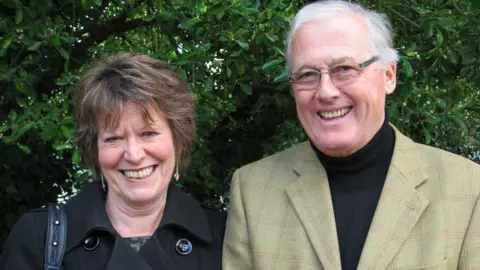
Mr Tomlinson said his wife, Ali, a doctor, insisted he had the biopsy that revealed he had prostate cancer in 2009.
He said she saved his life.
"I'll never forget going back for the results," he said. "The consultant looked ashen-faced and said: 'I have to tell you that you have prostate cancer, and you have it quite seriously'."
He went on to take part in a trial of different ways to apply radiotherapy to prostate cancer cells.
But in 2020, he lost his wife to pancreatic cancer.
It made him redouble his efforts to campaign in support of cancer research.
 Cancer Research UK
He is now a driving force behind a campaign by Cancer Research UK's Wyre Forest fundraising committee to raise £1m.
He said cancer survival rates had doubled since the days when he, Chris Tarrant and John Asher were "fooling about with buckets of water and custard pies on Tiswas".
He often plays drums in a jazz band to support fundraising concerts – and he has enlisted the help of Tiswas colleague and TV and radio personality Chris Tarrant, who has given speeches to help the fundraising effort.
Cancer Research UK spokeswoman Paula Young said: "With new technologies opening doors to new discoveries, we're living in a golden age of research."
But she said nearly one-in-two people would be diagnosed with cancer in their lifetime, adding: "There's so much more to do."
Follow BBC Hereford & Worcester on BBC Sounds, Facebook, X and Instagram.
