TfL lacking depth on accessibility, says report

 Allison Bell/GLA
Transport for London's (TfL) approach to meeting the needs of disabled passengers is "lacking depth and nuance", a new City Hall report has found.
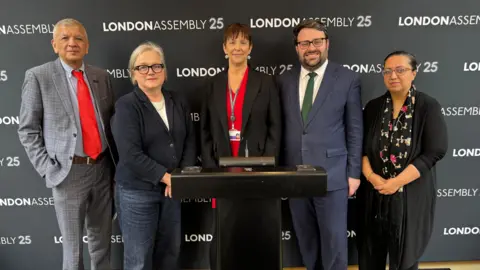
The London Assembly Transport Committee said TfL's work to improve accessibility remained "surface level", despite repeated pledges to make the network more inclusive.
Its month-long investigation looked into barriers faced by London's disabled population - made up of 1.2 million people - and found a lack of step‑free access and limited understanding of disabled people's travel patterns.
TfL said it would work to address issues raised in the report "to enable us to make London's transport network as fair, accessible and inclusive as possible".
The report said TfL collected a "significant amount of data" on its passengers, but this was "lacking depth and nuance" around issues concerning accessibility and inclusion and those people who were not using its services.
It said TfL could do more to engage with more diverse voices and "to embed accessibility and inclusion into the heart of its decision making".
The report also said disabled passengers had experienced negative attitudes from staff when asking for assistance.
'Change course'
TfL launched its Equity in Motion strategy in 2024, outlining more than 80 actions to make services more welcoming.
These included new wheelchair and buggy spaces on the Bakerloo, Central and Waterloo and City lines, along with 1,000 extra priority seats on buses.
TfL also committed to making at least half of Tube stations step‑free by 2030, a target the committee described as "commendable but ambitious".
Transport committee chair Elly Baker told the Local Democracy Reporting Service the strategy contained "effectively lots of good things that they are already doing".
"What they haven't done is take a good, long look at themselves and ask if they are valuing everyone's journey appropriately, looking at the data, speaking to people, and see what other people would say are the most important things to do, and not assuming they know," she said.
"So we're really just asking them to be more open, be more reflective, and maybe change course a little bit."
 EPA/Shutterstock
The report has recommended TfL to collect more detailed data on travel patterns and the needs of different user groups.
It said the existing annual London Travel Demand Survey - sent to a random sample of 8,000 households - was "due a refresh".
The report also raised concerns about Dial-a-Ride, TfL's free door-to-door service for those with permanent or long-term disabilities, and urged TfL to "urgently undertake a comprehensive needs assessment".
'Diverse range of needs'
Emma Strain, TfL's customer director, welcomed the recommendations from the transport committee's report and said they were considering how to address them in their strategy.
"It's vital that everybody is able to use our transport network, and feels safe, comfortable and supported as they do so," she said.
"We recognise the importance of hearing from as many people as possible to help shape our services, and continue to amend our plans in response to feedback concerning a diverse range of needs."
Listen to the best of BBC Radio London on Sounds and follow BBC London on Facebook, X and Instagram. Send your story ideas to hello.bbclondon@bbc.co.uk
