Train crashed into buffer due to driver microsleep

 Network Rail
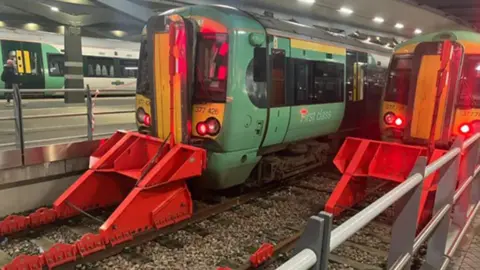
A train crashed into a buffer at London Bridge railway station due to a driver's microsleep caused by fatigue, the rail safety regulator has said.
At 15:45 GMT on 13 December 2024, the Southern service struck the buffer on platform 12 despite the emergency brake having been applied, a Rail Accident Investigation Branch (RAIB) report found. Nobody was injured.
The driver had less than their normal amount of sleep the night before and the rota "was constructed in a way that increased the risk of fatigue", the report says. The driver had worked many of their rostered rest days before the accident.
Govia Thameslink Railway (GTR) says it now uses "robust scientific modelling to plan staff shifts".
'Staff tiredness reports'
The report also found that none of the engineered protection systems fitted to the train intervened to prevent the collision because the train was travelling too slowly (2.3mph) for them to be deployed.
One underlying factor was was that GTR's fatigue risk management "was not sufficiently effective and that it had not adopted some elements of industry good practice", inspectors found.
A second underlying factor concluded "there are no safety systems currently fitted to mainline trains which can detect and mitigate short losses in driver alertness".
The Rail Safety and Standards Board has been urged "to provide guidance when seeking external advice about medical conditions and working hours that may increase the risk of fatigue in safety-critical staff".
The RAIB has recommended GTR improves its fatigue risk management and follow best industry practice.
Samantha Facey, GTR's safety, health and security director, said efforts were being made to meet the recommendations.
She said: "Safety is always our number-one priority and we're determined to learn from every incident to improve our safety standard for our people and our customers.
"We're committed to making sure our staff are fit and alert when they're at work – in August we updated and improved our fatigue risk management standard to help us manage fatigue more effectively, which includes reports from staff related to tiredness.
"We've also set up stronger working groups with staff representatives and we're now using robust scientific modelling to plan staff shifts so we can spot and prevent fatigue before it becomes a risk."
Listen to the best of BBC Radio London on Sounds and follow BBC London on Facebook, X and Instagram. Send your story ideas to hello.bbclondon@bbc.co.uk
