How World War One soldiers learned to cook in Sussex

 BBC
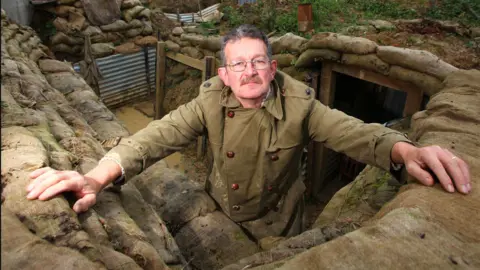
BBCSoldiers preparing to fight in World War One trained to cook in trenches in East Sussex before heading off to the front line.
The Portslade Army Cookery School, which operated from Portslade Camp, trained 14,000 British troops how to cook at a time when the army was expanding at record speed.
Historian Andy Robertshaw told the Secret Sussex series: "These guys weren't being trained to use weapons - they were being trained to cook and being graded."
Today, little remains of the camp itself, and the cookery school has largely slipped from public memory.
Surviving notebooks from 1916 to 1918 offer a rare glimpse into the curriculum.
One, belonging to Private H Whittington of the 23rd Battalion Royal Fusiliers, contains recipes, lecture notes and a stamp from the Eastern Command School of Cookery, confirming Portslade's role within a wider military training system.
 Imperial War Museum
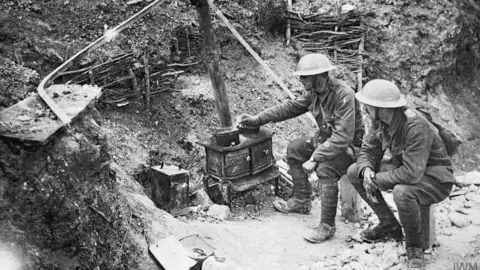
Robertshaw said cooks would raise stoves and ovens on stilts, to keep them off the ground and provide insulation, and would learn various cooking techniques.
"They had to cook sometimes in an ammunition tent so they would need to be prepared for that," he said.
He said the soldiers also learned about recycling, and that rabbit skins would be sent back home so they could be used for making gloves.
Robertshaw said the cook could be described as a "hero" - or an "absolute menace" - among his fellow soldiers.
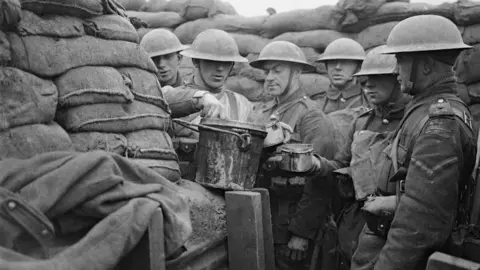
Usually, a cooking session could last hours and then the food would be delivered in hay baskets, before cutlery would be brought back to be washed up.
It would be a continuous process, with cooks being on for "10-15 days on the go", compared with five on the frontline.
Cooks would be given a pound and a quarter of fresh meat and bread per day at the start of the war, but this would be swapped for preserved meat and biscuits when the troops went to the frontline.
Other amenities, including tea, sugar and cheese, were also supplied.
Robertshaw added: "First thing in the morning, when you wake up wet and cold, getting a cup of tea was a good idea."
 Imperial War Museum
Follow BBC Sussex on Facebook, on X, and on Instagram. Send your story ideas to southeasttoday@bbc.co.uk or WhatsApp us on 08081 002250.
