Green light for apartments on site of mother and baby home

 RTÉ
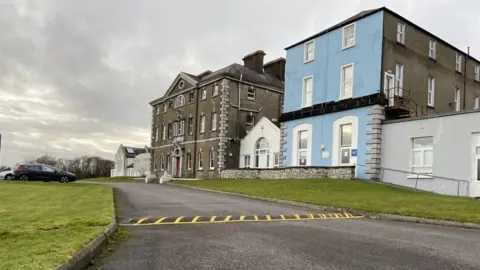
RTÉPlanning permission has been granted for apartments on the site of a former Irish mother and baby home.
Cork City Council has provided conditional permission to developer Estuary View Enterprises for the 140 apartment units at Bessborough in Ballinure, Blackrock.
Ex-residents and campaigners have long objected previous attempts to develop the site, fearing it could encroach on burial sites yet to be found.
More than 900 children from Bessborough died, but only 64 have known graves.
Bessborough mother and baby home operated from 1922 until 1998 and was one of a network of institutions which housed single mothers and babies during an era when most women were ostracised for becoming pregnant outside marriage.
Many of the institutions had high infant mortality due to harsh living conditions, which included overcrowding, malnutrition and poor infection control.
A six-year state inquiry into Irish mother and baby homes concluded that a total of 923 children who spent time in Bessborough died during its time in operation.
However, despite "very extensive inquiries and searches" the Mother and Baby Homes Commission of Investigation was "able to establish the burial place of only 64 children".
What are the development plans?
The planned development will see the demolition of 10 existing agricultural buildings and log cabin residential structures.
The construction of 140 residential apartments will take place across three blocks.
Two existing farmyard buildings are to be redeveloped as amenities for residents, including a workspace, library, lounge and function space.
The planned development also includes a new pedestrian and cycle bridge, upgrades to an existing pedestrian crossing and outdoor amenity areas.
What are the conditions of the planning permission?
Cork City Council granted the planning permission, subject to 70 conditions.
Before the commencement of the development, the development has to retain the services of a suitably qualified archaeologist to advise on the archaeological implications of the site.
The archaeologist must be employed to monitor all the site works before the development.
The excavation has to be monitored by a suitably qualified and experienced osteoarchaeologist/forensic anthropologist with expertise in skeletal juvenile remains.
The location of items of evidential value indicative of potential burials, such as coffin timber and coffin nails, must be noted and a record completed in compliance with forensic archaeological standards.
If human remains are found during the course of the excavation, all work must cease at all parts of the proposed development sites and all relevant authorities, including the city coroner and An Garda Síochána (Irish police), will be informed of "the location of unidentified and previously unrecorded modern human remains".
The conditions outline that in the event that human remains are found, "it is the responsibility of the relevant state authorities to determine the outcome for these remains and any associated evidence".
Who has objected to the plans?
An objection to the proposed development was submitted by the Bessborough Mother and Baby Home Support Group.
The objection, submitted by Carmel Cantwell on behalf of the group, outlined that "any proposed development must be approached with the highest level of sensitivity, transparency and compliance with planning law".
"The current proposal fails to meet these standards and should be refused," the objection stated.
In the objection, the group outlined some of its concerns that:
- No comprehensive, independent archaeological investigation has been completed
- Survivors and families have repeatedly expressed fear that unmarked burial sites may be disturbed
- The proposal fails to demonstrate that development can proceed without risking irreversible harm to a landscape of national memory
Labour Councillor Peter Horgan, for Cork City South East, also objected to the planning application.
In his objection, Horgan noted that previous applications for substantial residential developments have been refused.
He said that the "appropriate future for these lands should be publicly owned and dedicated to memorial and parkland use, not uncritically developed for private residential profit".
"I ask that the council follow the precedent set down by previous refusals and not deviate from the track on that."
