ME is like having the worst flu but all the time

 BBC
BBC"If you imagine the worst hour of when you have flu, but that's how you feel all the time."
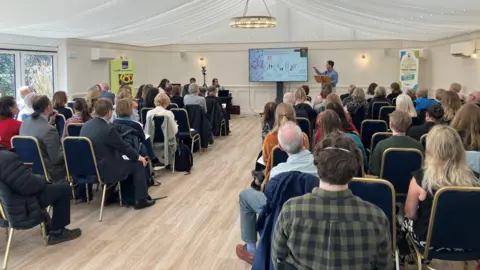
Sam, 30, was one of the attendees at the Stronger Together, a ME/CFS (myalgic encephalomyelitis/chronic fatigue syndrome) Alliance symposium at Winchester Cathedral on Wednesday.
The event was a meeting point for leading scientists and researchers into the causes of ME/CFS, Long Covid and post infectious disease to discuss the way forward.
Experts and patients are critical of the government for not putting further investment into the research. The Department of Health & Social Care has been contacted for a comment.
Previous BBC reports show more than two million people in the UK have Long Covid and about 390,000 are affected by ME/CFS.
One of them is Radha from Fareham, Hampshire, who has lived with ME for 27 years.
"If I go too hard, I will literally sit down and then as I relax, my whole body becomes paralysed," she said.
"I can't even move my eyelids, I can hear everything that's going on but everything is like completely shut down. It's scary."
Sam, who was an active sportsman before a viral infection led to ME, said his 70-year-old father and his 90-year-old grandfather "have a much better quality of life than I do".
"Working and sport and everything has basically just been taken away from me," he shared.
"If you imagine the worst hour of when you have flu, but that's how you feel all the time, that's the best way to describe it."
The NHS describes ME/CFS as a long-term condition that can affect different parts of the body. The main symptom is extreme tiredness but it also causes problems with sleep and concentration.
The cause of ME/CFS is unknown.

The researchers say their findings could be key to better understanding the causes of the conditions.
Prof Chris Ponting, chair of medical bioinformatics at the University of Edinburgh and keynote speaker at the symposium, said: "We used the genetics of 15,000 people or more with ME and compared them against the genetics of the general population.
"We saw there are eight places at least in the human genome which predispose people to having an ME diagnosis."
Organisers said their goal was "to accelerate crucial and vital research", as well as "to encourage the UK government to fund and develop this progressive impetus, ensuring better understanding and treatment, plus possible prevention of these debilitating conditions".
"We're at the cusp now and we need help from government, from other funders, to enable us to help so many people," Ponting said.
Sam added that he found it "absolutely disgraceful" that the approach to the condition had not changed, despite the "irrefutable evidence of the fact that this illness is purely physical".
Last July, the government launched a new delivery plan to improve education around the illness, as well as increased funding, research and medical training for health practitioners.
You can follow BBC Hampshire & Isle of Wight on Facebook, X, or Instagram.
