A sunbed tan is really not worth it, says skin cancer survivor

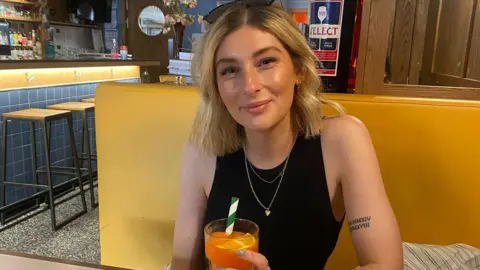 Emma Giannuzzi
With nights out planned out for New Year's Eve, for many a tan is high on the priority list.
While sunbeds may be tempting, skin cancer survivor Emma Giannuzzi, 36, is urging people to use fake tanning products instead, highlighting the risks associated with sunbed use.
The mother-of-two from Rogerstone, Newport, used sunbeds regularly throughout her late teens, and was twice diagnosed with melanoma, the first time at 23, and the second when she was pregnant.
"It is really not worth it that momentary feeling of 'oh yes my skin looks lovely and tanned'. It doesn't last. It's literally a moment," she said.
Warning: This story contains graphic images of scars
Although Emma said she could not say for certain sunbed use caused her skin cancer, she believed they were "likely a factor in me getting melanoma".
StatsWales figures showed that suspected skin cancer cases in Wales, where patients started their first treatment, rose from 3,611 in 2021-22 to 5,907 in 2024-25.
A survey by Melanoma Focus found that 26% of people in Wales used sunbeds at least once a year and 20% at least monthly.
Although under-18s in Wales are banned from using sunbeds, the survey found that 34% of 16 to 17-year-olds used them.
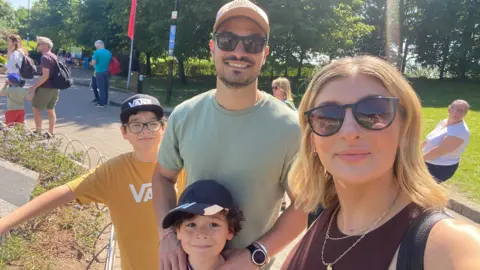 Emma Giannuzzi
Fiona Osgun, from Cancer Research UK, said "there is no such thing as safe tanning with sunbeds" as nearly nine in 10 cases of melanoma in the UK are caused by too much UV radiation from the sun and sunbeds.
According to the NHS, sunbeds are more dangerous than natural sunlight because they deliver concentrated UV radiation, which increases the risk of skin cancer, premature ageing, sunburn and eye damage.
Gilly Perkins, from the Sunbed Association, said professional tanning salons follow "strict" safety rules, promoting moderation, staff training, and customer education, making controlled sunbed use safer than unregulated sunbathing.
She added that informed adults should be supported in managing their UV exposure and stressed the importance of distinguishing modern, professional salons, which adhere to rigorous safety protocols, "from the often-unregulated practices of the distant past".
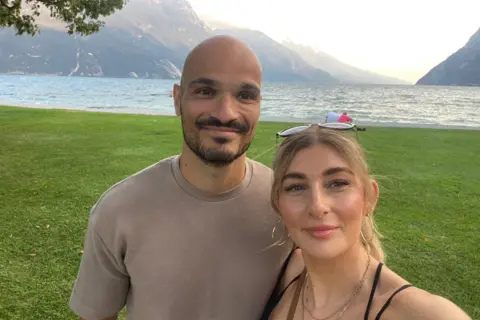 Emma Giannuzzi
Emma said she began using sunbeds at 16, often before holidays to get a "base tan", spending between eight and 10 minutes on one each time.
Although she often came out burned, she said staff allowed her to continue and sometimes offered tanning accelerators such as creams that do not offer sun protection.
Emma said the risks were rarely discussed, with sunbed use regarded as "quite normal", saying it often made her "feel better about myself".
She stopped using sunbeds in her early 20s after learning about the skin cancer risks.
Aged 23, while "ironically" applying sun cream at a party, Emma noticed what she thought was chocolate on her stomach, turned out to be a changing mole.
She was diagnosed with stage 1A melanoma, leaving her "in shock" but grateful it was caught early.
Emma said she had assumed cancer would only affect her when she was older - a belief she described as "silly" - adding she was "not emotionally equipped" to deal with the diagnosis so young.
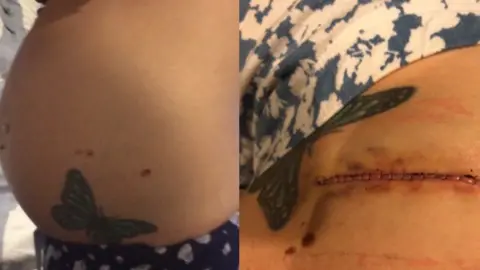 Emma Giannuzzi
During regular checks-ups when she was pregnant with her second child, Emma said doctors grew concerned about a mole on her stomach - it was confirmed as melanoma, having been removed after the child was born.
Emma said it was a "horrible thought" to have had her baby growing while she had cancer, adding that the second diagnosis felt different because she now had children "relying on me to be alive".
"The thought that I've done that to myself made me feel so guilty," she added.
Since then, Emma said she has had 10 moles removed, and although most of them have not been cancerous, the wait to find out was "horrific".
 Getty Images
Dr Ricky Frazer, a consultant medical oncologist, said he was "worried "about the rise in melanoma cases in young people, largely due to sun exposure and sunbed use - adding it was the most aggressive common skin cancer.
Non-melanoma cancers like basal and squamous cell are more common but usually less likely to spread or be fatal, he added.
He linked increased sunbed use to social media and television programmes that "stylise lying out in the sun".
"It's often portrayed as fashionable to be tanned all year round," he said, noting how easily accessible sunbeds are, with many high streets filled with salons.
He warned that sunbeds deliver harmful UV radiation that damages DNA, accelerates skin ageing and increases cancer risk, with no safe level of exposure.
While he said an ideal solution would be a ban on sunbeds, he stressed the need for better education, sun protection, and improved access to quality sunscreen, including removing VAT.
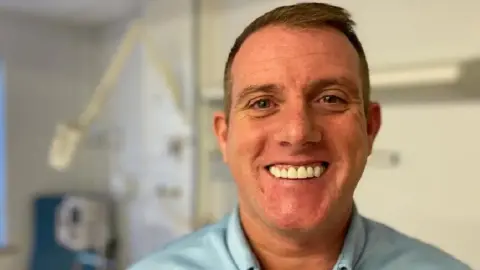
Aneurin Bevan University Health Board launched a skin cancer prevention campaign after seeing a 79% rise in skin cancer treatments since 2019, said Chiara Luongo.
She said the campaign promotes sun protection, awareness of symptoms, and safe practices, covering both winter sun exposure and sunbed use.
Newport, Torfaen and Blaenau Gwent councils are supporting the initiative by inspecting tanning salons and carrying out test purchases to ensure sunbed operators comply with regulations, including age limits, equipment safety and health standards.
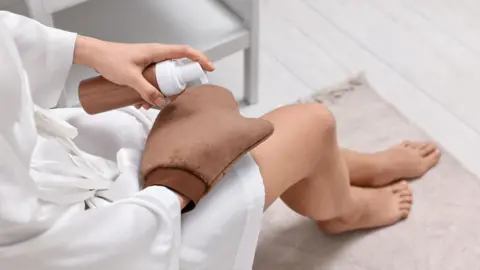
Emma said she has now switched to using fake tanning products, finding them "safer", "convenient" and longer-lasting than sunbeds.
She added the she did not believe sunbed use was "worth it", as the temporary "lovely" glow comes with increased melanoma risk.
"If I could go back and change my sunbed use I absolutely would."
A list of organisations in the UK offering support and information with some of the issues in this story is available at BBC Action Line.
