How a rare chronic illness left me unable to play my bagpipes

 Katie Robertson
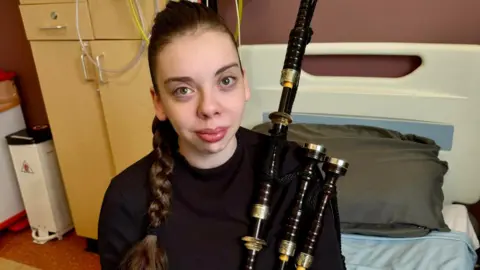
Katie Robertson's passion for the bagpipes has gained her thousands of followers online.
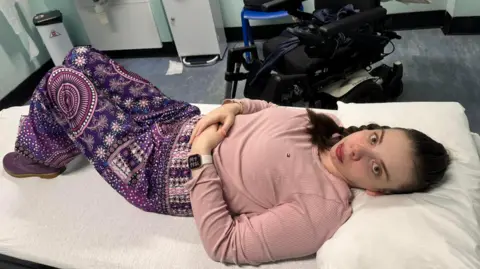
But the teenager says her "future is on hold" after being diagnosed with a rare chronic illness that leaves her unable to sit up.
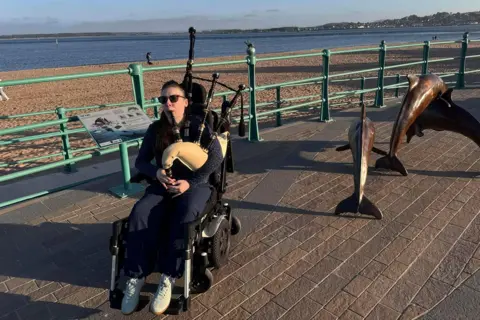
The 19-year-old, who has been a wheelchair user since the age of seven, lives with a number of chronic conditions such as arthritis and scoliosis.
And in December she was diagnosed with PoTS (postural tachycardia syndrome) - a condition that causes her heart rate to race as well as dizziness, fainting and chest pain.
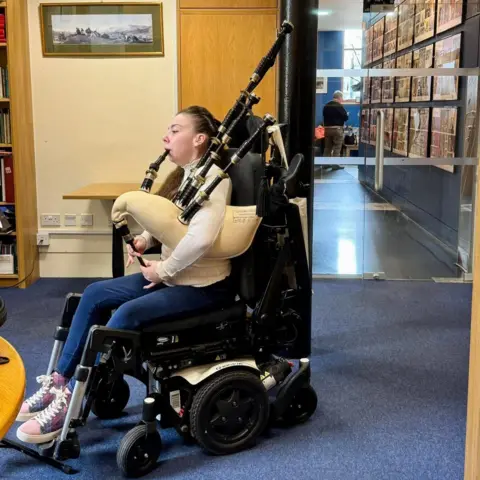
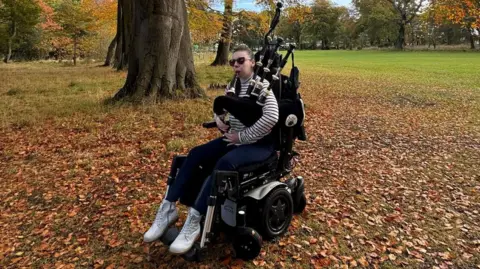
Katie, who is known online as the Wheeled Piper, used to play the pipes for hours at a time but now she is unable to play at all.
As a result she is currently unable to fulfill her dream of studying traditional piping at Glasgow's Royal Conservatoire of Scotland.
 Katie Robertson
Katie, from Carnoustie in Angus, had hoped to get her Highers and secure a place at college.
But last summer she experienced her first symptoms of PoTS.
Katie told BBC Scotland News: "I just sat up one day and could feel my heart racing, it was thudding like it would come out of my chest.
"Along with having a mega-fast heart rate, I felt dizzy and had a shortness of breath.
"I know my lungs are in brilliant condition because of my bagpipe playing so I was really concerned."
Katie said her heart rate would regularly shoot up to 180bpm - far above the normal maximum - and would last for hours.
 Katie Robertson
Visits to her GP failed to diagnose the problem.
And in early December concerns Katie's wellbeing were so great that paramedics were called.
They did various tests but put her high heart rate down to the fact she had a temperature.
As her symptoms persisted Katie visited the out-of-hours GP and was told the palpitations could just be down to stress.
Still adamant something was wrong, she went to her own doctor the next day and was referred to Ninewells Hospital in Dundee.
Staff did more tests, but as there was no visible damage on her heart, they tried to send her home again.
"I knew in myself something wasn't right," Katie said. "I know my own body.
"I said to them, 'Look I am not happy with this. I don't feel myself, I can't do anything and it is not normal for me to be out of breath all of the time'.
"The only reason I got admitted was because I refused to leave. I really had to advocate for myself."
 Katie Robertson
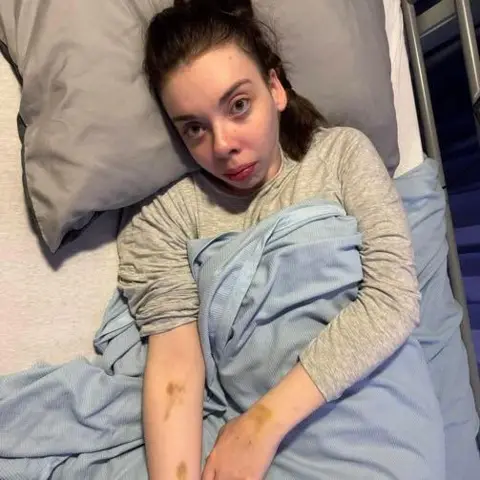
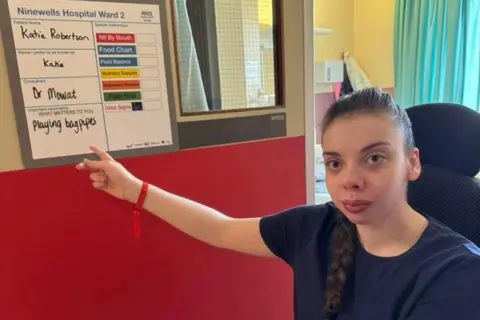
Katie turned 19 during her two-week stay in hospital and was finally discharged with a diagnosis days before Christmas.
"Trying to get all the tests done was a nightmare," she recalled.
"The doctors did not have an accurate understanding of the condition.
"I was able to get more information from the PoTS website than anyone in the hospital."
PoTS is diagnosed by ruling out every other possible cause which meant Katie had to undergo extensive testing.
"One of the doctors said I could not have PoTS because one symptom did not match the condition - but the PoTS website had conflicting information," Katie said.
"When I pointed this out to him he quickly changed his opinion.
"If I didn't challenge him or access that information I wouldn't have got a diagnosis and would have been sent home with a grab rail and told this is my life now."
 Katie Robertson
Katie said a diagnosis was a welcome development but the real battle began when she tried to seek support for her condition.
She discovered there are no PoTS specialists in Scotland so she was passed from one department to another.
"When I finally got diagnosed I felt relieved," she said.
"I thought finally there is going to be somebody that can actually manage this, but I was mistaken."
According to the NHS, treatments for the condition vary in order to manage symptoms but a GP may suggest lifestyle changes or prescribe medicines such as steroids or selective serotonin reuptake inhibitors (SSRIs).
While in hospital, a doctor agreed to try Katie on a medication she found out about herself on TikTok.
However, her GP said they didn't know much about the drug and tried to refer her to cardiology.
Katie has regular ECG heart monitor tests to track her condition and her medication is monitored by her GP.
But she is still struggling with everyday life.
"I have no idea what treatments could help me, especially considering my complex medical history before PoTS," she said.
"I am missing out on my education because I have been so exhausted. It feels like my future is stuck on hold because I can't leave my house.
"But I'm not going to stop fighting for myself. I will keep pushing through because the thought of playing my pipes again keeps me going."
 Katie Robertson
Katie is not alone in this experience.
Prof Lesley Kavi, chairman of PoTS UK, said Scotland was "one of the worst" nations in the UK for providing care to those with the condition.
She said: "We were aware there was a problem in Scotland from lots and lots of patient inquiries. We could see people were really struggling.
"So we carried out research between surveys and freedom of information requests and what we found was concerning.
"There are no care pathways, there are no specialist services, health boards across Scotland have no idea how many patients are in their area or what their needs are."
 Katie Robertson
An NHS Tayside spokesperson said: "In line with other health boards across Scotland, patients diagnosed with PoTS in Tayside are supported and managed within primary care, using local clinical guidance to help support consistent, evidence-based practice.
"Patients are also signposted to appropriate resources, including the PoTS UK website for additional information, guidance and support."
Public Health Minister Jenni Minto said she had every sympathy with PoTS patients and wanted them to "receive all the support which they are entitled to".
Minto added she expected health boards to provide "high-quality, safe and effective person-centred care".
She said: "This can include remote consultations and cross-Board referral pathways where these provide the most effective route to specialist input.
"Our funding has been directed to specialties where it can have the greatest impact against the longest waits, including more than £500,000 for cardiology and £500,000 for neurology – the specialties most likely to support people with PoTS."
What is PoTS?
According to ME Research UK, PoTS is a debilitating, under-recognised condition that causes quick heart rate increases after getting up from sitting or lying down.
Symptoms including dizziness or light-headedness, fainting, noticeable heartbeats, chest pain and shortness of breath.
The name PoTS breaks down as follows:
Postural: Refers to the body's position or posture. In PoTS, symptoms are triggered/worsened by a change in posture.
Tachycardia: Means a fast heart rate. The key diagnostic feature of PoTS is a persistent and abnormal increase in heart rate after assuming an upright posture.
Syndrome: This refers to a collection of symptoms/signs that occur together. In PoTS there are several symptoms, such as dizziness/light-headedness, which occur alongside an elevated heart rate.
