'I needed a coil to ease the bleeding but I just sat on a waiting list'

 BBC
BBCWarning: This article contains some graphic details
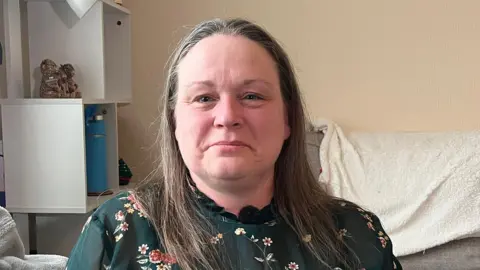
Elaine Gracey was told more than three years ago by her doctor that she should have a coil fitted to help with her heavy and painful periods.
The 50-year-old is still waiting. She said she was expected to just put up with the bleeding.
"One night I was in so much pain I just sat in the bath which turned literally into a blood bath - I was passing so much blood and clots which were the size of baby potatoes," she said.
Northern Ireland has the highest gynaecology waiting lists in the UK. The Department of Health said "significant work", though in its early stages, is underway to reduce waiting times and develop pathways.
The coil was meant to be the first step in Elaine's menopause treatment, and she was desperate for help.
"At night time I slept with a towel on the sheets, I was in a lot of pain and usually exhausted going to work as I'd little or no sleep," she said.
Elaine, who has since been put on a different form of HRT, said her symptoms were not seen as important.
The carer, from Craigavon, said: "No woman should have to wait three or four years just to be called - that is not dealing with the issue, but we are just women."
The Southern Trust said it recognised the "significant distress" that long waits for gynaecology services can have and apologised to those affected.
A spokesperson added that the trust was working to reduce waiting times, with additional funding, clinics and capacity put in place.
About the coil
- There are two types of contraceptive coils - a copper coil and an hormonal coil
- The hormonal coil - known as an intrauterine system (IUS) - is also widely used during perimenopause and menopause to manage heavy, irregular bleeding
- It acts as the progesterone part of hormone replacement therapy (HRT)
- It is inserted into the womb and the fitting/removal should take about five to 10 minutes and is usually done by a doctor or nurse at a GP surgery
- However, some women need to have the procedure carried out in hospital due to complications
Waiting lists by health trust
Last month, the Royal College of Obstreticians and Gynaecologists revealed that almost 60,000 women are either waiting to be seen or treated.
BBC News NI asked each of the health trusts for figures on menopause and gynaecology waiting lists between 1 July and 31 December 2025.
Across the five trusts, 6,597 women have been red flagged to see a specialist.
The longest waits are four and a half years in the Southern and Western trusts.
While some trusts run specific menopause clinics, others do not due to lack of funding.
'Very dark place'
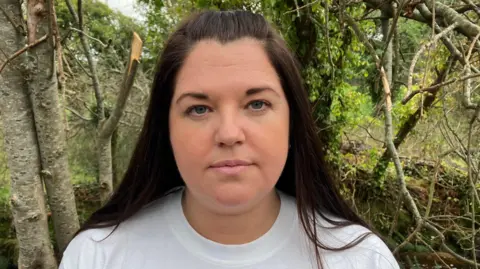
Gail Ritchie, 45, was on a waiting list for more than seven years.
The Londonderry woman had been diagnosed with pelvic congestion syndrome (PCS) - a condition that can cause pelvic and ovarian veins to pool with blood, enlarge and press against surrounding organs.
"I was in a very dark place, bleeding a lot, low mood, it was debilitating mentally and physically," Gail said.
"The first couple of years you expect to wait, then I thought I will be seen by three years, then that became four then five years and you start to lose hope."
After the eight-year milestone was reached, she went private and within four weeks she had an appointment.
"The difference was night and day, for the first time I felt listened to and heard. I described the symptoms, and he confirmed I wasn't imagining it and there was a solution," Gail said.
Using her health insurance, she paid about £6,000 for a hysterectomy and started HRT.
A spokesperson for the Western Trust apologised to patients for the delays in their care and said it was part of the Gynaecology Collaborative to implement initiatives which will reduce the number of long-waiting outpatients.
'Just struggle on'
Dr Charlie Beattie, an obstetrician and gynaecologist in the Northern Health Trust, told BBC News NI that the waiting times were "extremely concerning".
"As clinicians, we see the negative impact this has on women's physical and psychological well-being, and the impact on their families and wider society," he said.
"I do personally feel that many women just struggle on with symptoms and they are not brought to the attention of health care professionals whether it be because of acceptance, an inability to prioritise their own well-being, or challenges with access to services."
He said the resources required to provide effective services did not meet increasing demand.
On the particular issue of menopause, Dr Beattie said a delay in receiving HRT could increase the long-term risk of osteoporosis, cardiovascular disease and dementia.
Across four of the five trusts, more than 1,000 women are waiting to see a menopause specialist - the Western Health Trust does not provide a dedicated service.
The longest wait is 160 weeks in the Southern Trust; 146 weeks in the Northern Trust; 141 in South Eastern Trust. The Western Health Trust said the statistics were not available.
The Belfast Trust which once had the longest waits, has 34 women waiting, with the longest wait now at four months. It has funded two consultant posts which could explain the positive drop.
In a statement, the Department of Health said it is working to reduce waiting lists and "develop pathways for gynaecology-specific conditions" within each health trust, including menopause care and the establishment of a regional gynaecology services forum to oversee services.
"Although work is at an early stage and will require additional funding, this will include mapping clinical pathways from presentation at GP services into secondary and tertiary care, which will benefit both patients and clinicians," the statement added.
"This work includes a specific task and finish group to consider menopause care."
