Work of 'daring' female silversmith 'remarkable'

 National Trust
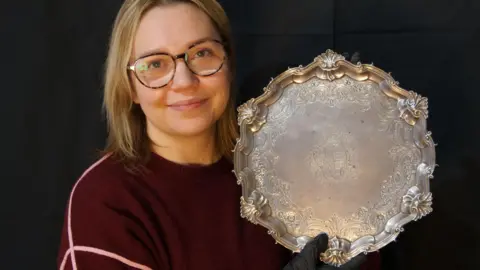
A rare Georgian salver, made in the workshop of a "daring" and "extraordinary" female silversmith, has gone on display to the public.
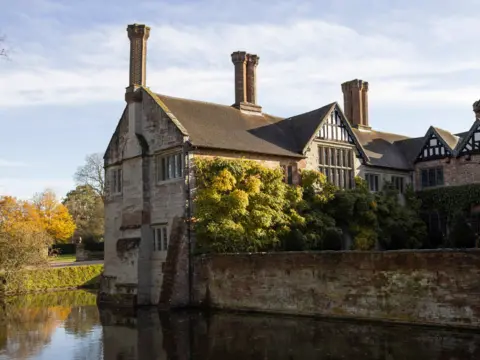
New research reveals the piece at Baddesley Clinton in Warwickshire was made in the workshop of Dorothy Mills, one of the few women to register as a silversmith in the 18th Century.
It is believed to be the only example from her studio in a publicly accessible UK collection, organisers said.
Her story "shines a light on women's role in a trade where they were almost invisible," said James Rothwell, National Trust curator of decorative arts.
Mills did something "extraordinary" organisers said, by defying her husband's express instructions to wind up the business, following his death, by stepping into it and registering her own maker's mark at Goldsmiths' Hall in 1752.
She ran the business for a further two years.
The workshop closed following a legal challenge by her late husband's nephew, bringing an end to Mills' "brief but significant career," said the charity.
 National Trust
For a woman in Georgian London, this was a "bold and rare move" - asserting her independence in a world dominated by men and running a workshop that produced high-quality silver for fashionable clients.
Her career was prolific but very short, and work bearing her mark is now extremely rare, said the National Trust.
She did not make or design silverware, but "her management of the business sets her apart from the majority of women at the time".
 National Trust
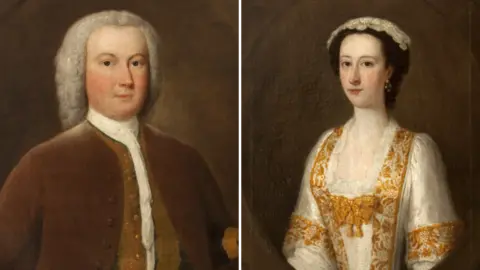
The salver is engraved with the arms of Thomas Ferrers and his wife, Margaret Kempson.
The family owned Baddesley Clinton for over 400 years, from the reign of Henry VIII until 1940.
It would have been a major purchase, said the National Trust, costing in the region of £12, twice the annual wage of a house maid at the time.
"In the 18th century, silver was more than tableware, it was a statement of taste, wealth and social standing, added Rothwell.
"Owning pieces like this signalled refinement and success, and for families like the Ferrers, it was a way to express identity and status in a changing world.
"Its survival is remarkable, not only for its craftsmanship but for what it represents: ambition, resilience, and female autonomy against the odds."
Follow BBC Coventry & Warwickshire on BBC Sounds, Facebook, X and Instagram.
