From grain to gigs: How corn exchanges are finding a new future

 Getty Images
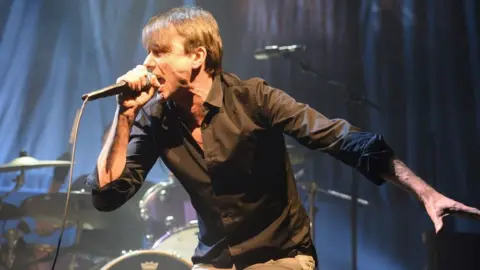
When Suede, Lily Allen and Happy Mondays take the stage at Cambridge Corn Exchange next year, they probably won't be thinking about grain trading.
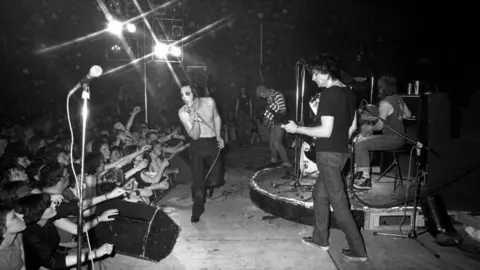
The building, currently celebrating its 150th anniversary, is an established concert venue that has hosted David Bowie, Queen and The Who, but it once served a very different function.
Other towns and cities in the region, including Ipswich, Bedford, Hertford and King's Lynn, also have corn exchanges hosting concerts, plays or cinema screenings.
Northampton's Grade II-listed example, derelict for more than a decade, is due for similar treatment after it was bought by West Northamptonshire Council.
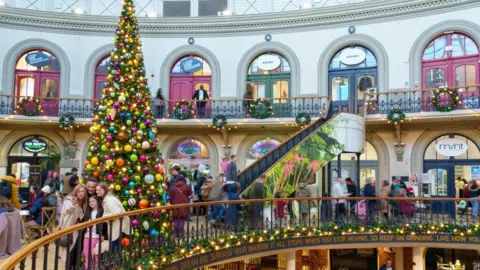
Others have been converted into pubs, restaurants, offices and shops.
But how and why did these halls come into being – and what does the future hold?
 Getty Images
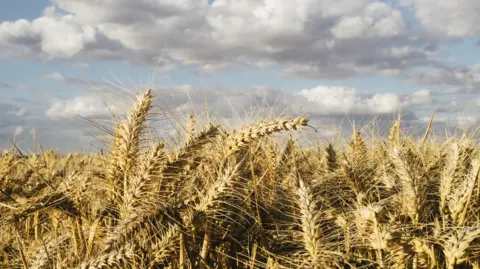
Unsurprisingly, they were venues where cereal crops, including wheat, barley, oats and rye, were traded.
They took off in the mid-18th Century, explains Prof Anthony Howe, an expert in Victorian Britain at the University of East Anglia in Norwich.
Agriculture was improving and more corn was needed to feed a growing population.
Previously, growers tended to sell their corn at a general market, he explains.
"Eventually they thought, 'Actually, it'd be much better if we had a structure that the farmers can bring the grain into'."
Early purpose-built exchanges included Bristol (1741-43), London (1747) and Liverpool (1749-54).
They began to spread to smaller towns, particularly in grain-growing areas such as East Anglia.
 Getty Images
As farming became more commercialised, merchants got involved. Rather than carting all their wares to market, farmers would often take just a sample, allowing larger quantities to be traded.
While some exchanges were built by local collectives of corn merchants, others were the work of speculative companies.
The Municipal Corporations Act of 1835 created more town councils.
"They began to regard it as part of urban improvement to build a corn exchange, because it will bring business into the town," says Prof Howe.
"You want a nice-looking corn exchange to show that your town is better than the town next door.
"And when you're building a new one, you want it to be bigger and better... because you're going to attract more merchants to sell at your market."
 Google Maps
The development of the railways, and the 1846 repeal of the Corn Laws, which had kept domestic grain prices high, further boosted their development.
"The ones you see surviving nowadays really came in the mid-19th Century, and the bulk of them were built between the 1830s and the 1860s," says Prof Howe.
"I don't think many were built after the 1880s."
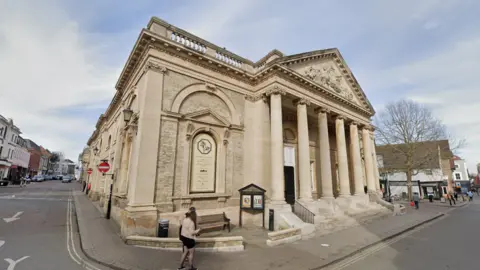
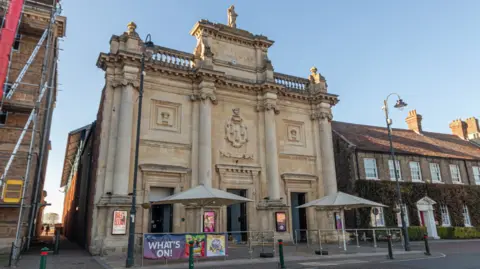
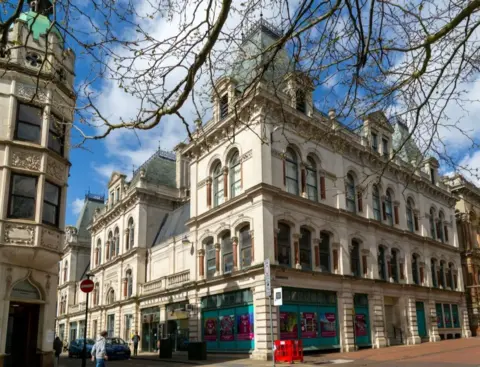
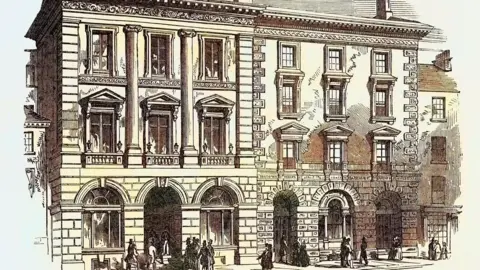
Exchanges tended to be large spaces, often with glass roofs and large windows to let in natural light and enable buyers to properly examine the corn.
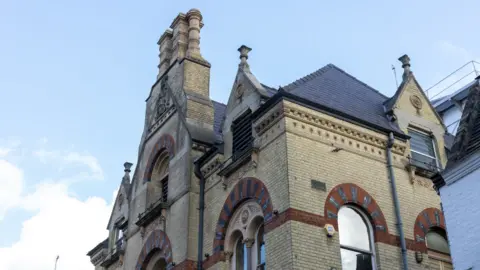
They were "hugely economically important", says Prof Howe, and many were architecturally impressive.
They were lively places, where farmers and labourers mingled with merchants.
 Getty Images
 Getty Images
 Getty Images
The Great Depression of British Agriculture from 1873 to 1896, caused by the fall in grain prices following the opening up of the American prairies to cultivation and the advent of the steamship, led to the exchanges' decline.
By the early 20th Century, some were being used as cinemas.
Most had always been used for other purposes – such as public meetings, court hearings or theatre performances – since corn trading typically lasted only a couple of hours a week.
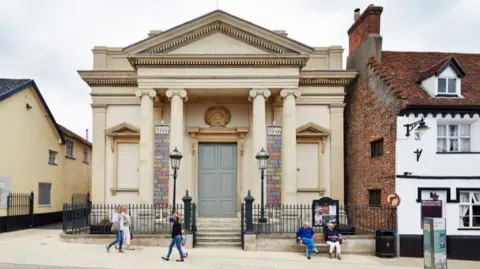
Prof Howe names Diss Corn Hall in Norfolk as a particular favourite.
 Getty Images
Built in 1854, it is believed to have been one of the country's last functioning exchanges, operating until 1998.
Run by a trust, it became an arts venue in 2010. A pre-fame Ed Sheeran played its gala opening.
It underwent refurbishment in 2016-17 as part of a £3.4m programme to regenerate the historic town centre.
"It's a great space," says general manager Lee Johnson.
"From the front, it's a beautiful building, neo-classical in style – quite imposing – and behind, we have the new extension housing the box office, the gallery and a bar and cafe."
 The Corn Hall Diss
It has hosted 285 events over the past year.
"We are a very, very busy little corn hall," says Mr Johnson.
"It has a fantastic buzz about it. We're always looking at ways to attract new audiences and activities.
"We are very fortunate to have this building. I think it will be here for another 170 years. It's not going anywhere."
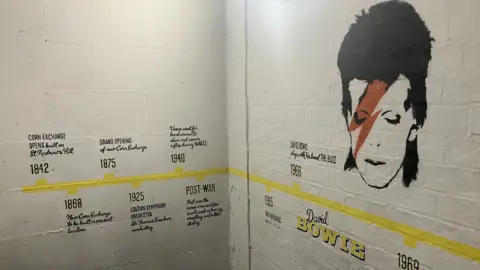
Cambridge Corn Exchange is marking its anniversary with a National Lottery-funded exhibition in February to share some of its heritage.
Its opening in 1875 was marred by trouble when undergraduates rioted, prompting seven arrests.
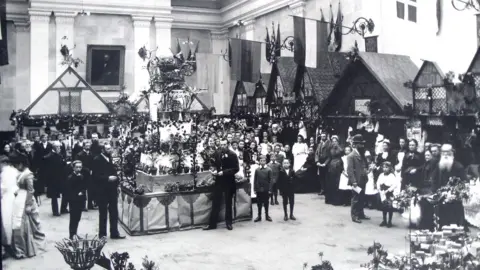
It was still used for corn trading until 1965 but also often hosted sales of other goods. In 1898, Rolls-Royce co-founder Charles Rolls took a test ride around the room on a motorcycle being displayed there.
 Getty Images
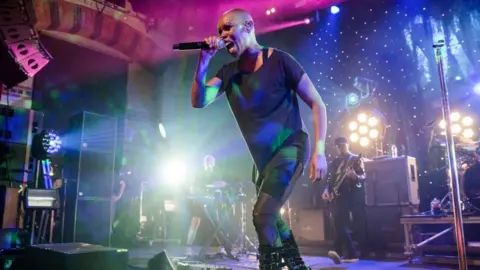
Suede, Lily Allen and Happy Mondays are among the acts due to play the venue in 2026.
Rosie Amos, heritage project manager, says: "As well as a concert venue, over the decades the Corn Exchange has become a hub for the Cambridge community.
"From hosting meetings for women's suffrage to distributing ration books in wartime, it has been what the community needed. Looking forward, it will continue to do the same."
 Getty Images
Other towns have been less fortunate.
Thomas Ollivier, of The Victorian Society, says some corn exchanges were demolished after World War Two and in the 1960s and 70s.
Peterborough, Chelmsford, Norwich, Luton and Watford are among the places to have lost theirs.
"Victorian architecture was not wanted. The ones that have survived tend to be the better examples that could be adapted," says Mr Ollivier.
 Getty Images
He says the buildings are important, but not as valued as they should be.
"They are not exactly high up people's lists for renovation. There is not that immediate financial gain for developers."
However, he says they lend themselves well to reuse, including as arts venues.
So, what of the future? Do these buildings have one?
"We think they do," he says.
 Bedford Borough Council
Sarah Gallagher, Conservative portfolio holder for customer experience, leisure and culture at Bedford Borough Council, describes the town's corn exchange as one of its "most iconic and loved landmarks" and "a place where culture, creativity and community come together".
It will be closed during January for a £2.5m refurbishment.
"By investing in the Corn Exchange, we are investing in Bedford's future: boosting footfall, supporting local businesses and showcasing our town as a vibrant destination to live, work and visit," she adds.
Follow East of England news on X, Instagram and Facebook: BBC Beds, Herts & Bucks, BBC Cambridgeshire, BBC Essex, BBC Norfolk, BBC Northamptonshire or BBC Suffolk.
