Farmer's one of first to use AI driverless tractors

 Kate Bradbrook/BBC
A farmer has become one of the first in the UK to use driverless tractors.
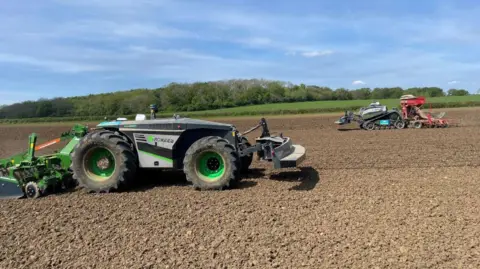
Will Mumford, an arable farmer in St Neots, Cambridgeshire, has used an autonomous vehicle to cultivate soil and another to plant seeds.
He said the robots were the future of farming as they could operate for up to 30 hours at a time and cause less damage to the land.
However, it is believed they would have to reduce in price before conventional machinery was replaced en masse. The National Farmers' Union said it welcomed the technological advancement but that affordability was important.
Autonomous tractors currently cost between £180,000 and £320,000.
 Kate Bradbrook/BBC
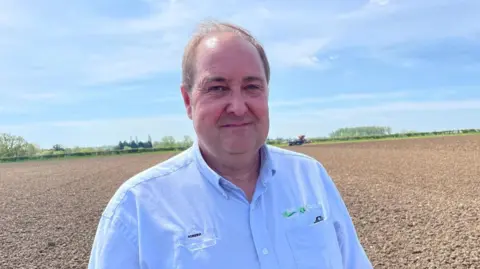
Mr Mumford, who is also the managing director of a company that supplies driverless tractors, said: "The industry in general is addicted to large machinery and that over time is starting to damage our soil structure and kill a bit of biodiversity off.
"These machines are much lighter and much kinder to the soil and we hope over time we can restore some soil structure . . . and farm in a far better, sustainable way."
Driverless tractors are around half the size of conventional tractors and are fitted with features such as a radar, ultrasound and sensors, which stop the vehicle if it detects an object.
Mr Mumford insisted the introduction of artificial intelligence would not lead to fewer farmers.
"We're allowing them [farmers] to farm in a better way, so we're removing the mundane, slow jobs. They no longer need to sit on a tractor for hours on end," he added.
 Kate Bradbrook/BBC
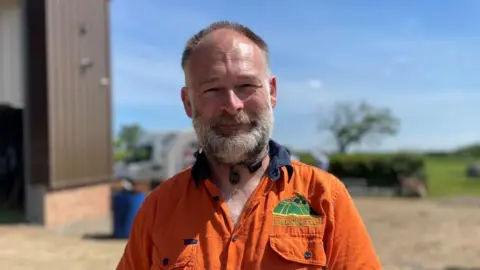
Tom Carnell, an agricultural engineer, said: "When things like this are initially launched it takes about five years for it to become really mainstream.
"And what we'll see is an initial few people who are really benefiting and believe in the technology, and as time goes by it will become more and more commonplace."
Follow Cambridgeshire news on Facebook, Instagram and X. Got a story? Email eastofenglandnews@bbc.co.uk or WhatsApp us on 0800 169 1830
