New stroke clinic 'vital' for younger patients

 BBC
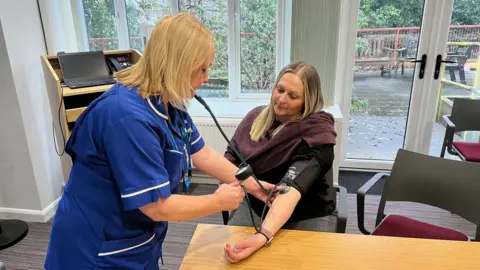
BBCA woman who had a stroke aged 44 has said she received the "best support" from a new clinic in Sheffield designed for younger patients.
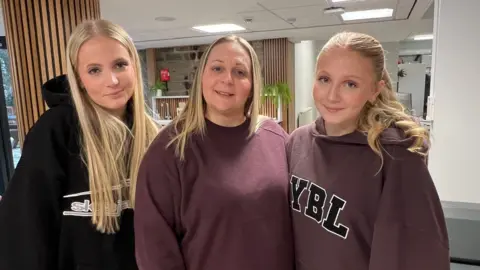
Lindsey Storey, now 45, suffered a stroke in November 2024 that damaged the left side of her brain and left her struggling with balance, communication and fatigue.
The former NHS worker, from Deepcar, is among a group of patients to benefit from the "first-of-its-kind" clinic, which caters for under-65s who have suffered a mild stroke.
Dr Amanda Jones, a stroke nurse consultant, described the clinic as a "one-stop shop" for patients in this age group who may have specific needs around returning to work or caring for families.
The clinic, which is housed at the University of Sheffield, is a collaboration between Sheffield Teaching Hospitals NHS Foundation Trust (STH) and the university.
It provides patients with a six-week review following their stroke and is geared towards younger patients who may have higher function than older people who have suffered more severe brain injuries.
Instead of being invited back to hospital for a traditional outpatient appointment, where they might be offered multiple onward referrals, these patients and their families can access a range of experts in one place.
The clinic provides access to clinicians, exercise specialists and dieticians, as well as advice from the Stroke Association.
Storey, who has struggled to go out or socialise independently since her stroke, said the new clinic had been "phenomenal".
"I've had the best support from the guys here and the community stroke team and they've been amazing," she said.
"I think that has given me reassurance that I am confident in the things I can do because of the experiences I've had here."
The clinic was first piloted 18 months ago and following a successful evaluation it was fully established in October 2025.
The clinic runs twice a month and will see about 100 patients each year.
Jones said it provided a more "holistic" experience for patients and their families.
"When you do have a stroke when you're younger you are at higher risk of it happening again, so the fact that we are changing their behaviours and really arming patients with the tools to actually reduce the risk of another stroke is vital," she said.
"It does take a bit longer, but it's a one-stop shop.
"So, they will see a specialist dietician; they'll see myself to go through the medical aspects; the exercise specialist; and the Stroke Association, who can address things like benefits or different forms of employment if you can't get back to work."
Prof Judy Clegg, from the University of Sheffield, said the clinic was a "brilliant collaboration" with STH because it also gave students an opportunity to learn from the experts involved.
About a quarter of strokes happen in people of working age, according to the Stroke Association.
It happens when the blood supply to part of the brain is cut off, which kills brain cells and affects how the body works.
Listen to highlights from South Yorkshire on BBC Sounds, catch up with the latest episode of Look North.
