Hotel where WW1 poet stayed given Grade II listing

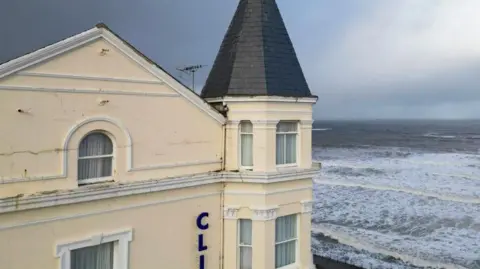 Historic England/ Alun Bull
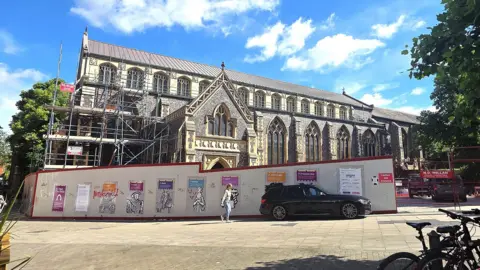
A seaside hotel which counts the war poet Wilfred Owen among the guests who have stayed there has been given a Grade II listing.
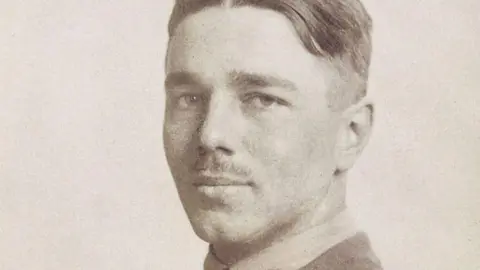
Historic England has recognised the Clifton Hotel in Scarborough because Owen lived and wrote in its turret room from 1917-18.
Owen was just 25 when he was killed in action in France, only a week before the Armistice was signed to end World War One.
The heritage body said that the Clifton, which was built in 1864, was also a surviving example of Scarborough's Victorian tourism boom.
The "handsome" hotel was where Owen was billeted to run an officers' mess after recovering from shellshock at a military hospital in Edinburgh.
Tom Frater, Historic England's regional director, said during Owen's time at the hotel, "a place of relative tranquility", he worked on some of his most famous poems, including Strange Meeting and Miners.
"It's a really interesting part of Owen's life," Frater said.
"People associate him with the mud and stink of the trenches [but] actually a lot of his work was done from the Clifton."
Frater said the hotel had kept many recognisable architectural features.
"It's very much as Owen would have known it when he was there," he said.
"We know this because he referenced it in letters to his mother with very detailed descriptions of his turret room and other rooms; views over the sea, the smoking fire and so on, while also working on these very famous poems.
"That's something we don't often get, poets sitting down and telling us about the room that they were sitting in at the point at which they're writing."
 Historic England/Alun Bull
Frater said Scarborough had an "incredibly rich heritage" with "many, many buildings associated with its 19th Century holidaymaking boom".
The town developed as a genteel resort and attracted a wealthy crowd compared to working-class destinations such as Blackpool.
"The architecture is a really special thing here," he said.
"Its bay windows, particularly the very distinctive corner tower are big things that have been called out."
"It's got many surviving interiors; painted timber arcades, grey-glazed screen walls, ceiling cornices, moulded panelling, fireplaces etc," he said.
Historic England said it has also kept its polished timber dancefloor and the remains of a narrow stage in the dining room.
The Clifton's use as a hotel has never changed, and it is now run by the chain Britannia. Until 2023, it was used to house asylum seekers.
It is one of only two known buildings in England with connections to Owen's war poetry.
Frater added: "I think a lot of people don't know Owen had this important interlude in Scarborough before returning to the trenches.
"It adds a lot to understanding his poetry to realise he was writing about first-hand experience of combat and trench life and working on them in quite different surroundings."
He said it must have taken "immense psychological strength" to run an officers' mess in a seaside resort while knowing he was likely to return to the front line.
Owen left for training in Ripon in March 1918 and was then sent back to France.
Frater added that the listing, which gives the building protection from demolition or inappropriate development, was not just about preservation, but of giving a site a sustainable future.
"It is vastly better to have use of a building.
"You get owners who want to maintain it, and people accessing the building, seeing it, enjoying the heritage, and people feel empowered to make necessary changes without harming it."
Listen to highlights from North Yorkshire on BBC Sounds, catch up with the latest episode of Look North.