'Miles of pylons would decimate Derbyshire'

 BBC
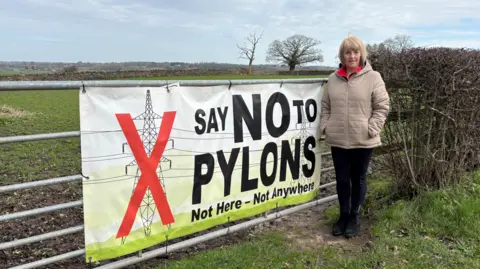
BBCA campaigner says plans to build a 37‑mile (60km) corridor of "horrendous" electricity pylons through Derbyshire would "decimate" the area.
Campaign group Stop The Pylons Derbyshire (STPD) has voiced concerns after National Grid launched its second consultation on proposals for new electricity infrastructure from Chesterfield to Willington.
National Grid first asked for the public's views on the project in 2024 and said it had since analysed the responses and completed further assessments to come up with a new "defined proposed route".
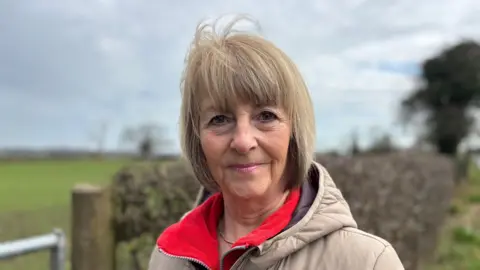
STPD chairwoman, Kath Hardman, said: "The pylons will decimate the whole area and is industrialising the whole of Derbyshire into something we don't want."
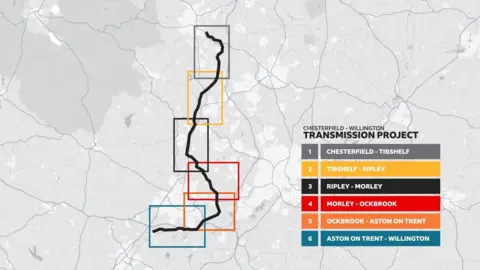
National Grid has said it needs a "stronger network" because the current infrastructure was built in the 1960s and was "not designed for today's power sources or future demand".
Hardman, who has lived in Morley for 19 years, is worried about the impact on farmers, the landscape, and National Grid "not listening" to alternatives.
She said: "There are far more pylons than they ever led us to believe. Morley in itself has gone from 15 pylons to 18 that would go straight through the village."
Hardman also argued the 164ft (50m) to 229ft (70m) pylons would cut through farmland, dominate views across the county and that construction work would be noisy, with "75% of properties" in Morley within 650ft (200m) of a pylon.
"We know we need more power, we've suggested alternative routes and National Grid ignored them," she said.
"It is not only us in Derbyshire that don't want this. Nobody would want this."
Campaigners have suggested National Grid instead uses underground cables, which it did use when it replaced 22 pylons and 8.8km (5.5 miles) of overhead cable with buried cables to restore uninterrupted views of the landscape in Dorset.
Reform UK-controlled Derbyshire County Council opposed a previous version of the pylon scheme in December and has also opposed the updated plans ahead of the second consultation.
Leader Alan Graves warned "these enormous pylons would dominate parts of Derbyshire for generations" and the visual impact "cannot simply be undone."
"These plans would industrialise swathes of rural landscape with towering steel structures," he said.
"We believe infrastructure must be delivered in a way that protects, not scars, the places people cherish."
Carol Wood, the council's cabinet member for net zero and environment, said: "We are carefully considering the details of the proposals in the latest consultation and will be responding in due course to National Grid.
"However, our position remains opposed to all these new, extremely high pylons and maintain the new cables should be put underground."
National Grid said it had altered the route between Astwith and Alfreton for the second consultation, so it now avoided "sensitive locations" such as the River Amber, Ogston Reservoir and Ogston Hall.
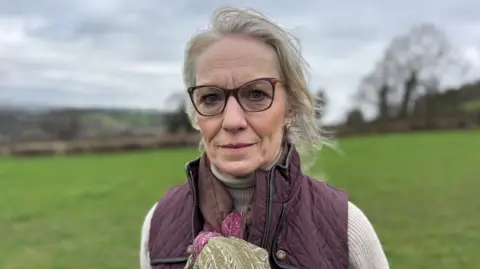
Catherine Harris from Save Amber Valley Environment (SAVE) Group, has welcomed National Grid's new proposed route.
"SAVE welcomes National Grid's decision to move away from their original proposals, which would have caused serious and unnecessary harm to this exceptional landscape and the communities that depend on it," she said.
"We recognise that the revised proposals continue to impact many people locally and have consistently argued that better routes exist that are significantly less damaging to the landscape and the local economy but also more cost effective for taxpayers."
The scale of the project means the final decision about whether it goes ahead does not lie with any local planning authorities.
Instead, the application will be analysed by an independent panel of inspectors, which would make a recommendation to the secretary of state for energy security and net zero.
If approved by the secretary of state, National Grid said construction was expected to begin in 2029, with the project set to become operational in 2031.
Follow BBC Derby on Facebook, on X, or on Instagram. Send your story ideas to eastmidsnews@bbc.co.uk or via WhatsApp on 0808 100 2210.
