Plans for 37-mile pylon project moves to next stage

 Reuters
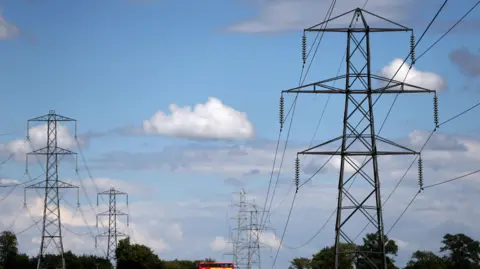
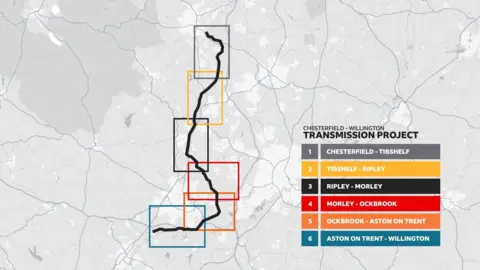
A new consultation has been launched on plans to build a 37-mile (60km) corridor of electricity pylons through Derbyshire.
National Grid wants to install new electricity infrastructure from Chesterfield to Willington.
It said following feedback from the first round of consultation in 2024, as well as further technical and environmental assessment, it was consulting on a more "defined proposed route".
It said it would also present an alternative route option between Astwith and Alfreton, "avoiding sensitive locations" such as the River Amber, Ogston Reservoir and Ogston Hall.
According to National Grid, the network in the region - largely built in the 1960s - was "not designed for today's power sources or future demand" and a "stronger network" was required.
National Grid said the project in Derbyshire was part of the Great Grid Upgrade – which it said was the "largest overhaul of the UK's electricity network in generations".
The latest proposals also set out National Grid's plans for a new high voltage substation in the vicinity of the existing Chesterfield substation.
The body said the consultation - which would build on previous feedback - would run from Tuesday to 28 April.
Nationally significant
This comes after Reform-UK controlled Derbyshire County Council voted in favour of taking a stance against the pylon scheme in its previous form in December.
Concerns had been raised about the potential visual impact, disruption and feared damage for the countryside, according to the Local Democracy Reporting Service.
However, National Grid said the project would include land for environmental mitigation and would deliver at least 10% biodiversity net gain in the area.
Leanne Evans, National Grid project director, said: "Our investment will help ensure communities across the East Midlands have the reliable electricity they will increasingly depend on.
"As demand grows, an upgraded network is needed to support everyday life, local businesses, and future jobs, while enabling more secure, cleaner, home-grown energy from more affordable sources.
"We also want host communities to see clear benefits, including funding for local projects, skills, jobs, and environmental improvements."
National Grid said the proposed project was classified as a nationally significant infrastructure project and would require a development consent order.
The scale of the project means the final decision about whether it goes ahead does not lie with any local planning authorities.
The body said an independent panel of inspectors would examine the application and would make a recommendation to the secretary of state for energy security and net-zero.
If approved by the secretary of state, National Grid said construction was expected to begin in 2029, with the project set to become operational in 2031.
Follow BBC Derby on Facebook, on X, or on Instagram. Send your story ideas to eastmidsnews@bbc.co.uk or via WhatsApp on 0808 100 2210.
