Fuel and fertiliser price rises hit farmers

 BBC
BBCFarmers in Jersey have said they are paying more for fuel and fertiliser because of price rises caused by the war in the Middle East.
But they have praised the continuation of the government's Rural Support Scheme, which was approved unanimously by the States Assembly in March.
The programme, introduced last year, aims to help the sustainability of the industry through financial support and agricultural loans.
The President of the Jersey Farmers' Union, Doug Richardson, said farmers now had "a tremendous amount of new confidence in the industry", despite the supply chain challenges.
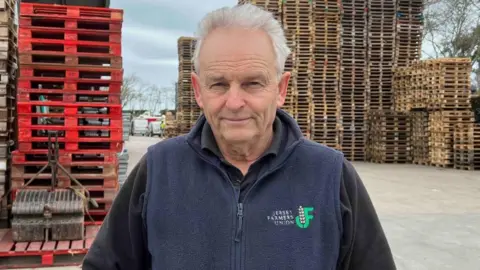
Richardson said: "The monies that were voted [on] two years ago or three years ago have proved an absolute godsend."
In his proposition to extend the scheme, Deputy Kirsten Morel said the "absence of certainty in government support has been a persistent challenge".
The funding will now continue and increase in line with inflation.
It can only end if the States Assembly votes to rescind it; a future government could not deduct the money from a budget.
Morel added: "Alongside the opportunity to increase local spend on locally produced food, this ambition could help protect Jersey against fluctuations in international food supply chain costs."
The scheme has given more than a hundred businesses grants and loans to help them invest and deal with rising costs, including fuel, fertiliser, and the living wage.
Last year, nine applications for loans were recommended for approval, at a total of more than £4m.
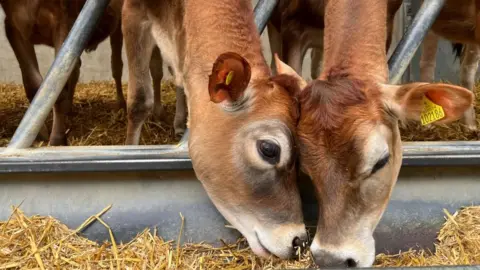
Paul Houzé runs Lodge Farm, with a herd of 200 dairy cows.
He said the financial help from the government was important so the industry continues to progress.
He said the loan scheme would have "a huge affect" and give farmers the confidence to invest and borrow money.
He added: "At the end of the day we're producing food and our public and our export markets always require that food and it's up to us to try and produce it as cost-effectively as we can."
He said fuel prices had risen by 16 or 17%, and hoped they would not rise much more.
"We can't avoid having to buy fuel," he added.
"When the crops need to be put in the ground, there's just no alternatives - we've just got to crack on and take the price rises on the chin."
Oil prices have fluctuated further this week amid threats from the United States to destroy critical infrastructure in Iran, and reports of US-Iran talks over a potential ceasefire.
Houzé said the increased costs were not being passed on to consumers yet but the worst impact could still be to come.
"The manufacture of some of the fertilisers, or the price of it, is heavily dependent on the oil price," he said.
"Most farms on the island are fairly well stocked with fertiliser this time of the year but the real impact will come at the back end of this year when we have to start buying for next year's crops."
Follow BBC Jersey on X and Facebook. Send your story ideas to channel.islands@bbc.co.uk.
