Human wee made into fertiliser to help grow new forest

 Getty Images
Scientists behind a pioneering project to turn human wee into plant fertiliser are hoping to grow their first forest.
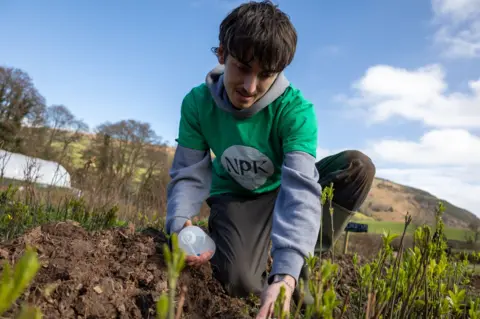
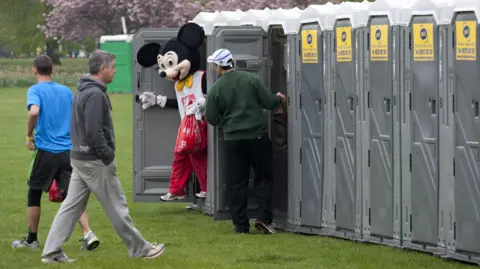
Bristol-based start-up NPK Recovery collects urine from portable toilets during festivals and events, transforming it into fertiliser to help grass grow back on the fields afterwards.
Now, as part of a UK-first Forestry Commission-backed trial, the team plans to grow thousands of native British trees for a new woodland in Monmouthshire, south Wales.
It comes as fertiliser prices have soared due to the war in Iran, putting pressure on farmers and growers.
 NPK Recovery
Based out of the University of the West of England (UWE), in recent years the team has been collecting urine at events like the London Marathon and Boomtown Festival.
They use the nitrogen and other nutrients in wee to produce fertiliser on site, easing the burden on sewage systems as the events run and reducing chemical use.
The product - which, you may be surprised to read, doesn't smell - has already been used to grow grass and crops, with field trials suggesting it can be as effective as synthetic fertiliser.
But this will be the first time it has been used on trees, as part of a three-year project funded by a £435,627 Forestry Commission grant to support innovation in the sector.
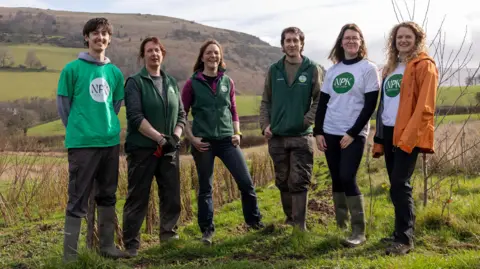
The company has partnered with Welsh charity Stump up for Trees and its tree nursery on the outskirts of Abergavenny.
The plan is to use the fertiliser to help grow 4,500 native British trees - such as beech and Scots pine - to be planted in Bannau Brycheiniog national park, also known as the Brecon Beacons.
 Getty Images
Lucy Bell-Reeves, NPK Recovery's co-founder, said using a waste product to grow trees was "a circular solution that can revitalise our struggling native species."
Pests, pathogens and invasive species have decimated native tree populations, she explained - pointing to Woodland Trust data suggesting just 7% of Britain's native woodlands are in good condition.
"I love the idea that by the end of this three-year project, revellers and runners will have created a fledgling Welsh forest, which could flourish for hundreds of years," she said.
"We need to stop flushing crop and tree-growing nutrients down the loo, and start using them to increase our fertiliser security. After all, we're not about to run out of urine any time soon."
 Getty Images
Author and journalist Rob Penn, who co-founded Stump up for Trees said he was "very excited to be involved in this ground-breaking project, which has implications for the future of sustainable forestry".
The farmer-led charity has recently celebrated planting its 500,000th tree, and is aiming for a million.
 NPK Recovery
Before you get any ideas, weeing in your garden in the hope it'll help the plants grow isn't the best plan.
"Urine does naturally contain all of the nutrients that plants need such as nitrogen, phosphorus and potassium, but it also contains a variety of contaminants," explained Olivia Wilson, NPK Recovery's research and development scientist.
The company's process removes the contaminants and turns the nutrients into forms that can be taken up by plants, creating an "effective, safe - and odourless - fertiliser", she emphasised.
At a time when the conflict in the Middle East has put pressure on the availability and price of imported synthetic fertiliser, Wilson said the project hoped in the long term "to provide a bit of fertiliser security for growers in the UK who are looking for a more sustainable source for their fertiliser needs".
