How one Lancashire city has changed

Emma StanleyNorth West
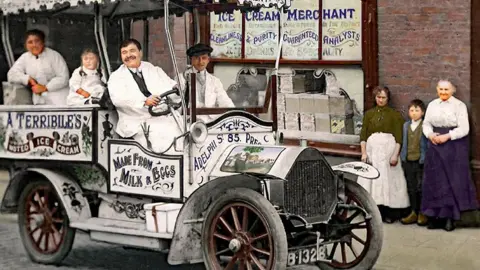
News imageEdwin Williams The same restored image shows the black and white signage on the car and the smiling people much more clearlyEdwin Williams
Edwin's restored image of Terribile's Ice Cream car shows the detailed signage on the vehicle

A man who spent years painstakingly restoring and recolouring historical photos of a Lancashire city has said he wanted to help other people "see themselves and the world around them differently".

Retired British Aerospace engineer Edwin Williams has transformed images and created original watercolours to show the changing face of Preston and the surrounding areas.

Edwin Williams spent seven years selecting, restoring and recolouring the images, currently on display at the Harris Museum.

The 72-year-old, from Deepdale, was inspired by his late father, who would carefully colour photographs with ink, and his mother, an avid collector of Preston memorabilia and photographs.

Sharing some of his images, he said: "Whenever I can help other people to see themselves and the world around them differently, it brings me great pleasure."
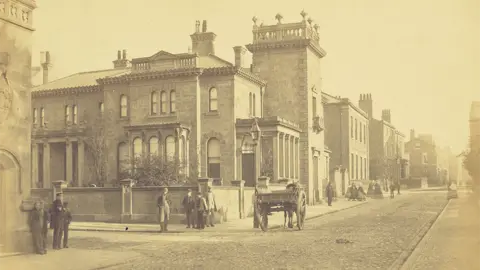
News imageEdwin Williams Sepia image of Winckley Square and Cross Street in Preston in 1862 showing an impressive large square two-storey building with a tower to the right, a low wall to the front and a cobbled street. There are groups of smartly-dressed men at the corners of the street and a horse and cart is going past to the rightEdwin Williams
Original image of Winckley Square and Cross Street in Preston in 1862. The original occupants of the Square were the families of professional gentleman and wealthy manufacturers
News imageEdwin Williams Head and shoulders of Edwin Williams who sits on a rocky beach with a grey sea in the background. He is smiling, has very short white hair and glasses and is wearing a dark coatEdwin Williams
Edwin Williams was inspired by his late father, who would carefully colour photographs with ink
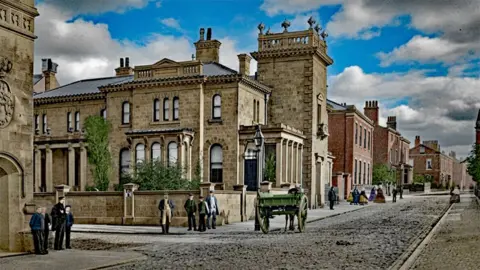
News imageEdwin Williams Edwin's restored image of Winckley Square and Cross Street in Preston in 1862. It is the same as the previous sepia image but the colours are much bolder, brighter and clearer. He has made the square building stone and houses going off in the distance are now red brick. The horse cart is green.Edwin Williams
Edwin's restored image of Winckley Square and Cross Street in Preston in 1862 showing the Italian villa that was home to cotton manufacturer William Ainsworth
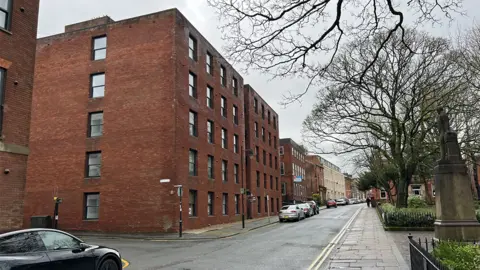
News imageEdwin Williams Winckley Square and Cross Street in Preston as it is today. A large five story, plain, square red brick building replaces the stone one with an asphalt road with parked cars and trees to the right, bare of leavesEdwin Williams
Winckley Square and Cross Street in Preston as it is today, home to solicitors, a Jesuit presbytery and restaurants
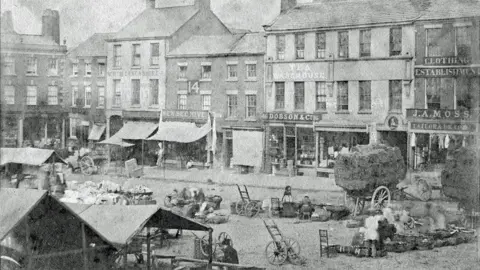
News imageEdwin Williams A grainy black and white image of Preston Market Square showing a row of shops with cloth awnings in the background and stalls, carts and wheeled trolleys in the foregroundEdwin Williams
Original photo of Preston Market Square, site of the Harris Museum in 1850. The area has been the historic civic and commercial heart of Preston for over 800 years
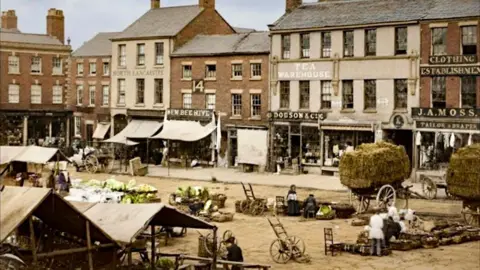
News imageEdwin Williams The restored image of Preston Market Square showing a row of shops with cloth awnings in the background and stalls, carts and wheeled trolleys in the foreground, but coloured in shades of brown and green Edwin Williams
Edwin's restored image of Market Square
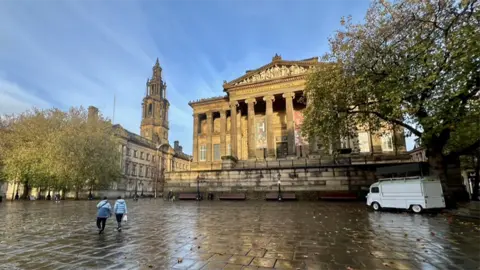
News imageEdwin Williams The site today shows a large paved flat area in front of a church to the left and the facade of the Harris Museum. A large square stone building with pillars at the entrance above a set of steps. Two women are walking past and there is a white van parked to the right under a treeEdwin Williams
Market Square today showing the Harris Museum which has recently undergone a £16m restoration
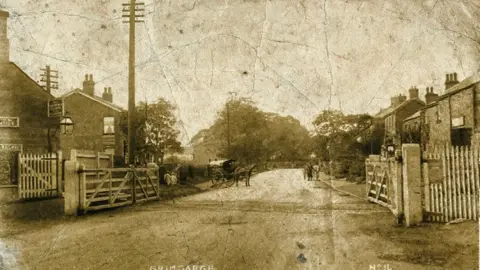
News imageEdwin Williams Original image of Grimsargh in 1907, a sepia picture showing a wide country lane in the middle with a horse and cart to the left. There are buildings either side with large gates folded back across the dirt roadEdwin Williams
Original image of Grimsargh in 1907. The village is situated midway between Preston and Longridge and has one of the largest village greens in Lancashire
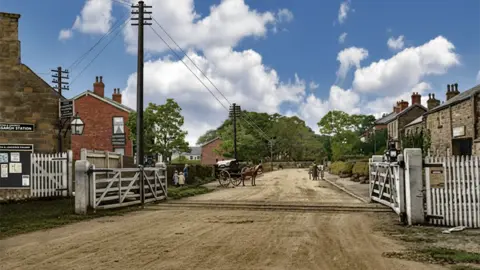
News imageEdwin Williams Edwin's restored image of Grimsargh in 1907 shows the same dirt road but the houses are coloured in brown and red and large leafy green trees in the distance can be seen more easilyEdwin Williams
Edwin's restored image of Grimsargh in 1907 highlights the dirt road and leafy trees
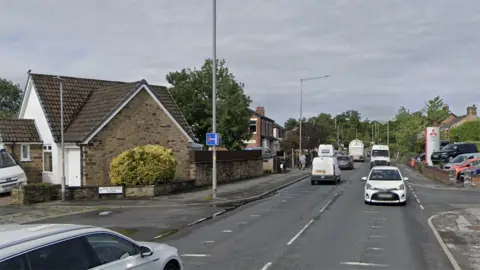
News imageEdwin Williams Grimsargh today showing a busy asphalt road, a car garage to the right and a large bungalow to the leftEdwin Williams
Grimsargh as it is today, with cars replacing horse carts
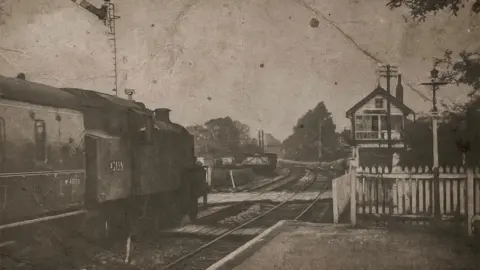
News imageEdwin Williams A grey grainy photo of New Longton and Hutton railway station in 1963 showing a train on the tracks to the left and the signal box building to the right behind a white picket fenceEdwin Williams
Original image of New Longton and Hutton railway station in 1963 shortly before it closed as part of Beeching's cuts
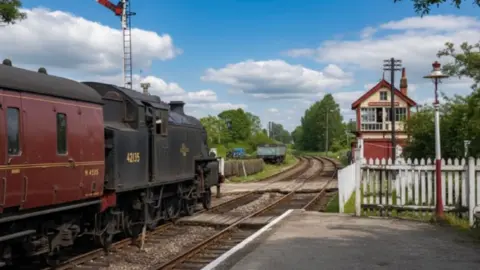
News imageEdwin Williams The restored photo of New Longton and Hutton railway station in 1963 showing a train on the tracks to the left and the signal box building to the right behind a white picket fence. The train is now black with a deep red carriage, the signal box is white and red beside greenery and the sky is blueEdwin Williams
Edwin's restored image of New Longton and Hutton railway station in 1963
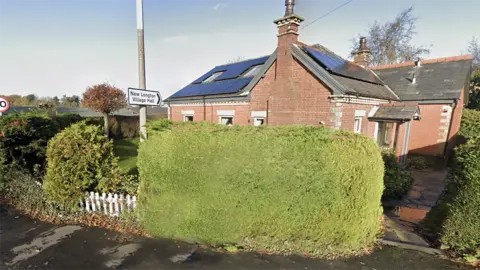
News imageEdwin Williams The site of New Longton and Hutton railway station today is a one storey red brick building mostly hidden by a large neat hedgeEdwin Williams
The site of New Longton and Hutton railway station today. It closed in 1964 and a couple of years later the tracks were lifted, and the buildings were demolished
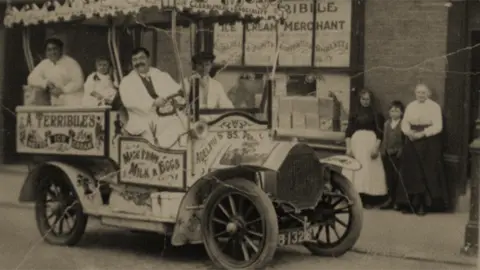
News imageEdwin Williams Terribile family with their motorised ice cream vehicle in 1917. There are four people smiling in the open top car all wearing white jackets and they are parked outside the shop watched by two women in long skirts and aprons with a small boy between themEdwin Williams
Original image of the Terribile family with their motorised ice cream vehicle in 1917
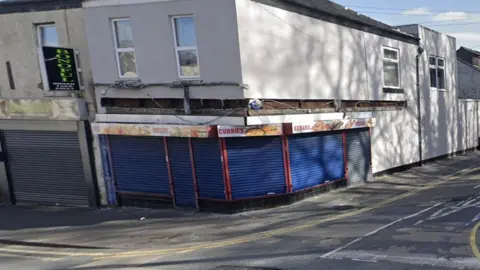
News imageEdwin Williams The site of Terribile's Ice Cream shop today, a blue shuttered kebab shop on the corner of an ashalt road with double yellow linesEdwin Williams
The site of Terribile's Ice Cream shop on Adelphi Street as it stands today

Listen to the best of BBC Radio Lancashire on Sounds and follow BBC Lancashire on Facebook, X and Instagram. You can also send story ideas via Whatsapp to 0808 100 2230.