University College London at 200: A potted history

 Getty Images
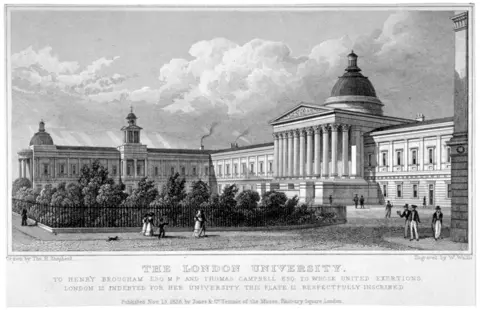
As University College London marks 200 years since it was founded, we look back at the pioneering moments that helped shape one of the UK's most influential universities.
Two weeks after it was founded in 1826, an advert appeared in The Times newspaper about the university.
"The London University is at this time an object of serious and important consideration with all who think deeply respecting the spread of knowledge in the British empire.
"The writer, though not sparing in his exposure of the abuses which prevail in our great national institutions at Oxford and Cambridge, clearly shows that the London University neither aims at becoming, nor ever can become, their rival."
In 2026, University College London (as it became known in 1836) is ranked ninth in the Times UK university rankings, just five places below the Oxbridge institutions, which are joint fourth. In 2009, it overtook Oxford in the rankings.
First for women
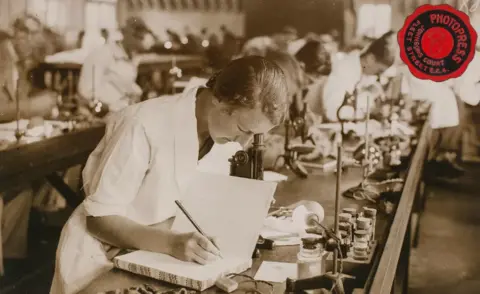
Having become the first university open to applicants regardless of race, class or religious background, in 1878 UCL became the first university in the country to admit women in all faculties except medicine.
Nine were initially offered a place to study, including politics student Eliza Orme, who was later appointed senior lady assistant commissioner to the Royal Commission on Labour.
 UCL
UCLIn a letter to a national newspaper on 16 February of that year, Emily Shirreff wrote: "That many men should remain hostile is what all must have expected; that numbers of women should remain indifferent is, considering their traditional surroundings and associations, a matter of surprise to none; but these facts remain true - that the noble resolution of the university was carried, not hurriedly nor with a doubtful victory; that it was the crowning act of a long contact and passed by a majority of 110 votes."
A Times newspaper editorial five months later mused: "Fifty years hence, perhaps, the university education will be accepted with as little misgiving as unsectarian education is now.
"It certainly will be no small credit to University College to have solved two such problems in the first century of its existence."
First students' union
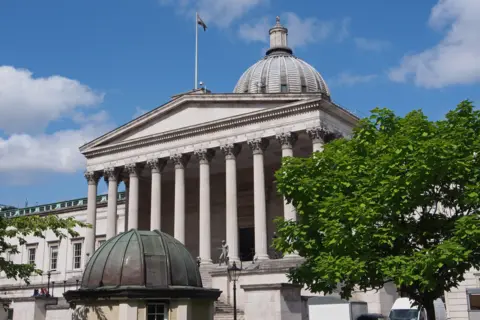
In another first, the university also established a recognised students' union before anywhere else in England.
Although Liverpool Guild of Students was set up in 1892, a year later the UCL union was the first to receive official recognition. However, it was only open to men.
Set up to protest about inadequate sports facilities, it wanted "the promotion of social intercourse and of the means of recreation, physical and mental, of the students of the University College, and the financial success of students' clubs".
 Getty Images
It had 133 members, or 10% of the student population, providing a template for others to follow. It was the first "to bring these elements of student life together under one umbrella, making it genuinely pioneering", according to the union itself.
In 1897, a separate women's union was formed, led by Rosa Morison, a key figure in the suffrage movement, who served as president until 1908.
Hospital links
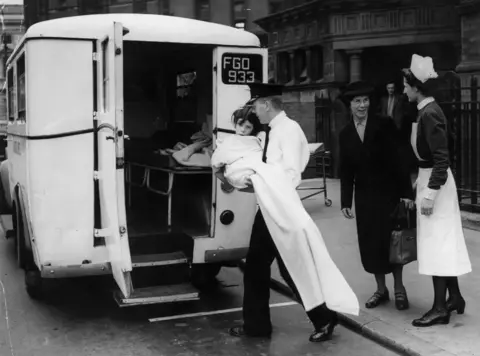
The first University College Hospital (UCH) opened in 1837, having been founded as North London Hospital three years earlier. The first operation in Europe carried out under anaesthetic took place there in 1846.
The university was heavily bombed during World War Two with the Great Hall being destroyed. An unexploded bomb was discovered on its grounds after the war, forcing an evacuation.
 Hulton Archive via Getty Images
Until the National Health Service was formed in 1948, hospitals had been run as charities or by local authorities. UCH was designated as a teaching hospital.
In 1994, the University College London Hospitals NHS Foundation Trust was set up and included the Hospital for Tropical Diseases.
In 2005, the current site of University College London Hospital (UCLH) was opened.
Within three weeks, it was treating 61 patients injured in the 7/7 bombings.
Acclaimed alumni
- 1868: Alexander Graham Bell, inventor of the telephone
- 1937: Francis Crick, who identified the DNA double helix
- 1957: Sir Quentin Blake, illustrator and author
- 1976: Baroness Scotland, first female Attorney General
- 1983: Ricky Gervais, comedian, actor and writer
There have also been 33 Nobel laureates.
Listen to the best of BBC Radio London on Sounds and follow BBC London on Facebook, X and Instagram. Send your story ideas to hello.bbclondon@bbc.co.uk
