Voluntary student loan repayments rise in England

 BBC
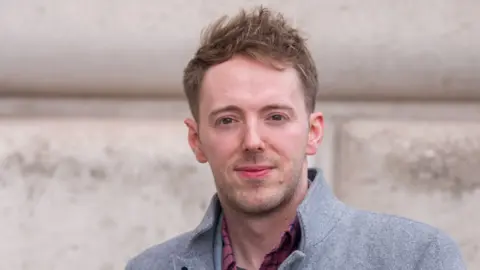
BBCLuke England recently became a father, and he's already thinking about setting up a university fund for his new baby.
But first he wants to try to clear his own student debt - by repaying £75 on top of the £250 that already comes out of his pay cheque every month.
"There's a hundred other things that I could put that money to," Luke says. "If I wasn't to make any voluntary payments, I would still be paying my loan off in about 12 years' time. By deciding to add voluntary payments, I can look to clear the debt within six years."
The amount of money graduates are voluntarily paying to try to clear their post-2012 student debt has risen, BBC analysis of Student Loans Company data has found.
The voluntary repayments by graduates who took out what are known as Plan 2 loans more than trebled between the financial years 2017 and 2025 - rising from £141.7m to £491.1m.
Plans 2 loans were available to students who started courses in England between September 2012 and July 2023. They are still issued in Wales.
Voluntary repayments are being made by students from England who studied in the UK, or EU students who studied in England.
MoneySavingExpert.com founder Martin Lewis warned last week that only higher earners could benefit from making voluntary repayments, and most should not to be "panicked into overpaying".

Luke is 34 and works as a chartered surveyor in London. He went to university in 2012 and, like others from England that year, took out a new Plan 2 student loan.
But Luke chose to study a two year Higher National Diploma in building surveying at the University of Greenwich - with annual tuition fees of about £6,000.
That meant he wasn't as heavily impacted by the £9,000 tuition fee cap rise as many other students were.
As a result, Luke left university with about £19,500 of debt, compared with many who graduated with £40,000 or more.
Still, he found the interest being added on to what he owed "overwhelming", and began making voluntary repayments from the get-go.
"It was difficult to not focus on it and be stressed," he says.
Luke is now a high income tax bracket earner and owes £16,800. He thinks he still would have paid off his loan before it was wiped, even without the voluntary repayments.
"Who really knows what the future holds? But based on what I do know and what I do have control of, making early repayments will make a better future for me," he says.
Luke hopes that by the time his loan is paid off, in six years' time, he can put what he used to pay for his student loan towards his child instead.
Martin Lewis said in his BBC Radio 5Live podcast that he knew of people who had been "panicked into overpaying" and for most borrowers it would be money "flushed" away.
"The fact that they have paid off £1,000 or £2,000 will not be enough to change the fact that they won't clear the loan within the 30 years before it wipes," he said. "And that means they will not pay a penny less in future because they overpaid by £1,000 or £2,000. That money has been thrown away.
"The higher income you have, the more likely to clear within the 30 years and the more likely therefore overpaying becomes realistically beneficial for you."
He told BBC Newsnight that Chancellor Rachel Reeves' decision to freeze the Plan 2 repayment threshold at £29,385 for three years from April 2027, announced in November's Budget, was "a breach of natural justice".
Reeves argued the move was "fair and proportionate" for getting "the balance right between tax and spending".
Welsh First Minister Eluned Morgan has said Wales wouldn't join England in freezing the threshold.
Labour MP Luke Charters told Parliament last month that the communication around Plan 2 loans felt like a "mis-selling scandal waiting to unfold."
The Rethink Repayment campaign wants income freezes reversed, the interest rate on student loans to be capped at the Consumer Prices Index measure of inflation, and a lower repayment rate of 5% of earnings above the threshold.
"It's made almost impossible for people to actually pay down their loans for Plan 2, unless you're earning a very, very high salary," said the campaign's founder Oliver Gardner.
"That's really unfair because young people went into university appreciating that they would have to contribute to the cost, but this has now turned into a 30-year tax that's weighing people down even aer they've paid back what they borrowed."
The amount of money voluntarily repaid has risen as the number of Plan 2 borrowers has grown.
The Student Loans Company does not provide a breakdown of how many Plan 2 borrowers are making them or how much they are individually repaying.
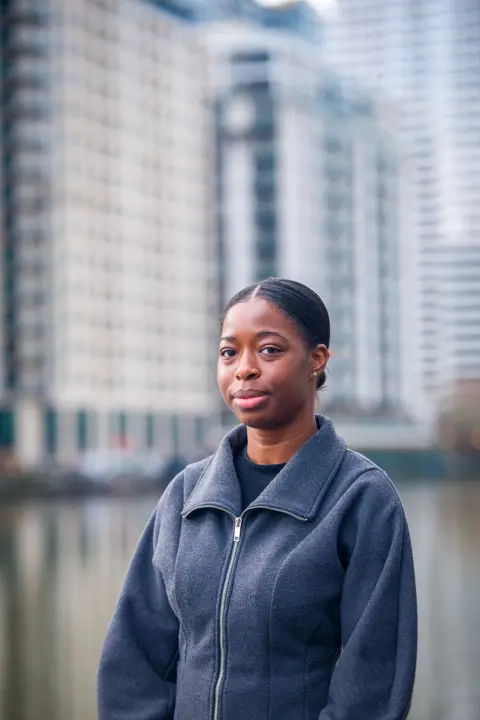
Hilary Iyoha, 29, an associate in an investment bank in London, studied money, banking and finance at the University of Birmingham between 2014 and 2017 and now earns "multiple six figures".
With monthly repayments of more than £700, her outstanding balance was £11,000 by the time she paid it off last year, following a conversation with colleagues who had done the same.
"I think that we are sort of exceptions, not the rule," Hilary says. "I knew I was going to pay off that loan within the next year or two. So in my mind, just to avoid the interest, I decided to pay it off."
Charlene Young, senior pension and savings expert at investment platform AJ Bell, said some of the rise in voluntary payments would be down to top-earning graduates like Hilary, but that it was "very likely that parents and family are stepping in to foot the bill".
She said that created "an even bigger gap between those who have family financial support and those who don't".
"Care is needed" when weighing up whether to overpay, she said, adding that two thirds of students who started university in 2022 are expected to see their balance written off, meaning that money could have gone to better use elsewhere.
Nick Bell, 74, a retired chartered accountant from Chester, received a lump sum in 2020 from the sale of his shares in a private company and used it to pay off the £51,000 balance on his son's Plan 2 student loan.
He said it seemed "a rational and fair thing" to do.
"I didn't think he should be saddled with it, so I paid it off."
Alex Stanley, vice president for higher education at the National Union of Students, said it was "not surprising that any graduate who can is making voluntary payments", because of the high levels of interest.
"They have been able to escape a broken system, while millions more remain trapped," he said.
The Student Loans Company advises customers to speak to a financial adviser if they are unsure whether they should make extra repayments or not.
The Department for Education said the loans system was designed by previous governments and "the fiscal situation this government inherited means we've had to make tough choices".
"Threshold freezes are part of the hard but fair decisions needed to protect taxpayers and students," a spokesperson said.
They said the system was "heavily subsidised by government" and "low-earning graduates will always be protected", adding: "Graduates earning some of the highest salaries in the country contribute more towards the repayment of their student loan than workers who did not attend university or graduates on the lowest salaries."
Additional reporting by Tom Curd
