My three-hour university commute is worth the £7,000 saving on halls

 Amelka Zambrzycka
On a packed morning train to Manchester, 19-year-old Amelka Zambrzycka is surrounded by commuters heading into work.
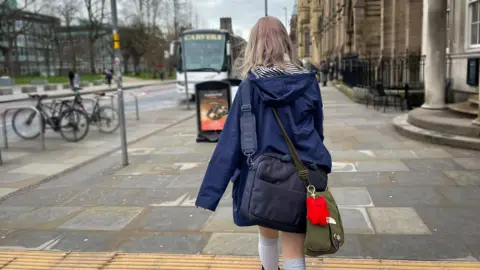
There isn't a suitable bus from her mum's house in Horwich, on the other side of Bolton, so she has just walked the 25 minutes to the station - as she does every morning - despite the freezing weather.
But Amelka isn't on her way to work. She's a first-year biology student, one of hundreds of thousands of undergraduates who now choose to live at home rather than paying for university halls.
With the Ucas application deadline around the corner on Wednesday 14 January, thousands more will be considering whether doing the same might be worth it for them, too.
More than 700,000 "commuter students" are at universities across the UK.
It has led to universities like Manchester creating dedicated social spaces for them to hang out in between lectures - complete with lounge seating, study areas, kitchen facilities, lockers and showers.
It's just before 08:30 when Amelka arrives at the University of Manchester's commuter lounge.
She can make a cup of tea or have some breakfast in the kitchen area, cram in some last-minute work in the study pods, or even grab a shower after an early morning gym session.
 Amelka Zambrzycka
Many of her course mates are only just getting out of bed in their nearby halls of residence, ready for the first lecture of the day at 09:00.
But Amelka has already been up for two hours, having just completed the first of two 90-minute journeys she takes every day between her mum's house and the city centre campus.
The University of Manchester's own cost of living estimates suggest a first-year student can expect to spend £7,875 on accommodation alone in 2025/26.
Together with everything from groceries and takeaways, to clothes and course materials, first-year students in Manchester this year will have estimated costs totalling £13,685, the university says.
 Amelka Zambrzycka
Renting and living costs vary widely across the country, but have been rising across the board in recent years.
The Higher Education Policy Institute (Hepi) says students in England now need £61,000 over the course of a three-year degree "to have a minimum socially acceptable standard of living".
Amelka's mum does not charge her rent, and even though she buys her own food and will spend about £700 this year on public transport, her costs are a fraction of what they would be if she lived nearer university.
The latest figures from the Higher Education Statistics Agency (HESA) suggest the number of students who live in their own home, or their parents' home, during term time has been steadily increasing in recent years, accounting for more than 40% of UK students in 2023/24.
 Dr Nicholas Weise
Nick Weise, who runs the university's commuter peer mentoring scheme, says about a quarter of the student population are commuters.
The new lounge, which opened at the end of 2024, has been designed as a "home away from home", he says.
"Some of the feedback we got was that commuters would have to arrive maybe an hour early, in case there was traffic or delays.
"If their first lecture was at 09:00, they were arriving at 08:00, and they had nowhere to be. They were just wandering the streets.
"So now we have that commuter lounge open from 08:00 where they can come, just have a little rest, a little place to land and recharge, store their food."
With some students taking multiple buses and trains to get to university every day, from as far as Morecambe or Derby, he says it's important commuters have a place they can be between lectures.
For Amelka, it is "one of the best things to happen" at the university.
 Amelka Zambrzycka
"I live in there, that is my house," she says.
"[Without it] I would have nowhere to go, other than the library, but you can't really socialise in a library.
"In the lounge you can always just come in, strike up a conversation with a random person, and you always have something in common because they're a commuter. You can complain about bus strikes, train delays, weird disruptions.
"Everyone loves it, it's perfect."
Every day, come rain or shine, Amelka leaves her mum's house at about 07:00 to walk the 25-minute journey to the train station.
It takes her another 25 minutes on the train to get to Manchester Oxford Road station, before a further half-hour walk to the other side of campus for her first lecture of the day.
After her lectures, she often stays in the commuter lounge to socialise or study, normally leaving when the space closes at 18:00, arriving home at about 20:00.
She says it's worth it and her mental health has been boosted by the regular sunlight and 15,000 steps she walks each day.
But there are downsides.
"It's so much harder to socialise when you're a commuter," she says.
"Most students that I've met, their social life is going to clubs, going to bars, to pubs really late at night, coming to each other's halls. It's all nightlife.
"It's not safe for me to do that hour-and-a-half commute in the middle of the night."
 Amelka Zambrzycka
But she's made plenty of friends through the university's commuter student network - about 40 from one group chat alone.
"I felt so left out at the start of uni, I was so worried about making friends," she says.
"I'm so much more confident now."
She says she is still working out her options for next year, and everything is still on the table - including a year in accommodation.
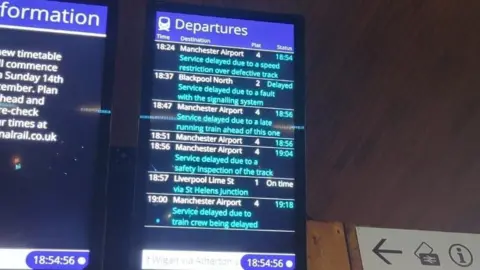
"There have been multiple times when my train just hasn't shown up for two hours, when they're supposed to come every half-hour," she says.
"So, I am thinking about it, living with friends.
"But I also bought a three-year railcard - so I need to get my money's worth."
