Project to save Scottish wildcats had 'successful' first year

 Scotland's The Big Picture
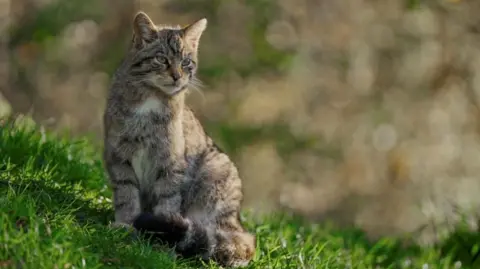
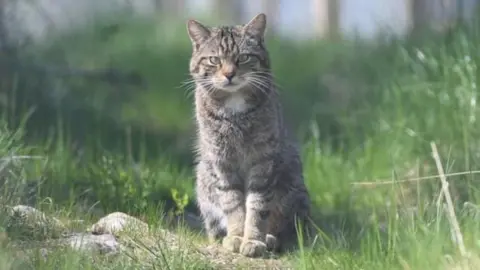
A Scottish wildcat conservation project has been "highly effective" in helping to grow the species' population in the Cairngorms, a new report suggests.
Saving Wildcats, which is led by Royal Zoological Society of Scotland (RZSS), bred wildcats in captivity at the Highland Wildlife Park, near Aviemore, before releasing them into the wild.
A study published in IUCN's Cat News looked at the project's first year. It said all but one of the 19 cats survived their first 10 months.
Two kittens did die just a few months later, after the research had finished, with one knocked down on a road and the other dying of starvation.
In 2018, scientists warned that Scotland's wildcat population was "functionally extinct".
Breeding with feral domestic cats, disease and habitat loss were blamed for reducing numbers.
Saving Wildcats was introduced to improve survival and reproduction rates. It is now in its third year.
The ICUN study suggested that after their first 10 months cats experienced little injury or disease, and they put on an average increase of 20% in body weight.
The report claimed the captive breeding programme had been an "effective" way of reintroducing the species into the wild in Scotland.
However, it warned that hybridisation - wildcats interbreeding with domestic cats - still remained a threat.
The project has been working with the charity Cats Protection to trap, neuter and vaccinate 132 feral domestic cats in an effort to combat this problem.
 Saving Wildcats
 Saving Wildcats
Scotland's nature body NatureScot has welcomed the study.
Species project manager Dr Martin Gaywood said: "We've made huge strides for wildcat conservation in Scotland, and we now have the science and evidence to back up our theory that wildcats can be restored through careful planning, breeding and release."
But he added that uncertainty and challenges remained.
Dr Helen Senn, of RZSS, added: "Studies like this help to illuminate just how big the challenge was in year one and how successful the project has been so far - against all odds."
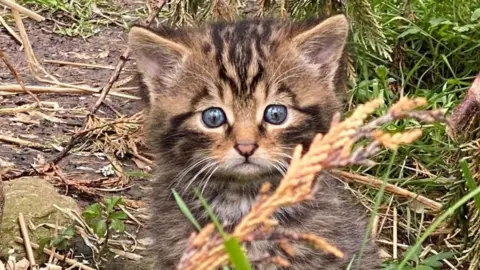
Saving Wildcats has released 46 cats into the Cairngorms National Park over the last three years, and some of the females have gone on to produce litters of kittens.
