'Dead matter' art takes over National Trust house

 James Beck
Artwork made of organic ‘dead’ matter is on display at a National Trust house.
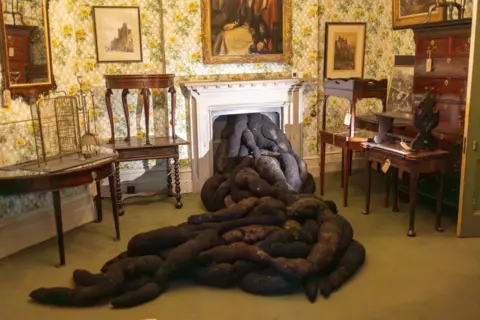
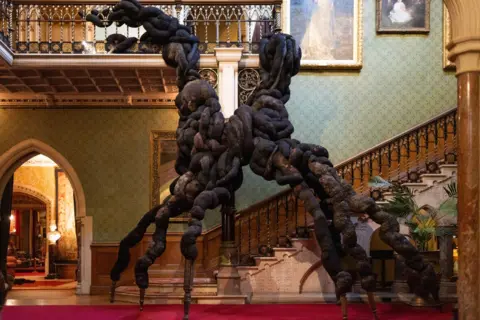
‘The Uninvited Guest from the Unremembered Past’ is a new exhibition open at Tyntesfield House, North Somerset.
It includes a series of installations made of furniture legs, wool and horsehair which are “winding their way around the house.”
National Trust says the artwork, which has split opinion online, is a chance for visitors to “experience something different.”
Artist Nicola Turner says she was inspired by the house’s huge collection of more than 70,000 objects.
“I have been fascinated by seeing the broken items previously owned by the Gibbs Family and in store at Tyntesfield,” she said.
“The glimpses beneath the tears in fabric. The stuffing breaking free. The bowels of the furniture, the layers of materials."
The installations are seen weaving around objects like furniture, books and ceramics.
 James Beck
Some visitors on Facebook said they “love” the artwork, while others have said it has put them off visiting the property.
Responding to reaction online, a National Trust spokesperson said: “We want to offer visitors the experience of seeing Tyntesfield house in a new way.
“Temporary installations such as this provoke thought and conversation and give visitors the chance to experience something different.”
The exhibition is on show in September and October in the grand public rooms, and bedrooms and storerooms which are not usually open to the public.
Follow BBC Somerset on Facebook and X. Send your story ideas to us on email or via WhatsApp on 0800 313 4630.
