Maverick newspaper editor 'paved the way for Manx democracy'

 MNH
MNHA maverick newspaper editor jailed in the 1800s for criticising the then self-appointed members of the House of Keys is widely credited as playing a significant part in the Isle of Man's journey to democracy.
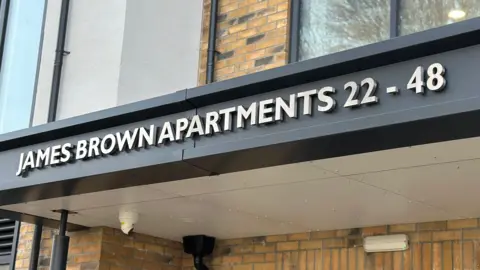
Last week, the newest housing development in Douglas was named after James Brown as Douglas Council officially opened a block of 48 apartments in the Williston part of the Manx capital.
Who was James Brown?
The grandson of a freed slave, Brown was born in Liverpool in 1815 and went on to find employment as a newspaper printing compositor.
After marrying a Manx woman, Eleanor Jane, he moved to the island in 1846, going on to found the Isle of Man Times in 1861.
Social history curator for Manx National Heritage, Katie King, said the island's newest newspaper was "reformist" in nature.
What was so different about it?
At the time, Members of the House of Keys (MHKs) were not popularly elected, said King.
Instead, they were self-selected from the landed gentry and wealthy families "who were married into each other to keep power amongst certain classes".
Although King said newspapers challenging the status quo were not necessarily unusual, the Isle of Man Times "really did hit a time when the island was changing".
"There was definitely agitation in the air when he set up this newspaper, and predominantly he was challenging the House of Keys."
 MNH
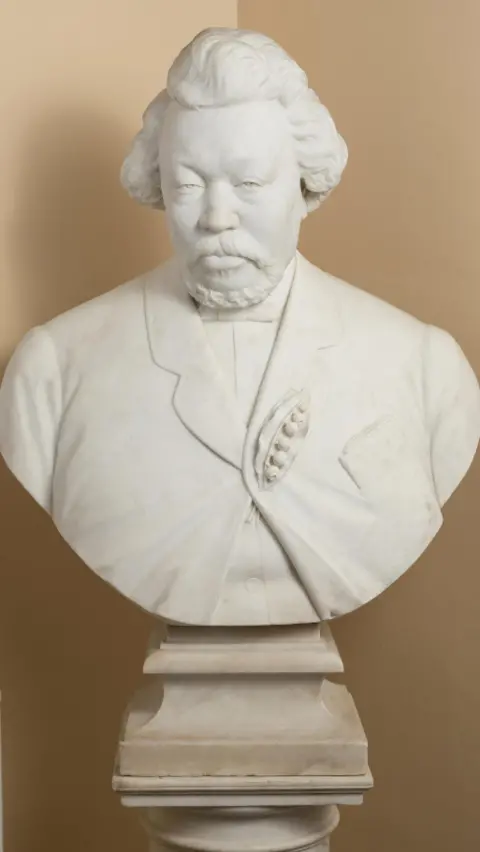
MNHHow did he target MHKs?
King said Brown used his newspaper to write about how "scurrilous" the national politicians were, waging a campaign to have them popularly elected.
That criticism strengthened after MHKs rejected the Douglas Town Amendment Bill, which would have given Douglas Commissioners – who had responsibility for much of the island's tourism industry – additional powers.
That debate saw the local authority dismissed as only being fit to look after donkeys on the shore – after which Brown likened the MHKs themselves to donkeys.
Why was he thrown in jail?
The House of Keys had become "very cross with him", King said, accusing his newspaper of "containing certain libellous and scandalous paragraphs" including calling them "self-elected imbeciles".
On 16 March 1864, Brown was summoned to appear before MHKs, charged with "contempt of this House and a breach of its privileges", and sentenced to six months in prison at the Gaol of Castle Rushen.
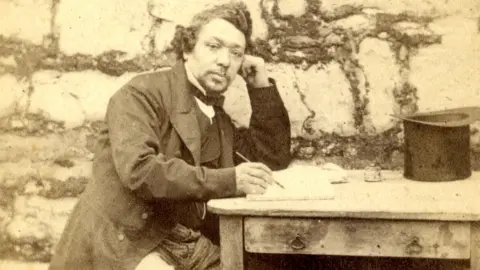
King said during his imprisonment he paid a photographer to take pictures of him "looking very splendid, as a well-dressed political prisoner", which were used as a form of "propaganda" sent to the UK parliament.
A subsequent appeal saw him serve less than a third of his sentence, with the Queen's Bench ordering his release on 7 May.
He also successfully sought damages against the MHKs who signed the warrant which led to him being jailed, and was awarded £500 for wrongful imprisonment.
 MANX SCENES
What happened after his release?
Brown continued his crusade as a political activist through the Isle of Man Times.
He was still at the helm of the newspaper when the first public election took place on the island on 3 April 1867. Only male landowners were given the right to vote, however.
King said although that was "a tiny general election", it was "still a step to democracy".
"Today Brown is credited for that, as being highly instrumental in bringing about government reform," she said.
Ultimately, it paved the way for its extension to women landowners in 1881, before all adults were given the right to vote in 1919.
"Essentially he was a bit of a maverick and a reformer, and I think we all hold him with great respect," King added.
What do his descendants think?
After Brown died in 1882, the Isle of Man Times stayed in the family for the following two generations.
Visiting the island for the recent official opening of the apartment complex bearing his name, Brown's great-great-great grandson Christopher Brown said the family was "very proud" of his legacy.

He said, as the Isle of Man Times "went out of the family" when he was a child, it was "only as you get older that you tend to delve into the history and what he stood for in terms of democracy".
"I know I speak for the whole family," he added, "we're very proud of his achievements.
"He was in prison for what he believed in, and I think that kind of moral courage is needed today more than ever."
The diary kept by Brown during his imprisonment, along with a number of other artifacts, can be found in the national library and archives held by Manx National Heritage.
Read more stories from the Isle of Man on the BBC, watch BBC North West Tonight on BBC iPlayer and follow BBC Isle of Man on Facebook and X.
