Exclusion zone set up to protect endangered birds
 David Andrews
People are being asked to keep their distance at one of the island's coastal beauty spots, to protect endangered birds nesting.
Manx Birdlife has implemented an "exclusion zone" around Langness during the ground-nesting season from March to August.
Of the island's 332 known bird species, more than 200 have been recorded at the southern peninsula.
Manx BirdLife's Allison Leonard said: "If you speak to any birdwatcher they will tell you that Langness is one of the best places to go birdwatching on the island."
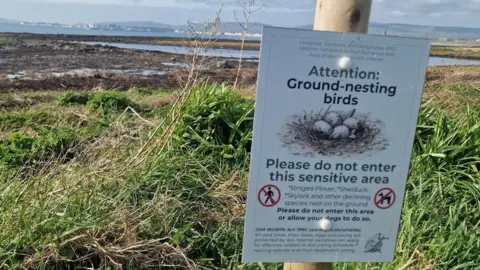
To safeguard important nesting areas along the coast, signs and temporary rope barriers have been put up in key locations.
The measures are aimed at reducing any disturbance to breeding birds, particularly species considered vulnerable or specially protected under Manx wildlife legislation.
 Manx Birdlife
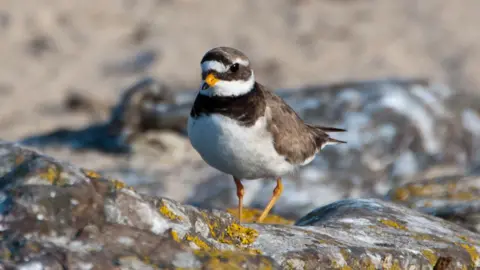
Leonard said one of the main species the initiative aimed to protect was the ringed plover, a small coastal bird that nests directly on beaches and shingle.
Because their nests are difficult to see, they can be easily disturbed by walkers, dogs or other activity, she explained.
Leonard said ringed plovers were among the island's "schedule one protected species", meaning disturbing them at the nest is an offence under the island's Wildlife Act.
'Responsibility to protect'
She added that protecting wildlife was important because of the unique range of species found on the island.
"The Isle of Man is home to some amazing wildlife and we should all have a responsibility to protect that," she said.
Manx BirdLife hoped that by raising awareness during the breeding season, the public would help ensure Langness remained an important habitat for birds for years to come.
She said: "It's about getting it on people's radar that these places are special and that we should be looking after them."
Read more stories from the Isle of Man on the BBC, watch BBC North West Tonight on BBC iPlayer and follow BBC Isle of Man on Facebook and X.
