Released beavers settle after year of ups and downs

 BBC
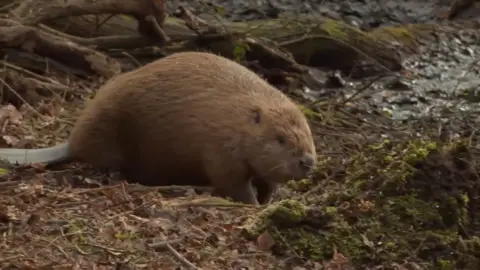
BBCThey made history when they were released into the wild, unrestricted by fences, onto a Dorset nature reserve in March 2025.
At the time it was described by the National Trust as a real "watershed moment in the history of the species”.
After a year of ups and downs, it looks like one of the two licensed pairs of beavers set free has finally settled.
But after the death of one of the beavers last summer, conservationists continue to search for signs of his mate.
If there is one thing conservationists and volunteers have learned over the past 12 months - it is to expect the unexpected.
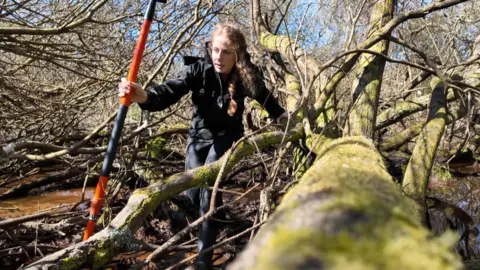
Despite years of careful planning for the return of wild beavers to Studland someone, or rather something, got there first.
In 2024, a pair of unlicensed animals were found already living at Little Sea lake at the very spot picked for the official release.
It was a discovery that would have lasting consequences for Britain's first ever wild release.
Stretching 33 hectares (80 acres), Little Sea is by no means a cramped freshwater lake.
But despite being released away from the established pair, it seems the new arrivals were not made welcome.
 Gary Jacobs
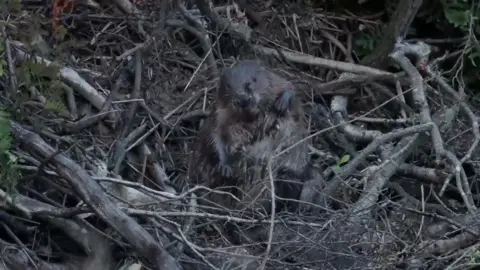
Beavers are very territorial and experts think they may have been pushed out of the chosen habitat and forced to find a home elsewhere.
But no one quite expected where they would turn up.
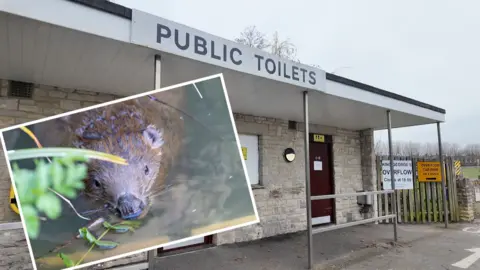
"In April we got a call from someone in Swanage saying they thought they'd seen a beaver - which was a big surprise," recounts National Trust project manager Gen Crisford.
One of the females had turned up in a stream by public toilets in the town centre and was starting to make herself a home there.
The National Trust believes the female swam about 5km (three miles) around Old Harry Rocks on the Purbeck coast after leaving its lodge, possibly chased off by another.
 Mark Singleton
At too much risk and outside of the licensed area, the escapee was carefully recaptured and returned to Little Sea.
But not for long.
Reunited with her mate it did not take long for the pair to make another run for it.
"They almost immediately went and found themselves a home at a local 'swimming pool' at Studland sewage treatment works," says Gen.
"That's not an ideal place for them to be, so we had to say sorry you can't stay there either so we kicked them out of there too."
Third time lucky
But it proved third time lucky and although the two were on the move again, they would finally find a home and start transforming the landscape.
While it was good news for one pair, a very hot summer, and a disaster, was just around the corner for the other.
As the South was gripped by the warmest summer on record, Studland began to suffer from a lack of rain.
With water levels dropping, the remaining new pair that had settled down in the north of Little Sea were on the move.
"In July it seemed like these animals were looking somewhere else to go," says Gen.
"Instead of finding one of the available wet habitats not far from there, unfortunately the male went to the sea and attempted a sea swim but didn't survive."
The area is being monitored for signs of the female but so far she has not been seen.
While the established beavers at Little Sea continue to thrive raising kits, the new arrivals have set up home at an undisclosed location away from their original release site.
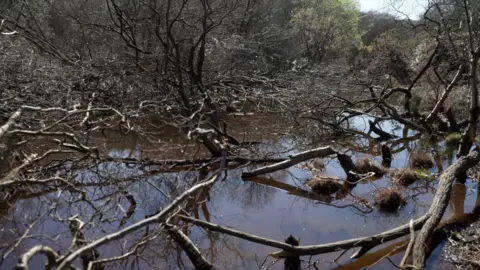
A formerly shady brook, enclosed by trees, has been opened out to form a wetland area. A 35m (115ft) long dam now holds back the water with the former stream leaving deeper channels for the beavers to get around in.
All around, tree stumps bear tell‑tale signs of busy activity, gnawed into points with teeth marks still clearly visible. Fallen trees dot the landscape.
Trail cameras have captured other wildlife moving into the area. From an otter, which the beaver pair seem to tolerate, to a hunting barn owl on the water's edge.
Also caught on camera early this year were the pair mating. The hope is kits could be on the way this summer.
For Gen, the settled beavers and transformation of habitat more than make up for the run around given by the troublesome two.
"All things said it's been a really positive year," she says. "Obviously the death of one of the animals is something we're sad about.
"It isn't unusual for re-introduction projects and so I think we just have to take that in our stride and that won't stop us from continuing.
"So the next step is to look at our larger landscape and there are some other locations there where we'll be looking to do releases in the future."
