Our local bridge has been closed for two years - it's affecting daily life

 BBC
BBCConcerns have been raised after a report found a lack of funding has led to the "widespread deterioration" of bridges in Aberdeenshire.
The council report found more than 200 bridges needing repairs, restoration or major refurbishment.
Residents in Aboyne told BBC Scotland News that their bridge had been closed for the last two years and it had had a serious impact on daily life.
Aberdeenshire Council said no-one would be available for interview until after a meeting on Thursday. The Scottish government said it was for local authorities to decide how to manage budgets.
The council roads and transport infrastructure report stated: "A review of bridge replacements/major works indicates that underfunding has been a long-term issue (more than 50 years).
"This has led to widespread deterioration across the network."
The estimate is that there are more than 200 bridges that would require work in the short term.
There are 28 prioritised bridges where major works is required - which would cost an estimated £65m.
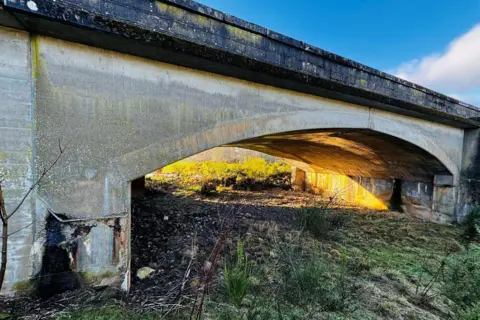
Aboyne Bridge, over the River Dee, has been closed to vehicles since November 2023 due to structural defects.
Work to repair the bridge was delayed after engineers discovered it was in a worse condition than they previously believed.
Villagers said it had effectively split the village in two, and people face a diversion of several miles if travelling by vehicle.
Duncan Cassie is site manager at an Aboyne sawmill which he described as one of the biggest local employers.
"The direct impact is mostly down to the employees, they inevitably have to go round the diversion," he said.

He said there was the added financial cost of extra mileage.
Mr Cassie also said people due for interviews had been late as they did not know about the closure.
"We need funding, we need to get the Aboyne Bridge sorted, and reconnect the north side and south side of the river," he said.
"Initially it was an inconvenience, but now after 26 or 27 months it's beginning to wear a wee bit thin. There doesn't seem to be a drive or urgency to get the bridges sorted."
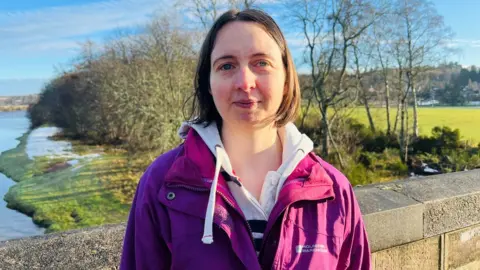
Charlotte Davys, 36, who has chronic fatigue syndrome, lives in nearby Birse, which is about two miles (3.2km) from Aboyne on the other side of the bridge.
Since the structure was closed she faces a detour of several miles if she wishes to drive to the village for shopping or appointments.
"It's just made things harder for me, having to plan out my energy use even more, taking longer to recover after," she said.
"And having the bridge closed, it's not as easy for friends to get up and support me, now it takes a lot longer."
She also has to drive down to the bridge and then meet her dog walker on the other side.
"So I'm having to use more energy to get down here, where before the dog walker would come to the house which meant I could save my energy."
It is one of the many bridges across Aberdeenshire in urgent need of work.
The ability of some to safely carry abnormal roads is also said to have been severely compromised.
The report going before councillors later this week highlights the scale of the issue.
The Scottish government said it had allocated £15.7bn for local authorities in the 2026-27 budget.
"This includes funding of £655m to Aberdeenshire Council this year - an increase of £40m or 6.7%.
"Local authorities are independent bodies and it is for them to decide how to manage their budgets and infrastructure based on local needs and priorities."
