US hints at easing Iran oil curbs - what it means for India

 LightRocket via Getty Images
India could be one of the biggest beneficiaries of a tentative US rethink on Iranian oil, as Washington weighs options to ease pressure on strained global energy markets.
US Treasury Secretary Scott Bessent said in an interview with Fox that the administration was considering easing restrictions on Iranian oil already at sea.
Such a move could release tens of millions of barrels into global markets to offset war-driven disruptions to shipping and production.
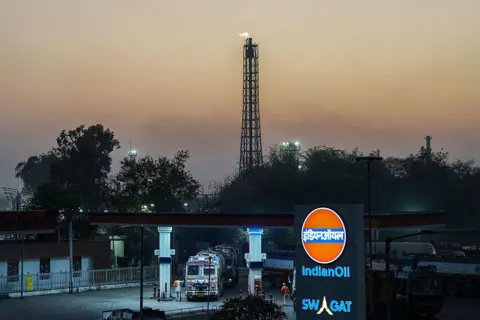
For India, which imports 90% of its oil and has a track record of snapping up discounted supplies, even a limited opening could offer both relief and opportunity, experts say.
Bessent floated the idea as a way to ease tightening global supply amid war-driven disruptions to shipping and production. If pursued, it would mark a striking and uncertain reversal of long-standing US policy.
 Bloomberg via Getty Images
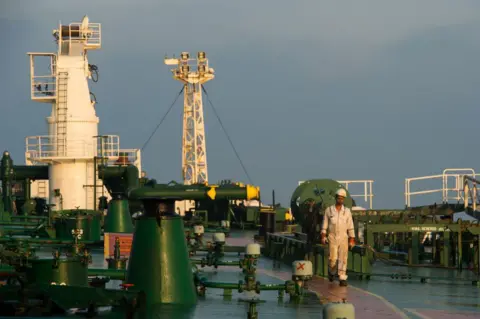
By allowing Iranian cargo currently on water - he put the figure at about 140 million barrels - to reach buyers, US hopes to ease supply tightness and temper prices, if only for 10 to 14 days.
At the moment, China is the main buyer of oil from Iran. It is not clear how the oil at sea will be sold, but Asian consumers, including India, Japan and Malaysia, may benefit, Bessent said.
India could sit at the centre of this recalibration.
More than 60% of its crude imports come from the Gulf - primarily Iraq, Saudi Arabia, Kuwait and the UAE. Half of these imports travel through the Strait of Hormuz, the narrow Gulf chokepoint now effectively closed by the conflict.
"India could emerge as a key demand centre to watch, alongside Chinese buyers (state-owned companies and private refiners) and other Asian countries," according to Sumit Ritolia, a refinery and oil markets analyst at maritime intelligence firm Kpler.
Historically, India was a major buyer of Iranian crude, with imports peaking at around 11.5% of its total intake before sanctions tightened in 2018.
Iranian Light and Heavy grades of crude oil were well suited to Indian refineries and often came with favourable pricing and payment terms.
Those flows halted in 2019, replaced first by Middle Eastern and American crude, and later by deeply discounted Russian barrels after the Ukraine war reshaped global trade.
 Anadolu via Getty Images
When Russian oil became available at a discount, Indian refiners moved in, ramping up imports with minimal disruption.
Analysts now argue that a similar dynamic could play out if Iranian barrels re-enter the market.
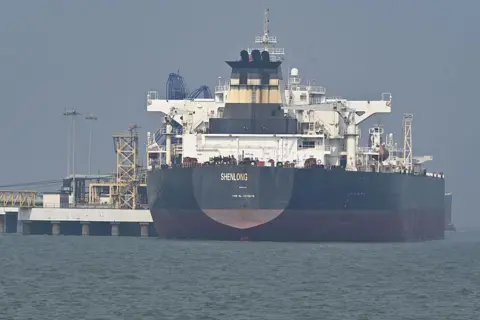
Kpler estimates suggest roughly 170 million barrels of Iranian crude are currently on water, including floating storage and cargoes in transit.
"Oil on water" simply refers to crude that has been loaded onto ships and is moving- or waiting - at sea.
This includes two categories: oil that is in transit to buyers, and oil held as floating storage.
"Floating storage refers to oil held on ships that are currently stationary rather than being in transit," says Ying Cong Loh, senior market analyst at Kpler
"These are vessels carrying oil, moving very slowly or barely at all, and lingering in the same area for days - typically identified by low speeds and recent tracking data may shows they are not actively on a delivery route."
Not all of this oil is uncommitted, but a portion remains unsold - representing potential incremental supply if sanctions enforcement weakens or is selectively eased, according to Ritolia.
In other words, there is a lot of Iranian oil already out there - barrels sitting on ships, either parked as floating storage or already being transported.
Not all of this oil has buyers yet. Some is already sold, but a chunk is still unsold and available.
"Indian refiners retain the ability to re-integrate these barrels with minimal operational adjustments, supported by prior processing experience and established trading setups," he says.
India, the world's fourth-largest refiner, has been hit by disrupted oil and gas supplies - but unlike China, it has not moved to curb exports of refined fuels.
Yet, the constraints are formidable.
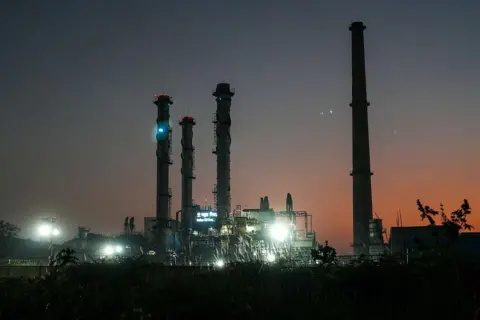
Any sustained return of Iranian oil hinges less on refining capability than on commerce and geopolitics, experts say.
 LightRocket via Getty Images
Sanctions do not just restrict sales; they complicate shipping, insurance and payments.
"Key considerations include the scope and durability of sanctions relief (including on shipping), pricing structure and the availability of payment, insurance and logistics mechanisms," according to Ritolia.
Unless these mechanisms are clarified or relaxed, transactions remain fraught.
Bessent offered little detail on how such a waiver would be structured, or whether safeguards might be built in to prevent proceeds from flowing back to Tehran. The Treasury has declined to elaborate.
Asked if he would back the idea, President Donald Trump was non-committal, saying only that "we will do whatever is necessary to keep the price" before trailing off.
It's unclear if Bessent's proposal would gain traction in Washington, where the House of Representatives has just passed a bill to tighten sanctions on Iran's oil sector.
The proposal follows other US moves to boost supply, including releasing millions of barrels from reserves and easing some sanctions on Russian oil last week.
