Photo exhibition opens celebrating Martin Parr

 Martin Parr/Magnum Photos
A new exhibition has opened celebrating the work of the late photographer Martin Parr, who died in December 2025, aged 73.
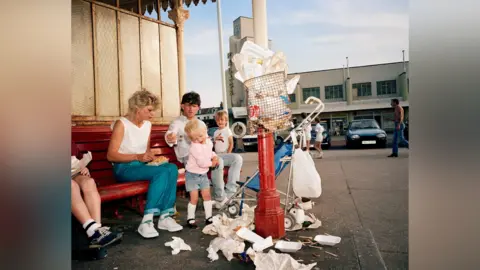
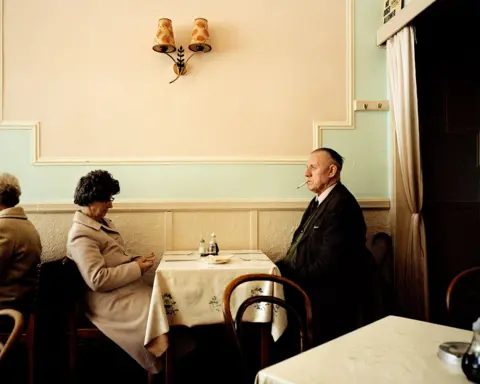
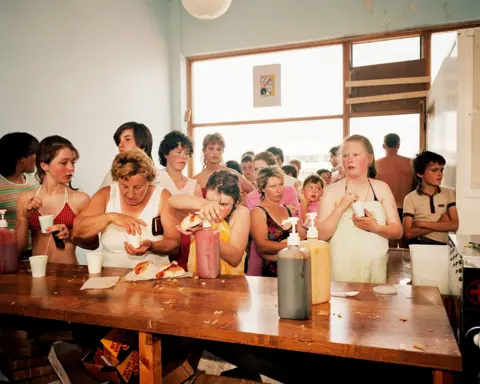
The exhibition, entitled The Last Resort, shows photos that Parr took in the Merseyside seaside resort of New Brighton between 1983 and 1985.
The photos are on display at Bristol's Paintworks, organised by the Martin Parr Foundation.
The head of production at the foundation, Louis Little, told the BBC: "He would have loved it."
 Martin Parr/Magnum Photos
 Martin Parr/Magnum Photos
Parr's works were known for capturing the smallest details of everyday life.
His photographs were playful and had humour, but also provoked debate and discussion.
When the photos were exhibited at the Serpentine Gallery in London in 1986, Parr was berated for being patronising and voyeuristic.
"People from London and the South East, they really didn't know what places in the North looked like," said Parr before his death.
"The litter was quite terrible, but they just weren't used to it; so it was almost like it was my fault that the place looked so scruffy."
Little said: "It's very rarely shown as a whole project.
"What was key about Martin's work in the 1980s was that it was one of the first bodies of work to be shown in colour using flash photography as well.
"That was a huge step forward from the tradition dominating British photography at the time.
Head of collections at the foundation Isaac Blease said: "There's so many elements I find fascinating about the work.
"I think the way he was able to identify particular rituals and moments of the everyday that resonate and are very familiar to us."
Follow BBC Bristol on Facebook, X and Instagram. Send your story ideas to us on email or via WhatsApp on 0800 313 4630.
