Student who fled meningitis uni 'saw hazmat suits'

 Mashaal Chughtai
A student has told of fleeing back home to Birmingham after a major meningitis outbreak at the University of Kent.
Mashaal Chughtai, 22, who studies law, compared the scenes to "Covid all over again".
Two people have died, including a 21-year-old university student and a sixth form pupil called Juliette, who was 18.
Five new Kent cases were identified by the UK Health Security Agency (UKHSA) on Wednesday, with Health Secretary Wes Streeting saying officials were "proactively managing" the situation.
Chughtai, who has now returned to her family home in Bournville, said she first learned of the outbreak through a university society group chat before receiving official emails warning students to watch for symptoms.
"Somebody had sent an article saying two people had passed away in Kent," she said.
"When I read on in the article it said 'through meningitis' and I just had to pause for a second."
 Getty Images
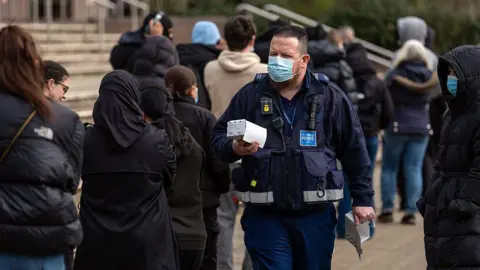
Chughtai, who is in the final year of her undergraduate degree, said she waited almost two hours in long queues for antibiotics. Her parents then drove the eight-hour round trip from Birmingham to collect her.
She described growing panic among students, with many unsure whether they would be placed in lockdown. The university has since moved assessments online.
"I remember seeing some people in hazmat suits," she continued. "I remember seeing some ambulances.
"It just feels like a simulation. It feels like Covid all over again.
"It's just surreal."
Health Secretary Wes Streeting told BBC Breakfast that a response was being coordinated nationally across government, the UKHSA and NHS England.
"The general risk is low even if the disease itself is extremely serious," Streeting said.
But he added that while the outbreak was being managed at a national level, it should not be compared to emergencies such as the Covid pandemic.
 Getty Images
A targeted vaccine programme has been set up at the University of Kent and students have been urged to seek antibiotics if they believe they have been in close contact with a confirmed case.
Six of the confirmed cases are Meningitis B, the UK Health Security Agency has said, which is a bacterial form of the disease.
Bacterial meningitis is rare but can be very serious. It is recommended that all cases are treated in hospital so patients can be closely monitored.
A MenB vaccine has been routinely offered to babies and young children since 2015 but the current generation of university-age students were not covered by the programme.
Symptoms of meningitis include a high temperature, vomiting, confusion and a rash that doesn't fade under pressure.
Follow BBC Birmingham on BBC Sounds, Facebook, X and Instagram.
