'LGBTQ+ museum lets community tell their stories'

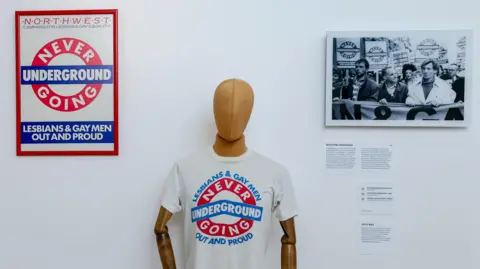 Queer Britain
The UK's only dedicated LGBTQ+ museum has said it wants to ensure people can "tell their own story", as it spotlights both trailblazers and painful chapters from Britain's past.
Queer Britain - which is based in King's Cross, central London - showcases figures who shaped the community's history, alongside cultural spaces and memorials.
The museum was founded in 2022, but closed in November for refurbishment. It reopened earlier this month in time for LGBTQ+ history month.
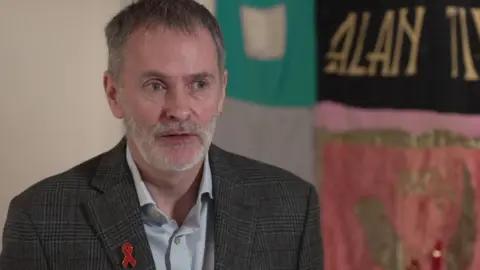
"It's really important to have a museum like this because we are the only museum of its kind in the UK and only one of 10 in the entire world," said Andrew Given, the museum's director.
"What we like is for members of the community to tell their own story, not for us to tell it on their behalf."
Among the figures featured in its new displays is footballer Justin Fashanu.
Fashanu became the first black £1m player in English football when he signed for Norwich City in 1981.
He later came out as gay in 1990, becoming the first and, to date, only player to come out while in the top flight of the men's game.
"He was not really accepted by the Premier League, unfortunately, and not really accepted by many of their fans either," Given said.
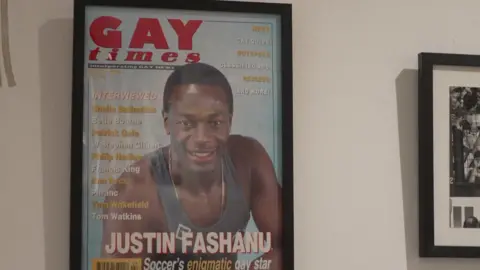
The display includes a banner from Norwich City's LGBT+ supporters' group, the Proud Canaries.
Asked whether such groups form part of Fashanu's legacy, Given said: "Absolutely, because while Justin was playing, there was nothing like this at all.
"And I think if he'd had the support of groups like this, I think he would have had a very different experience."
The museum also reflects on the HIV and Aids crisis, with a panel from the UK Aids Memorial Quilt on show to remember those who died.
 Queer Britain
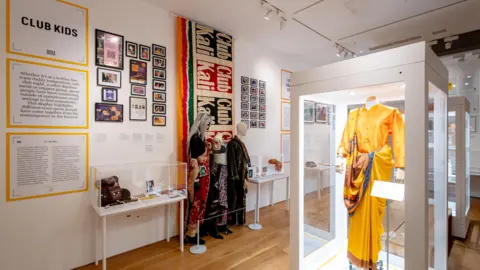
Alongside these tributes, it celebrates LGBTQ+ culture and community life, including an exhibit dedicated to Club Kali, a long-running night for the South Asian LGBTQ+ community.
"[It shows] a history of 30 years from photographs of some of the incredible outfits which combine the kurti and the sari, the kurti being the male shirt, the sari being the female dress, and some really historical items celebrating an incredible nightclub," Given said.
Much of the collection has been donated by members of the public keen to share personal histories that might otherwise have gone untold.
Given said there are many more stories still waiting to be shared.
Listen to the best of BBC Radio London on Sounds and follow BBC London on Facebook, X and Instagram. Send your story ideas to hello.bbclondon@bbc.co.uk
