Meningitis survivor says acting fast saves lives

 BBC
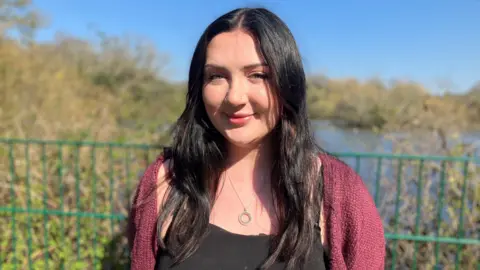
BBCA medical student who contracted meningitis and almost died has warned others to look out for symptoms and act fast.
Becca Heritage, 25, was diagnosed with meningococcal septicaemia during her first term at the University of Southampton in November 2018.
Medical staff were able to save her life by amputating both of her legs and most of her fingers.
Following an outbreak of meningitis cases in Kent, Becca says recognising the signs quickly is what "saves lives".
 Becca Heritage
Becca was six weeks into her medicine degree when she suddenly became unwell after what she described as a normal day.
"I got an early night and then woke up vomiting and that was the first symptom," she said.
Assuming she had a stomach bug, she tried to sleep it off but when the vomiting continued she called 111 and was admitted to hospital.
"...that's when I started getting some of the other symptoms and it became clear that it wasn't just a stomach bug," she said.
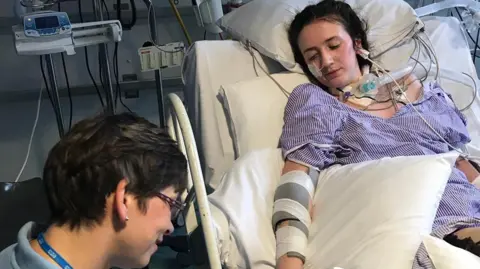
Over the next 12 hours her condition deteriorated rapidly and she developed a high temperature, elevated heart rate and became confused.
Her organs began to fail, a rash appeared on her arms and legs and she was placed into an induced coma for two weeks.
Doctors had to amputate both of her legs below the knee, as well as most of the fingers on her left hand and all the fingers on her right hand.
"It's a really cruel disease, it's just so fast," Becca said.
"That's why I have this passion now about sharing the story and raising awareness of all those symptoms, so people know to go and get help quickly, that's the thing that saves lives at the end of the day."
Becca caught Meningitis B, known as MenB, which is the same strain of bacteria behind the Kent outbreak.
She said she was "shocked" to hear about the two young people's deaths in Canterbury and the number of students being treated in hospital.
Babies have been offered a vaccine against MenB since 2015, but most older teenagers and university students were not eligible when they were born.
Becca wants to see that missed generation offered the vaccine on the NHS, calling it a "no-brainer".
"My case was very close to going that way, I completely understand how all the loved ones of those people must be feeling right now, it's just a really scary place to be and it's just really sad because I can't help but think that they would have been preventable with the vaccine."
The government says vaccine eligibility is being kept under review.
Becca has since undergone a rare hand transplant and, after intensive physiotherapy, can now use her right hand for most daily tasks.
Inspired by her experience, she is studying for a Master of Medical Sciences at the University of Southampton and hopes to become a GP.
You can follow BBC Hampshire & Isle of Wight on Facebook, X, or Instagram.
