Lab research could help make blood stem cells

 Jitesh Neupane, University of Cambridge
Researchers have found a new way to produce human blood cells in the lab that mimics the process in natural embryos.
University of Cambridge scientists used human stem cells for the studies.
The discovery may have the potential to simulate blood disorders like leukaemia and to produce long-lasting blood stem cells for transplants, said the scientists.
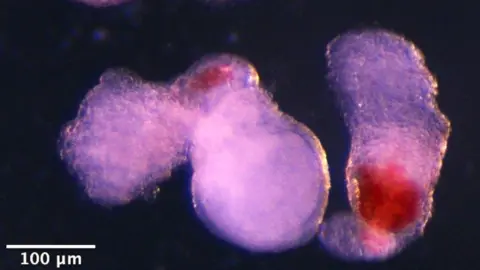
Dr Jitesh Neupane, a researcher at the university's Gurdon Institute, said: "It was an exciting moment when the blood red colour appeared in the dish."
 Jitesh Neupane, University of Cambridge
Prof Azim Surani, senior author of the paper, said: "Although it is still in the early stages, the ability to produce human blood cells in the lab marks a significant step towards future regenerative therapies - which use a patient's own cells to repair and regenerate damaged tissues."
Human blood stem cells, also known as hematopoietic stem cells, are immature cells that can develop into any type of blood cell.
These include red blood cells that carry oxygen and various types of white blood cells crucial to the immune system.
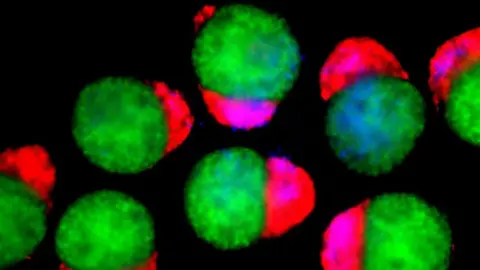
The embryo-like structures, which the scientists have named hematoids, start producing blood after about two weeks of development in the lab - mimicking the development process in human embryos.
Human development
The university said the structures differ from real human embryos in many ways.
They cannot develop into embryos because they lack several embryonic tissues, as well as the supporting yolk sac and placenta needed for further development.
Current methods for generating human blood stem cells in the laboratory require a cocktail of extra proteins to support the stem cells' growth and development.
In contrast, the new method mimics the natural developmental process, based on a self-organising human embryo-like model.
Researchers say this model is crucial for advancing knowledge in human development.
All research modelling human embryo development must be approved by ethics committees before proceeding.
This study received the necessary approvals, while the resulting paper was peer reviewed.
The embryo models were allowed to grow and develop until they were comparable to an embryo 14 days after fertilisation. In many countries, this is the legal cut-off fornormal embryo research.
The research was primarily by Wellcome and the study has been published in the journal Cell Reports.
Follow Cambridgeshire news on BBC Sounds, Facebook, Instagram and X.
