New system 'working well' since critical incident

 Nottingham University Hospitals NHS Trust
A new digital patient system that was blamed for a hospital trust declaring a critical incident is now working well, NHS bosses said.
Nottingham University Hospitals (NUH) NHS Trust said the wider roll-out to outpatients and theatres in November 2025 meant the new Nervecentre system was "running slower than expected".
The trust said despite initial challenges, the system was a "major step forward" in transforming the way it delivered and managed patient care.
Mark Simmonds, deputy medical director and clinical lead for the programme, said: "It's been difficult for many staff, but we're now at a point where the system is being used really well across the hospitals."
NUH bosses said the system meant there was now "seamless access" to patient data across departments and "improved coordination" of patient care.
They added the smarter use of data and technology allowed them to spend "less time on paperwork and more time caring for patients".
"The main thing is the availability of information. A piece of paper is only in one place and can only be seen by one person, whereas a digital system can be seen by lots and lots of people," Simmonds told the BBC.
"That piece of information, the data, can be used by lots of people all at once and is recorded forever. So we're able to use that data to understand our systems, our processes and our hospital better so we can improve it for the future."
 PA Media
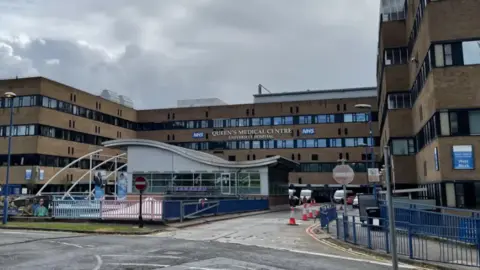
The wider roll-out of the new system went live on 3 November, but the trust had to declare a critical incident the following day amid reports that 24 ambulances were waiting outside to offload patients. The incident was stood down on 6 November.
"Our hospitals were very, very busy going into the weekend of it going live, and whilst everything went really well over that weekend, when we started to open up to outpatients and theatres on the Monday, we found that the software was running slower than we expected it," Simmonds said.
"By that time, ongoing pressures on our ED [emergency department] had got to a point where we felt it was the safest thing to do to go into critical incident.
"We recognised this caused delays within ED and to ambulances offloading to the hospital.
"I'd just like to say sorry to people who were caught up in that and especially the patients who spent longer than we wanted within the ED.
"This was a difficult time for patients and staff... so although there was no ideal time and no right time to do this, it was a major change and we've managed to get through it."
 Nottingham University Hospitals NHS Trust
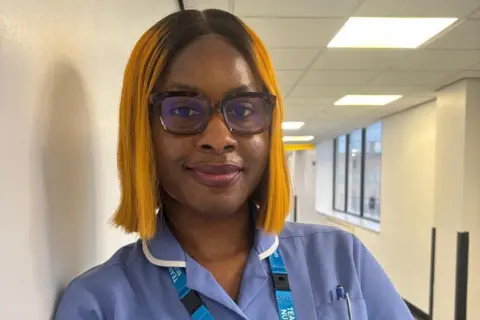
Nurse Precious Osondu, who works in the pre-operative assessment department, said the roll-out of the new system had been beneficial for her team.
She said having patient information in one place had made clinical decision-making quicker and safer, particularly when reviewing histories, test results, and outstanding actions.
"It has significantly reduced our reliance on paper files and printed leaflets, which has improved information governance and reduced the risk of outdated or missing information," she added.
Follow BBC Nottingham on Facebook, on X, or on Instagram. Send your story ideas to eastmidsnews@bbc.co.uk or via WhatsApp on 0808 100 2210.
