The fort built for the invasion that never was

 National Trust
Nestled in the North Downs, Reigate Hill is known for its sweeping views, not its secrets. Yet beneath the chalk lies a Victorian fort built in fear of an enemy invasion that never came.
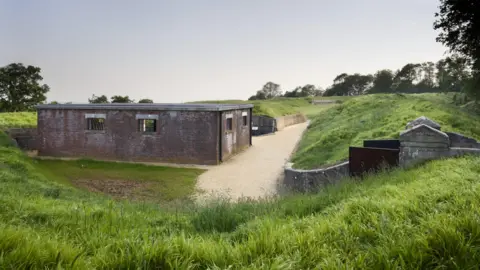
Reigate Fort was one of a network of small hubs that formed a 72-mile (115km) defensive line across the land, including Henley Fort in Guildford and Fort Halstead in Sevenoaks.
Built in 1898, when fears of a foreign invasion were high in the nation's consciousness, the brick-built Mobilisation Centre offered commanding views across the Weald.
If an invasion happened, trenches could quickly be dug to form the last line of defence for London.
Military historian and National Trust tour guide at the site, Tim Richardson, told Secret Surrey that the tool shed would house pick axes, spades and axes, so if needed, "labourers were brought in and they would start digging trenches".
"Up to then it's absolutely silent. Nothing would go on here at all," he said.
As well having defensive measures in place, the fort was also prepared to attack.
Richardson explained that "guns would be brought out from Woolwich Arsenal".
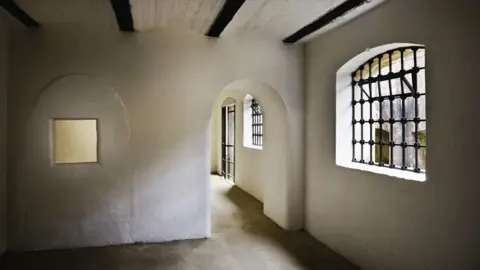
Protected from enemy shelling and the subsequent risk of unplanned explosions, the magazine where ammunition was stored lies just below ground level at the site, covered with a layer of earth.
Any soldiers accessing the area would have to take great care around the incendiary devices, Richardson said.
He added that soldiers working in the stores would change out of their uniforms with metal buttons and boots with iron nails on the soles and would wear "pyjamas" and canvas or rope shoes to avoid danger of sparks that could potentially ignite the munitions.
 National Trust
Advances in naval power and military strategy meant that by 1906, the site was no longer needed, and the mobilisation centre was decommissioned and sold.
After standing empty for decades, the site was designated a Scheduled Ancient Monument in 1972 and was restored by the National Trust in the 2000s. It is now managed by the charity as a heritage visitor site.
Richardson said: "There's quite a bit of affection for the fort.
"You can imagine the pride of the men who would have been here to defend us."
Follow BBC Surrey on Facebook, on X. Send your story ideas to southeasttoday@bbc.co.uk or WhatsApp us on 08081 002250.
