Restoration of 400-year-old staircases begins

 National Trust/John Miller
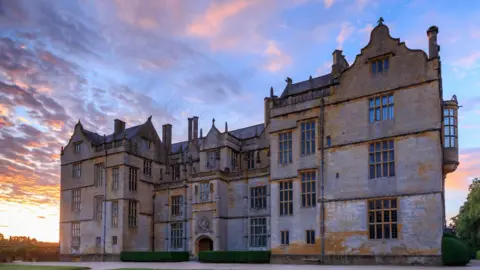
Work has begun to preserve two staircases at a National Trust property which have not been renovated since the house was built in 1601.
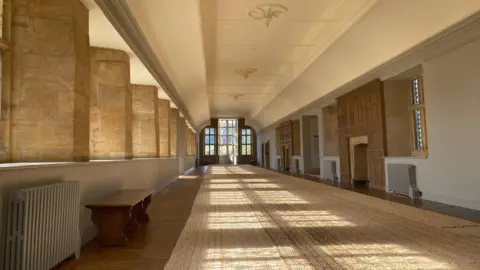
Montacute House near Yeovil, Somerset, was built more than 400 years ago and features the longest-surviving long gallery in England.
An £800,000 project is under way to restore two of its staircases, which are closed to the public due to safety concerns. The work has been funded by a legacy gift.
The project manager for the repairs Melanie McCarthy said the staircases "are not just passageways to the upper floors - they are spaces that command as much attention as the rooms themselves".
 National Trust/Pippa Gibson
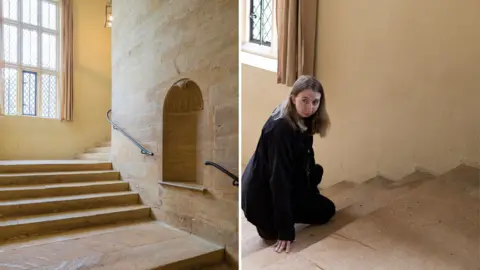
The National Trust said the staircases could end up collapsing if nothing is done.
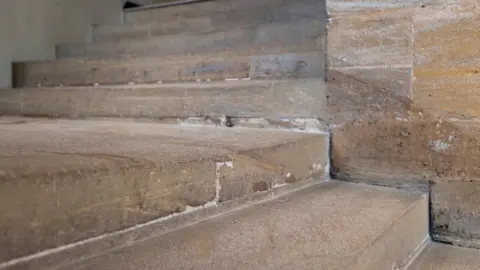
The charity said that despite previous reinforcement, the ham stone had been worn down significantly during the past four centuries, particularly in the joints which hold them together.
 National Trust/James Dobson/James Beck
McCarthy said: "Four hundred years ago they would have called in the stonemason, carpenter, and blacksmith, and that's exactly what we've done to develop a unique and sensitive solution that protects the structure and preserves these Elizabethan stones."
The work will involve steel reinforcement in some of the treads on the stairs, while bespoke coverings designed by a Somerset blacksmith will be added to each of the steps to prevent more erosion.
 National Trust/James Beck
The work is expected to take up to a year to complete and has been funded by a "generous legacy" gift. The stairs will be closed to the public for the duration of the project.
Paul Hooper, lead specialist craftsperson at the National Trust, said: "It is a privilege to be working on something that hasn't been significantly altered for hundreds of years – think of the number of feet that have passed over those stones from Elizabethan times till today.
"This project is about ensuring that legacy continues, using traditional skills to protect the fabric of our shared heritage."
Follow BBC Somerset on Facebook and X. Send your story ideas to us on email or via WhatsApp on 0800 313 4630.
