The mission to save a listed 400-year-old barn

 Historic England Archive
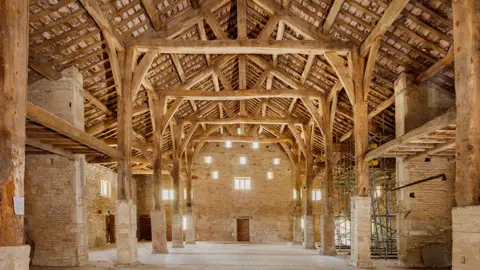
A great barn that has witnessed four centuries of history is getting a £1.35m roof revamp.
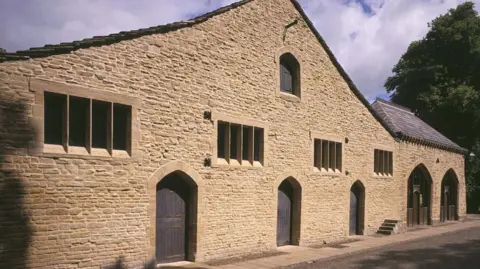
Originally built for agricultural storage, the 100ft (30m) long barn at Gawthorpe Hall in Padiham, Lancashire, dates back to 1605.
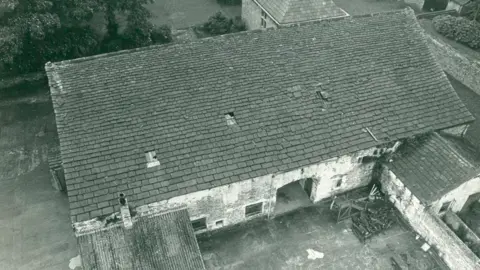
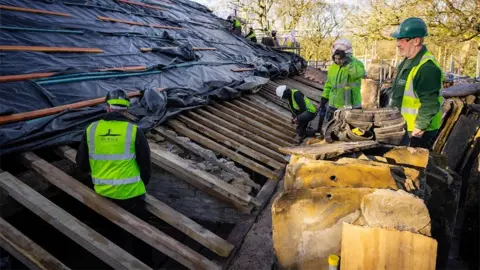
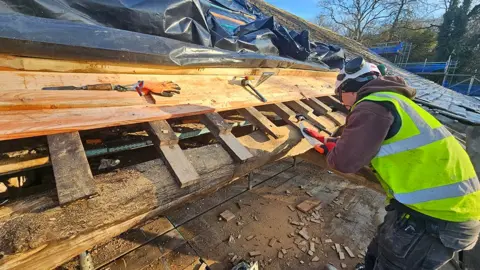
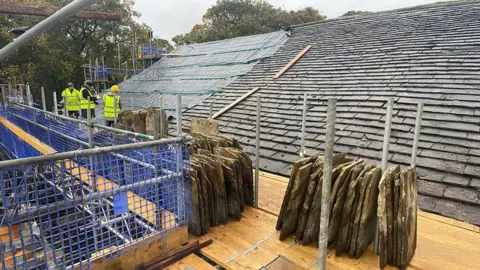
The leaky roof has received a number of temporary fixes over the years, but now it and the oak rafters are being repaired by specialists using heritage craft skills.
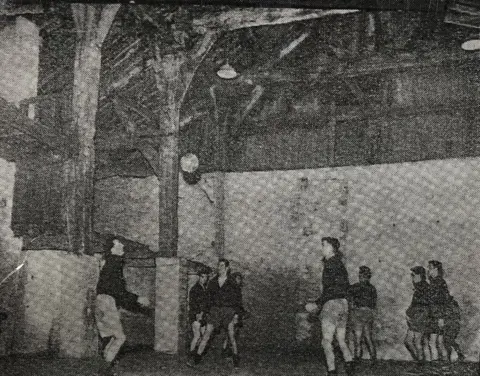
The Grade I-listed barn has been used for a variety of different activities over the years, including an indoor training area for Burnley Football Club, and more recently as an arts and exhibition space.
 National Trust, Matthew Antrobus
 National Trust
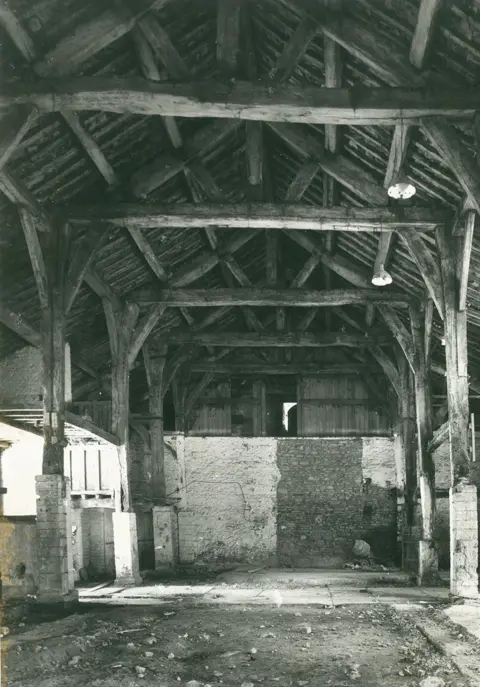
The great barn's roof structure is largely original, and "jaw-dropping" according to Dan Taylor, the National Trust's general manager for South Cumbria and Lancashire.
"It soars above a structure which includes some of the earliest dated ox stalls in Britain," he said.
"Re-roofing the barn will enable us to open the doors for the public to be inspired, and to also enjoy use of the space for local events for which we are continuing to gather brilliant ideas."
The building has been closed to the public since 2008, with work also being done on the coach house and toilet block.
 Historic Property Restoration Ltd
 Historic Property Restoration Ltd
 Historic Property Restoration Ltd
The project will offer a chance for the local building and conservation community to develop their knowledge and experience with heritage skills, including timber repairs, pointing and the construction of a new boundary wall to the west of the barn.
Early November saw the careful removal of some of the stone slates, one at a time so as many as possible can be reused.
The work will also make a cosier environment for the colony of brown long-eared and pipistrel bats that breed and hibernate there each year.
 Burnley FC Archives
 National Trust
The barn was bought by the National Trust in the 1970s and ranger David Bevis said the trust was keen to see how it could be used by the local community.
Ideas include craft markets, weddings, pop-up food events and medieval banquets when work is completed in the summer.
The great barn roofing project is the first step in a long-term development plan for Gawthorpe Hall, an Elizabethan mansion that hosted Jane Eyre author Charlotte Bronte in 1850 and 1855.
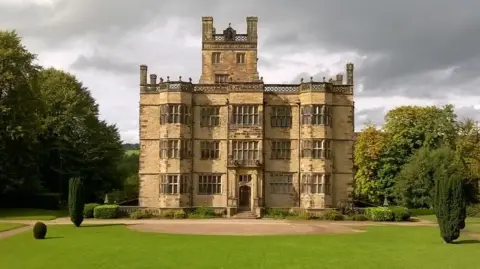
- Gawthorpe Hall was built between 1600 and 1605 for the Shuttleworth family
- It was redesigned in the 1850s by Sir Charles Barry, architect of the Houses of Parliament and Highclere Castle where Downton Abbey was set
- Its interiors show life as it was in the Victorian era for the Kay-Shuttleworth family who resided at Gawthorpe for nearly 400 years
- Famous visitors include writers Charlotte Bronte and Elizabeth Gaskell
- The hall and family also inspired contemporary author Stacey Halls, who set her 2019 bestselling novel The Familiars at Gawthorpe
Listen to the best of BBC Radio Lancashire on BBC Sounds and follow BBC Lancashire on Facebook, X and Instagram and watch BBC North West Tonight on BBC iPlayer. You can also send story ideas via Whatsapp to 0808 100 2230.
