Bird numbers flying high at nature reserve

 RSPB Blacktoft Sands
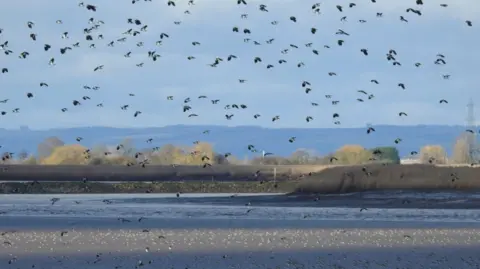
"Crazy numbers" of lapwings have been reported by the RSPB along the Humber estuary.
The lapwing is currently on the UK Red List - the highest conservation priority - due to severe population declines, with numbers nationally down 55% since the 1960s, the charity said.
However, on the stretch of shoreline from Blacktoft Sands near Goole down to Tetney Marshes south of Grimsby, "anything between 15 and 20,000 lapwings" have been counted.
At the RSPB's Blacktoft Sands nature reserve near Goole, where more than 2,800 of the wading birds have been roosting, site manager Pete Short said: "It's really fantastic, especially as lapwings nationally are declining in their breeding populations."
The birds, also known as peewits due to their call, are coming in to the Humber and the surrounding arable land from the continent and around the UK to feed.
Short said: "Along the estuary as a whole, because it's not just Blacktoft, we've had good numbers, we've had them down at Reeds Island and down at Tetney.
"So you might be talking in anything of excess of 10,000 birds, if not more, maybe 12, 13,000 using the RSPB sites and then on the wider estuary, there might have been anything between 15 and 20,000 lapwings."
The RSPB is a participant in the East Coast Wetlands Project which is working to maintain habitats for up to a million migrant waders and wildfowl that pass through that part of the UK annually.
Listen to highlights fromLincolnshire on BBC Sounds, watch thelatest episode of Look Northor tell us about a story you think we should be covering here.
Download the BBC News app from the App Store for iPhone and iPad or Google Play for Android devices
