Wales could tax disused land to encourage house building

 Getty Images
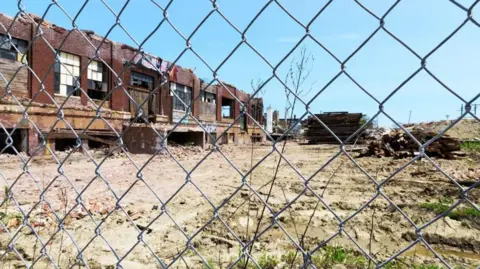
Slapping a tax on disused plots of land would encourage house building on disused sites in Wales, according to government ministers.
The UK and Welsh governments will consult jointly on plans to devolve powers to Wales to allow for a vacant land tax.
Welsh ministers want to discourage so-called land banking, the practice of land being bought in the hope that its value will increase but without any specific plans to develop it.
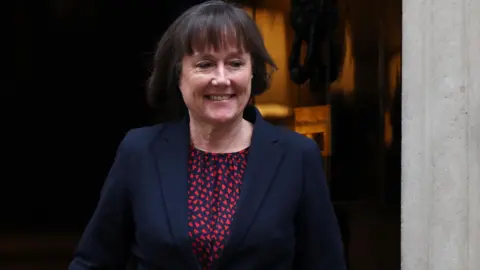
The UK government's Welsh Secretary Jo Stevens said it would have a "positive and tangible" impact for Wales but did not give a specific timescale, saying a consultation would be published in the "near future".
BBC Wales has been told this will not take place before the Senedd election in May.
Both governments have also been asked how much a new tax would be expected to raise.
Welsh government-commissioned research from 2020 found there were 456 "stalled" sites in Wales, 376 of which were residential.
Welsh government Finance Secretary Mark Drakeford, said that the plans were "not about raising money, but changing behaviour and getting more houses built".
Labour MP Stevens told the UK Parliament's Welsh Affairs Committee that "pockets of land" were "being held for ever and ever and we need to bring them back in to use".
She said the request for the powers had been refused when made to previous Conservative UK governments.
She claimed that Labour had strengthened devolution "in ways that will make a tangible and positive impact for Wales and this is one of the areas where we think can do that".
Drakeford said in a statement that the timing of the consultation was in the hands of the UK government's Treasury, but that he wanted a "swift progression to the next stage of the process".
"The devolution of this tax will benefit our communities," he said.
"A tax on land that has been designated as suitable for development but has not yet been developed could encourage land being developed within the expected timescales.
"This is not about raising money but changing behaviour and getting more houses built."
Opposition parties have been asked to comment.
Welsh ministers hope that powers over the tax would help to encourage development and regeneration, and prevent dereliction.
 EPA/Shutterstock
The move comes at a time of jeopardy for Welsh Labour, which faces a serious challenge to hold on to power from Plaid Cymru and Reform at the Senedd election in May.
Welsh First Minister Eluned Morgan previously said that her Labour colleague, Prime Minister Sir Keir Starmer, would be welcome on the campaign trail if he brought "goodies" – understood to be improved funding or devolution of powers.
The Welsh government cannot introduce the tax until the UK government agrees to devolve the necessary powers.
It would need to be approved by both Houses of Parliament and Wales's parliament, the Senedd, before that could happen.
Drakeford was involved in putting forward initial Welsh government proposals to the Tory UK government back in 2018 for Wales to be able to introduce the tax.
A formal submission was made two years later but the then finance secretary, Rebecca Evans, accused the Treasury of "moving the goal posts", with the Welsh government saying discussions were at an impasse.
Plaid Cymru MP for Caerfyrddin Ann Davies said she was "delighted" by the move to consult on the plans.
"But we also need to look at the devolution of rail infrastructure, youth justice, probation, and the transfer of the Crown Estate, that's so important for us in Wales," she added.
Davies pointed out that all of this had been called for by the first minister and asked for her thoughts.
But Stevens said she did not agree with the Welsh government on the devolution of the Crown Estate.
"We believe at the moment that the Crown Estate is working well and introducing a new entity, at a critical time, would risk market fragmentation, damage investor confidence, it would complicate existing processes, and delay further development offshore," she said.
The Conservative shadow finance secretary in the Senedd, Sam Rowlands, expressed scepticism about the tax proposals.
"If this is truly about building more homes rather than raising revenue, ministers should be upfront with the Welsh public about the data, the impact and the timetable," he said.
"Warm words about 'swift progression' are not enough, we need concrete plans, not vague open-ended promises."
A Green Party spokesperson said: "The way land and property is taxed in Wales needs a total overhaul, including replacing council tax and business rates with a fairer land value tax.
"Any new financial powers are welcome, but it should be a matter for Wales what types of taxes will work best."
