What now for Asia after Trump's tariffs struck down?

 Getty Images
Key US trading partners in Asia have been hit with a fresh wave of uncertainty after America's top court ruled that many of the tariffs President Donald Trump announced in 2025 are illegal.
After the Supreme Court ruling on Friday, Trump said he would impose new global levies of 15% on goods entering the US.
US customs said on Monday that it would halt the collection of tariffs linked to the signature trade policy that Trump used to launch a global trade war.
This is a major blow to governments from India to Indonesia, which had spent months negotiating trade deals with Washington. Many had pledged to invest billions of dollars in the US.
While the new tariff rate appeared to be a win for many Asian countries that had originally been hit with higher levies, significant uncertainties remain, analysts have told the BBC.
"Even if countries do decide to negotiate, at the end of the day, the current US administration is still looking to enforce higher levels of tariffs, regardless of the measures that have been struck down," said Adam Samdin from Oxford Economics.
Trade deals signed with the US in recent months do not have the clear, legally binding agreements of traditional pacts, leaving room for further changes, he added.
Most smaller economies in Asia will also be cautious about potentially upsetting Trump as "how they fare will depend greatly on their relationship with the administration," Samdin said.
Governments across the region are now evaluating the latest announcements.
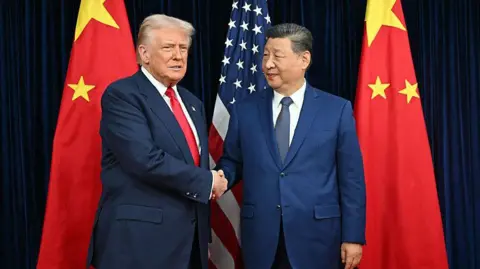
China, which is preparing to host Trump in early April, said it is "conducting a comprehensive assessment of [the] content and impact" of the ruling.
"China has consistently opposed all forms of unilateral tariff increases and has repeatedly emphasised that there are no winners in a trade war, and protectionism leads nowhere," a Ministry of Commerce spokesperson added.
On Sunday, US Trade Representative Jamieson Greer said he did not expect the changes to impact Washington's talks with China and its leader Xi Jinping.
"The purpose of this meeting with President Xi is not to fight about trade. It's to maintain stability, make sure that the Chinese are holding up their end of our deal and buying American agricultural products and Boeings and other things," Greer told ABC news.
"I don't see this really affecting that meeting," he added.
 Getty Images
US allies in the region are also uncertain about what comes next with Trump's trade policy.
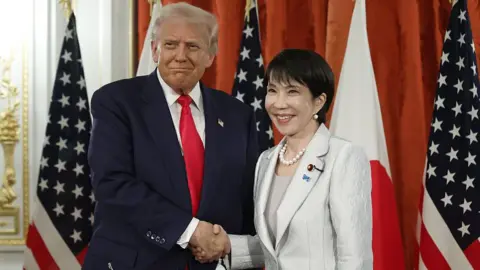
Over the weekend, a Japanese government spokesman said Tokyo "will carefully examine the content of this ruling and the Trump administration's response to it, and respond appropriately".
But Itsunori Onodera, an executive of Prime Minister Sanae Takaichi's Liberal Democratic Party and a former defence minister, raised concerns about the new tariff rate.
"As an ally, I'm worried this will only accelerate countries distancing themselves from the US," Onodera, who is not part of the government, said on a TV show on Sunday.
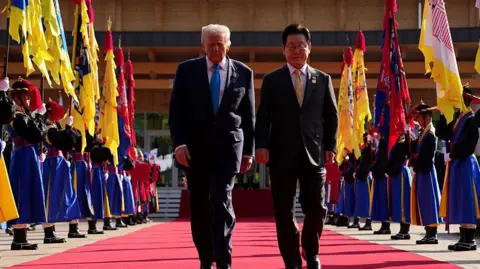
South Korea's Industry Minister Kim Jung-kwan said on Monday that there is uncertainty over potential refunds for tariffs already paid.
Kim also said that computer chips were not subject to tariffs Trump announced after the ruling.
On Saturday, Taiwan - which is also a key producer of chips - said that although the impact on the island appeared limited, "the government will closely monitor developments and maintain close communication with the United States."
Singapore, which had its tariff rate raised from 10% to 15% after Trump's latest announcement, said it is monitoring the situation and will meet soon with US officials to clarify how the new levies will be implemented.
The city state's trade ministry told the BBC it believed that certain goods - such as pharmaceuticals, electronics and energy - would not be effected by the new measures.
 Getty Images
Countries in Asia, many of which had built their economies based on booming exports to the US, were hit especially hard by Trump's sweeping "Liberation Day" tariffs in April.
Last week, Indonesia and the US finalised an agreement to lower US tariffs on the South East Asian country to 19% from 32%, in exchange for preferential access to its market.
Taiwan similarly secured lower US tariffs of 15% in exchange for billions of dollars of investments.
Japan inked an agreement in late 2025 to accelerate the production of rare earths with the US, which is racing to diversify its supply of critical minerals to cut its reliance on China.
Greer said in a separate interview on CBS that the US was in talks with countries that had reached trade agreements with Trump administration and that none had indicated plans to withdraw since the tariff ruling.
Greer said: "We're going to stand by them. We expect our partners to stand by them."
A flat 15% tariff rate is likely to hit Asian economies that export finished products to the US the hardest, said Sandra Alday from the University of Sydney.
The impact is more complex and harder to gauge for countries that supply goods that are to be completed in America, she added.
But with tariffs applied universally, one thing is for sure: foreign products to the US will be more expensive in general, said Alday.
Trump's new 15% tax rate is a temporary solution under Section 122 of the Trade Act, which allows the tariffs to stay in place for around five months before the administration must seek congressional approval.
The new levy also raises questions for countries such as the UK and Australia, which previously agreed a 10% tariff deal with the US.
