Benefit cheats must be called out - Lyons

 Getty Images
Complaints of benefit fraud in Northern Ireland have significantly increased in the year since Stormont reintroduced the naming of people who have been convicted.
The number of reports from members of the public has risen by over 40% in nine months, according to figures obtained by BBC News NI.
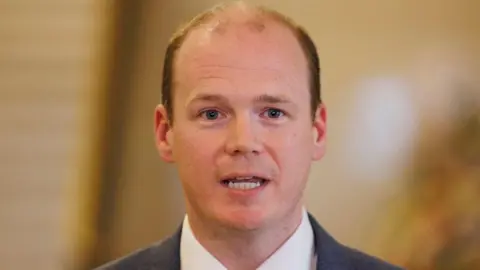
On Monday, Communities Minister Gordon Lyons announced fresh efforts to tackle benefit fraud and error, including a new advertising campaign.
"At this time of significant budget constraint, we must call out benefit fraud, ensuring that public money is directed to our key services - not to criminals," he said.
A year ago Lyons reintroduced the practice of his Stormont department publishing the names of people convicted of benefit fraud, saying it was part of a "zero-tolerance approach".
The move by the Democratic Unionist Party (DUP) minister reversed a decision in 2020 by the then Sinn Féin minister Deirdre Hargey.
She had said publicising names was "not necessary", and instead she wanted the Department for Communities (DfC) to look at providing broader information.
A number of anti-poverty campaigners last year questioned the plan by Lyons, describing it as a "distraction from the real issues".
Some 57 people in Northern Ireland were convicted of benefit fraud since April last year, according to DfC figures.
More than 9,000 reports from members of the public of alleged benefit fraud were recorded between April and December last year.
That compares to just over 6,300 reports in the previous 12 months.
The figures on benefit fraud complaints were obtained by BBC News NI through a Freedom of Information (FOI) request.
Benefit fraud in Northern Ireland was estimated to cost £233m in 2024 - about 2.5% of benefit expenditure.
The figures were an increase on previous year, when benefit fraud was estimated to be worth £163m.
Errors in the system cost £42.5m in 2024, while customer mistakes amounted to almost £75m.
 PA Media
Speaking at Stormont on Monday, Lyons said he was seeking additional funding to address fraud and error in the welfare system.
He said fraud was not a victimless crime and when people "cheat the system they are taking support from those who need it most".
The minister is seeking Treasury approval for the Northern Ireland Executive to retain a share of savings secured as a result of cutting fraud and error.
Lyons said he had submitted an "invest to save" business case in agreement with the Treasury, and he would be "seeking a 50% share of savings".
"However, the executive must support the initial investment and to reinvest the share of savings generated in programmes that will support people with barriers to employment, particularly those with disabilities or health conditions," he added.
"This is a key priority for me, as it aligns with Programme for Government goals to reduce economic inactivity, tackle poverty and social exclusion, and support inclusive economic growth across Northern Ireland."
'Creating further suspicion'
Dr Ciara Fitzpatrick, a lecturer at Ulster University who has researched the social security system, said the minister's focus on benefit fraud was "misplaced".
"Claiming benefits is already highly stigmatised and the ministers 'zero tolerance' approach is creating further and often unnecessary suspicion between neighbours and friends," she added.
The academic encouraged more effort to tackle poverty and "focusing on creating cohesion" within communities.
"The minister is seeking to invest millions of pounds in the investigation of fraud, at a time when poverty is increasing and when disabled people are excluded."
DfC said publishing details of those convicted of benefit fraud acts as a "deterrent to those who seek to defraud the benefit system" and increases "public confidence in the processes to tackle benefit fraud".
"No single intervention will reduce fraud on its own and a multi-faceted approach is required, with the naming policy being one element of that," a spokesperson for the department added.
