'Tangerine' monkey born at zoo is 'ray of hope'

 Lee Button
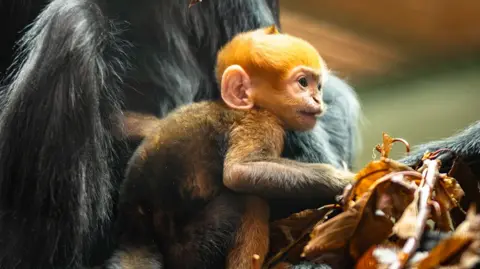
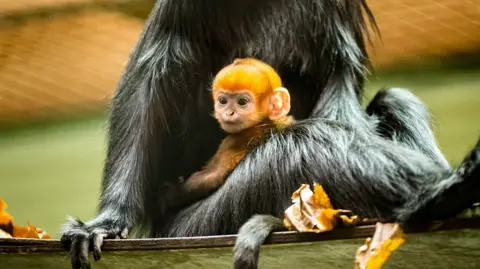
A rare monkey with a shock of orange hair has been born at a zoo.
Whipsnade Zoo in Bedfordshire said the birth of the endangered François' langur offered renewed hope for the long-term survival of the species.
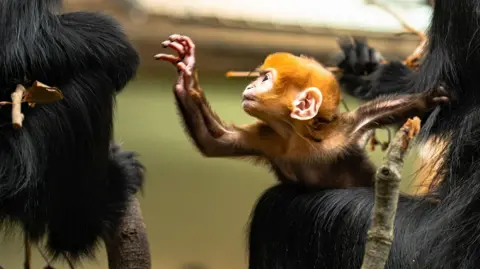
It said the orange hair is an evolutionary quirk, thought to allow parents to easily spot their youngsters when they're being cared for by other members of the troupe.
Section manager of primates, Amanda Robinson, said: "It's estimated that only 2,000 of these primates remain in the wild, so every birth is a ray of hope for the species."
 Lee Button
The infant was born to 10-year-old mum Nguyen and nine-year-old dad Wang on 1 February.
The baby boy is part of the international conservation breeding programme for François' langurs, which aims to boost the numbers of species that are threatened in the wild.
Native to China and northern Vietnam, the species faces threats from illegal hunting for their meat and traditional medicinal purposes.
Whipsnade Zoo said that caring for a back-up population in zoos was vital to protecting their future.
 Lee Button
Robinson said that Nguyen was an experienced mother, having given birth to male Bao in 2024.
In the same year, another baby Francois' langur was born to mum Lulu at Whipsnade Zoo.
They live in matriarchal groups and engage in allomothering and allosuckling, where all of the female members lend a hand in caring for the infants.
This means their groups have really deep social bonds and it allows older siblings to learn important social skills.
Robinson continued: "Over time, the newborn's hair will fade to black, so I'd definitely recommend coming to see him in his home at Monkey Forest whilst he's still tangerine!"
ZSL, the conservation charity behind Whipsnade Zoo, works across the world to tackle the illegal wildlife trade, including in Thailand – considered to be the largest transport point for the illegal wildlife trade in Southeast Asia.
Follow Beds, Herts and Bucks news on BBC Sounds, Facebook, Instagram and X.
