Caring teen dies from rare illness after tummy bug

 Family
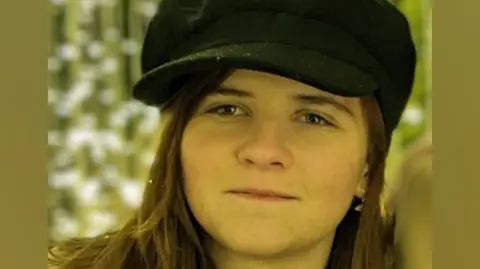
A teenager who "wanted to make the world better" died from multiple organ failure after a tummy bug led to an extremely rare condition.
The 17-year-old, who was studying acting at Newcastle-under-Lyme College, had eaten duck which may have been undercooked, an inquest heard.
Lois Francis, from Talke Pits in Staffordshire, died at Royal Stoke University Hospital in September 2023, days after becoming unwell.
Her symptoms had been treated as gastroenteritis but she had contracted a rare condition, haemolytic uraemic syndrome (HUS), which the inquest was told occurs in just two out of every 100,000 patients per year in Europe and the US.
The inquest heard when she fell ill, initial blood tests indicated evidence of inflammation and she also had tenderness in her stomach. She was given anti-sickness medication and IV fluids, as well as being started on a course of antibiotics, the inquest heard.
This was stopped after a stool sample revealed on 26 September that she had Shiga toxin-producing E. coli.
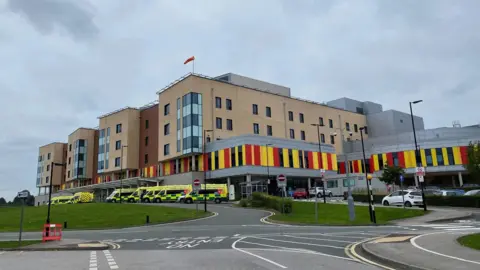
She had been treated at hospital in Crewe but arrangements were made for her to go to Royal Stoke University Hospital's kidney unit.
However, she was not transferred until the following day and a miscommunication meant she was restarted on antibiotics on her arrival.
She later developed neurological symptoms and struggled to communicate, as well as developing problems with her vision.
A procedure to clear toxins from her body was not able to clear the Shiga toxin-producing E. coli.
A CT scan showed brain swelling and a referral was made to critical care but she died on 29 September.
'Nothing could be done'
An inquest jury concluded Lois Francis died after contracting Shiga toxin-producing E. coli, which led to HUS.
Staffordshire area coroner Emma Serrano said when she was given antibiotics at Leighton Hospital it was in line with guidance.
Following the issue of antibiotics being restarted on Francis' arrival at Royal Stoke, a new system has been put in place to ensure all necessary information is handed over during the hospital transfer process.
Summing up, Serrano said the antibiotics were due to concern of a secondary infection and earlier dialysis would not have cleared the toxin but may have helped with the swelling.
"There was nothing that could be done to treat the condition she was suffering from and the progress of that," she said.
"The delay in being conveyed to intensive care had no bearing on her death."
'Be more Lois'
"She cared deeply for those in need. Her compassion wasn't just something she spoke about, it was something she lived," her family said in a tribute.
"She cared deeply for those in need, especially within the LGBTQ+ community, and she had a strong sense of right and wrong."
They added: "And still, we are left with questions we cannot answer. How can someone so full of life, so strong, so deeply loved, be gone? How could she be taken by something she should have been able to overcome?"
Her family said they launched a Be More Lois campaign in her honour, to carry forward her belief in a more inclusive world, which has raised £16,000 for local charities.
Follow BBC Stoke & Staffordshire on BBC Sounds, Facebook, X and Instagram.
