NHS trust cuts ambulance handover delays

 BBC
BBCDelays in ambulances handing over patients at an NHS trust's hospitals have fallen but more needs to be done, a meeting has heard.
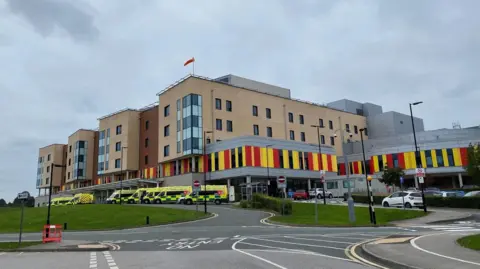
University Hospitals North Midlands NHS Trust (UHNM), which runs the Royal Stoke University Hospital and the County Hospital, Stafford, said average times had dropped to one hour and 10 minutes since the start of 2026.
The update came after delays reached two hours and 13 minutes at the end of 2024, which fell to one hour and 39 minutes a year later. The national average in 2025 was 27 minutes.
A West Midlands Ambulance Service spokesperson said the region had the worst handover delays in the UK and staffs recognised more work was needed.
During a meeting of UHNM's board on Wednesday, chief executive Dr Simon Constable said: "We all know that every minute matters when a patient arrives at hospital by ambulance.
"How quickly we receive and assess them is not just a performance metric, it directly affects patient safety, clinical outcomes and the experience of people in our care."
He said improving the time it took for patients to be transferred to the hospital after arriving by ambulance was the trust's number one priority.
"Ambulance handover delays are one of the most significant pressures we face," he added. "We know we must do better for all our patients."
'Green shoots of recovery'
Constable said this year's improvement came after the trust launched its Release to Respond scheme, which aimed to achieve a maximum handover time of 45 minutes.
"There are some green shoots of recovery," he said, "but please be assured we are not accepting the current status as enough."
The spokesperson for the ambulance service said the handover delays in the region made up about a third of the total across England.
"We recognise there is more that we need to do, which is why we have increased the number of paramedics and nurses in our control rooms and have more ambulances and paramedics on the road than ever before," they added.
"We will continue to work with our partners in hospitals to find ways of reducing the handover delays so that we can get to patients even faster than we do at the moment."
This news was gathered by the Local Democracy Reporting Service which covers councils and other public service organisations.
Follow BBC Stoke & Staffordshire on BBC Sounds, Facebook, X and Instagram.
