Robotic dogs part of wildfire detection trial

 Reuters
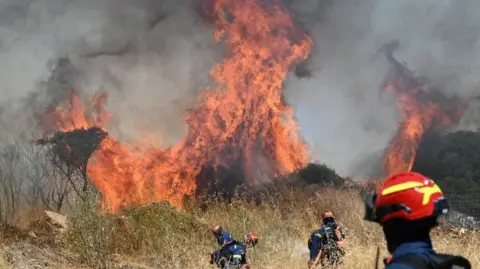
Robotic dogs are among the tactics researchers in Bradford are testing to assess how artificial intelligence can help predict and tackle wildfires.
A team at the University of Bradford will evaluate how the four-legged androids along with drones use 6G connectivity to spot the first signs of smoke, locate casualties and send alerts to emergency teams.
The team will travel to Greece next year as part of the 6G-VERSUS research project, an EU-funded initiative conducting 6G technology trials.
Dr Kamran Mahroof, from the team, said: "Wildfires are a global phenomenon and have been increasing in frequency and intensity in recent years.
"We are immensely proud to be at the forefront of research addressing this pressing global challenge."
The research, which gained funding earlier this year from the European Union's Horizon Innovation Action programme, was showcased at an event in Birmingham exploring how AI can help solve global challenges.
 CN Photography
West Yorkshire has been hit with an increasing number of wildfires in recent years, including on Marsden Moor and Ilkley Moor.
West Yorkshire Fire and Rescue Service (WYFRS) said it was not aware of "this particular technology" but added it may reach out to the University of Bradford team.
"At present, WYFRS does not utilize AI technologies for wildfire firefighting operations," a spokesperson said.
"We already use drones equipped with thermal and optical cameras to provide real-time aerial views and intelligence, helping incident commanders identify hotspots and monitor fire spread."
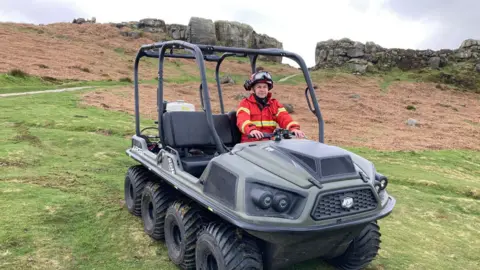
The fire service said it also used mapping tools and weather forecasting applications to help predict fire behaviour, with new lightweight wildfire personal protective equipment introduced to aid firefighters during prolonged operations.
Dr Mahroof added: "The whole idea for us is to identify wildfires as soon as possible.
"We are using the latest technologies out there - the likes of 6G, drones and, dare I say it, robotic dogs to identify where the likelihood is for a fire to take place and for us to mitigate this as soon as possible."
Dr Konstantinos Katsaros and Dr Lazaros Karagiannidis from the Greek-based Institute of Communication and Computer Systems (ICCS) will lead next year's pilot.
In a joint statement, they said: "In the Greek pilot of SNS-JU 6G-VERSUS, we're developing a combined robotic dog and aerial drone system that boosts situational awareness for first responders during wildfires.
"By applying AI to interpret real-time camera feeds and using 6G links to relay the data, we can help teams quickly identify people at risk and deploy resources where they're needed most, all while keeping responders safe."
Listen to highlights from West Yorkshire on BBC Sounds, catch up with the latest episode of Look North.
