Scouts help find city's WW2 Polish veterans' graves

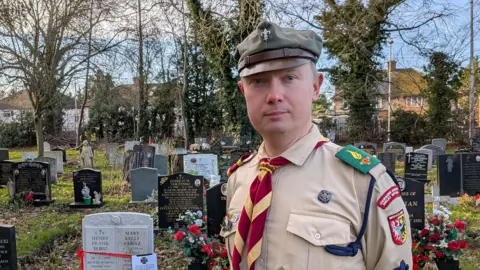 Lukasz Lakomy
A Scout troop is on a mission to find the descendants of Polish World War Two veterans buried in a city cemetery.
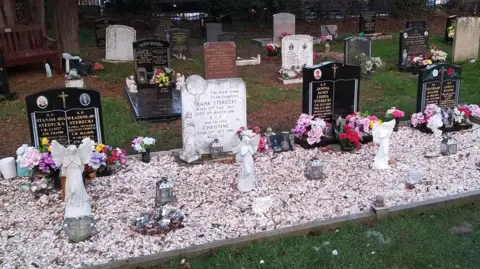
At least 80 burials have been located in Newmarket Road Cemetery in Cambridge in the past couple of years by the city's Polish Scouting Association.
Team leader Lukasz Lakomy, 45, said plaques would be added to 15 of the graves later this year, as part of an official Polish register of veteran burials worldwide.
"A lot of this is my passion project - I care about Polish history and the very hard history we've had with our neighbours and war," he said.
"I'm appealing for any descendants to get in touch with me to share information," he added, saying he hopes they might want to attend the ceremony, once a date is set.
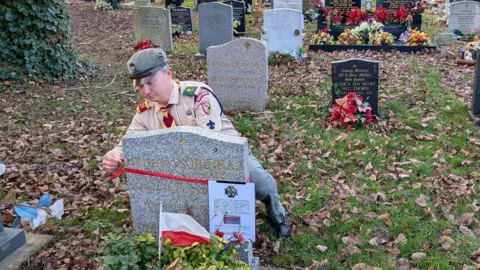 Lukasz Lakomy
The software engineer reformed the city's 21st Polish Scout group, which had been dissolved in the 1970s, when he moved to Cambridge from Poland in 2022.
"I wanted my son to join the Scouts - he was a Scout in Poland - and the only option for me was to become a group leader of that group," he explained.
The Cambridge branch had been set up after the war, as Polish people settled in the UK unable to return home after the Communist takeover of their country. It is part of the Polish Scouting Association UK.
Lakomy said he came across the graves as part of "a big tradition in Poland", which also involved the city's Polish Guides unit.
"We bring the boys and girls to the cemetery to clean up the graves before All Saints' Day [1 November] and visit our buried loved ones - and there's not many descendants of the soldiers left," he said.
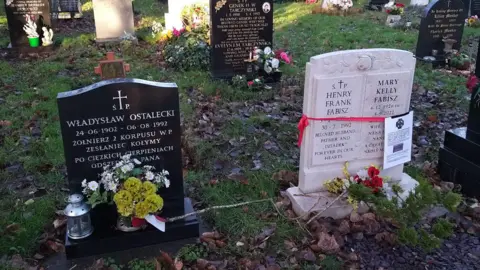 Lukasz Lakomy
The Cambridge project is part of a wider one by the Polish Institute of National Remembrance (IPN) to build a Register of Graves of Veterans of the Struggles for Freedom and Independence.
It "includes burial places of people who fought for Poland's independence between 1768 and 1990", said its spokesperson, Dr Rafał Kościański.
"It is estimated that thousands of Poles are buried in cemeteries in the United Kingdom alone, including many soldiers of the Second World War," he said.
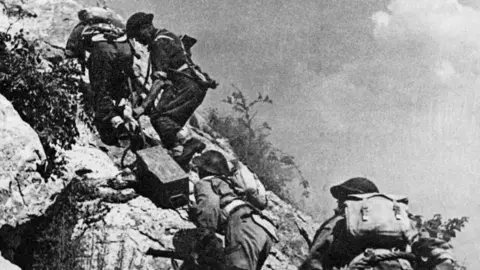 Getty
GettyLakomy said 47 of the soldiers buried in the cemetery served in Gen Władysław Anders's 2nd Polish Corps - famous for its part in the Battle of Monte Cassino in Italy in 1944.
But before that, they had been sent with their families to labour camps in Siberia, after Russia invaded their country in 1939.
"A lot of people died on the way and most of their children - only the toughest survived," he said.
 Lukasz Lakomy
The Soviet Union changed sides after the German invasion of Russia in June 1941 and the Poles were freed.
Lakomy said: "They were starving and sick, so once they got out of Russia, the British had to feed them for months until they were suitable to carry a rifle - and when they fought, they fought like hell.
"We want to find their graves and honour them."
Eventually, Lakomy hopes all the veterans' graves will be added to the register as part of the "multi-year project".
Kościański said the register "helps protect graves from neglect and removal, provides a basis for legal, conservation, and organisational care".
"As a result, the memory of these heroes does not remain only in archives, but continues as a living part of national heritage," he added.
Follow Cambridgeshire news on BBC Sounds, Facebook, Instagram and X.
