Children to sit new national tests in reading, maths and science

 Getty Images
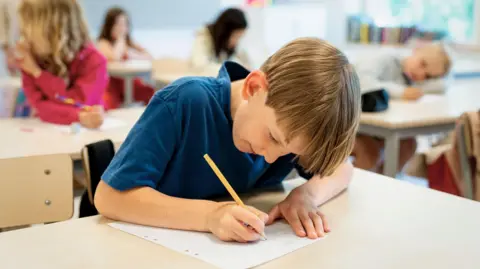
Children in Northern Ireland are set to sit new national tests in reading, maths and science in primary school and year 10.
It is one of the key recommendations from a review of how children in Northern Ireland are assessed.
Children will sit the new online tests in P4 and P7 of primary school and year 10 of post-primary school. They will sit tests in reading and maths from P4, while science will be introduced from P7.
A similar model of standardised testing in reading and maths has taken place in primary schools in the Republic of Ireland for a number of years.
However the Department of Education (DE) has said the results of the online literacy, numeracy and science tests will not be used to create 'league tables' of schools.
They said the tests would help teachers and parents understand how their children were progressing in key subjects.
Big changes to GCSEs, AS and A-levels were motivated in part to cut the number of exams and tests pupils sat.
But DE said the new primary school tests, which will begin around 2030, would lead to pupils sitting fewer exams set by schools.
'Low stake assessments'
 Department of Education
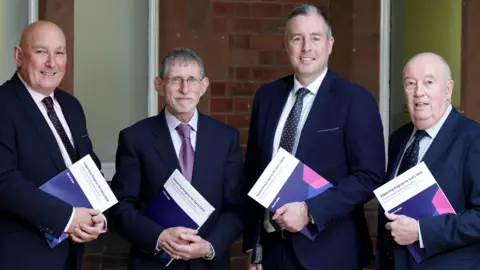
Education minister told BBC News NI it would help deliver "consistent assessment across Northern Ireland in every school".
All our schools are carrying out annual assessments but that can be a patchwork type scenario and some schools maybe carrying out these assessments more often than others," Paul Givan said.
He said the assessments would identify "a baseline" for performance and then provide "support" where there are gaps.
"These are low stake assessments," Givan said.
"There's no revision, there's no preparation to be carried out.
"They'll be short in length, some only 20 minutes, carried out once a year.
"It will help the schools to identify further support that can be provided to them."
'Portable qualifications'
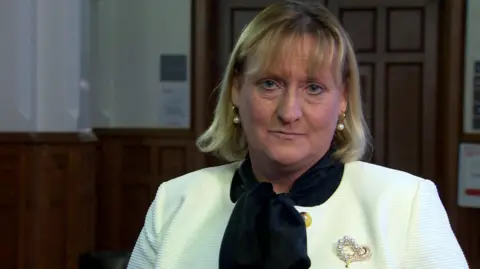
Nicola Connery, the principal of Strathearn School in Belfast, said teachers wanted to know how a child was performing in order to help and support them.
"We want to put strategies in and track them as they go forward," she said, adding:
"This external data will give us a little bit more information to do that."
She also said focusing on subjects such as science would help ensure that "our children have portable qualifications".
Connery also said that the school's "priority is the welfare of the pupils".
"We'll just have to wait and see what the minister is proposing and how we would manage it," she said.
"Obviously we don't want anymore pressure on the child."
'Low workload, high utility'
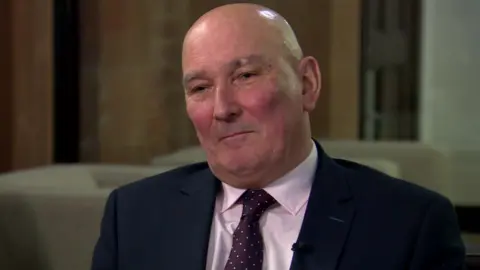
Garry Matthewson, one of the report's panel members, said the recommendations mean "low workload, high utility".
He said the work is already "bread and butter to schools," but would put it in a "statutory framework".
"This is about having a statutory assessment system which will allow information pertaining to the child to move through the system from (in the record of development) from zero through to leaving school age," he said.
He added that it would make it "easy for the post-primary school to pick up on that information".
