STV journalists vote to strike over plans to cut news show

 BBC
BBCJournalists at STV have voted to strike in a dispute over controversial plans for big changes to news programmes.
The company is proposing to end the separate news programme for viewers in the north of Scotland with the loss of up to 30 jobs.
The NUJ union opposes the plans and said it would fight compulsory redundancies.
STV called the vote "disappointing" and said the changes would ensure the news service was sustainable.
The strike ballot result was overwhelming - 94% in favour of striking on a turnout of 82%.
Although a strike could take place before Christmas, no dates have been announced. It is understood that action is unlikely before the new year.
Nick McGowan-Lowe, the NUJ's national organiser for Scotland, said: "Voting for industrial action is a step that no worker takes lightly.
"This result shows the strength of feeling within our members at STV, both around the cuts, and the way in which management has handled them.
"While we acknowledge the progress that STV management have already made in attempting to reduce the number of compulsory redundancies, the plan they are proposing for axing the STV North edition of the News at 6 is bad for viewers, bad for journalism, and bad for the north of Scotland."
He added: "This is a dispute about quality journalism, and making sure the north of Scotland can continue to have access to reliable, trusted, quality news coverage that is routed in their communities.
"We will continue to fight for every single job in the newsroom."
STV currently provides two separate news services which each cover both Scottish national news and regional stories about their respective areas.
One is presented from Glasgow and is shown in the central belt. The other, presented from Aberdeen, includes stories from the north of the country.
It is understood that no on-screen reporters are now at risk of compulsory redundancy, but some behind the scenes staff and presenters remain at risk
The Aberdeen programme is the last remaining legacy of Grampian Television, which once produced a wide range of local programmes for the area. It was bought by STV in the late 90s.
 Scottish Parliament
STV plans to replace the two news programmes with one. It would be presented from Glasgow but there would still be reporters in Dundee, Aberdeen and Inverness.
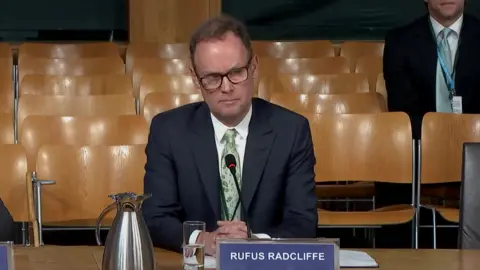
STV's chief executive Rufus Radcliffe said the company hoped to minimise compulsory redundancies but insisted changes were needed.
He said: "Today's ballot result is disappointing, especially when the consultation process has not yet concluded and we are making significant progress through voluntary redundancy and redeployment.
"As a result, we expect the number of those impacted on a compulsory basis to be very small. Our proposals will protect local journalism and ensure STV News is financially sustainable.
"This kind of change is never easy, and our focus continues to be on supporting our colleagues through a period of essential change."
The proposal for a single news programme for both central and northern Scotland will require the approval of the TV regulator Ofcom.
Ofcom is expected to start a consultation within the next fortnight.
The result is not a foregone conclusion: Ofcom could potentially back the plan, throw it out completely or help broker a compromise.
For instance, it might insist on some separate news provision for the north being retained. One possibility could be a short, recorded section during the main 6pm programme which would only be seen by viewers in the north.
However, STV believes the regulator cannot insist on the studio presentation of the programme remaining in Aberdeen.
The current plan is opposed by the leaders of all the main political parties at Holyrood - including First Minister John Swinney - as well as several local councils and Aberdeen Chamber of Commerce.
The changes to news are part of a wider move by STV to try to save £3m. It has been hit by falling advertising and a drop in the number of commissions to make programmes for other broadcasters and streamers.
Other commercial broadcasters and production companies have faced similar challenges.
STV's share price has fallen significantly in recent months which means the company is now only worth about £50m on the stock market.
