'Love locks' being cut from city's historic bridge

 BBC
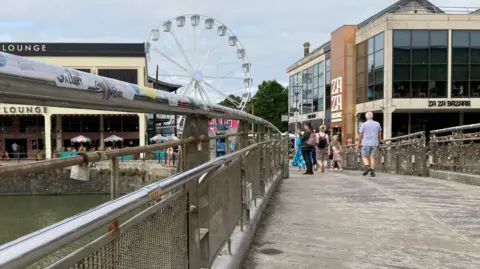
BBCPadlocks attached to an historic bridge as romantic gestures are being removed due to fears they are too heavy.
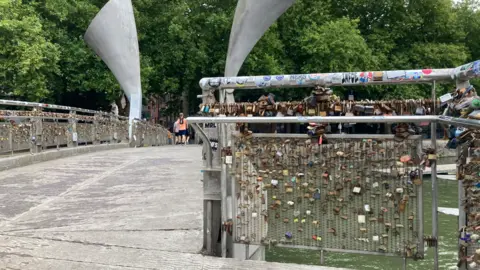
The so-called 'love locks' on Pero's Bridge in Bristol reportedly collectively weigh up to three tonnes, and the process to cut them off began on Monday morning.
There are thousands of the locks attached by couples to the bridge - which is named after Pero Jones who was enslaved in Bristol in the 18th Century - many with their initials inscribed.
Bristol City Council has been approached for comment.
Pero's Bridge opened in 1999 and links Queen Square and Millennium Square.
It is not yet known what will happen to the padlocks once they are removed.
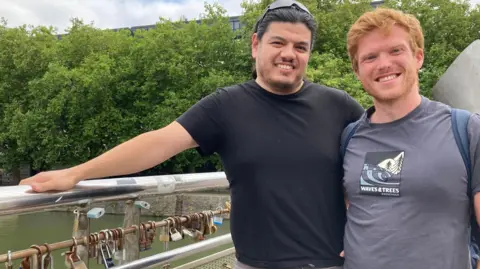
Speaking to the BBC on the bridge, couple Tom Davies and Josh Inoue said the move "makes sense if it's a safety thing".
"It's sad though, I hope they came up with another way of preserving it," Mr Davies said.
Mr Inoue said: "You can see a lot of them [the padlocks] are eroded and decaying, but the moment is still there.
"Things fade, but memories are forever."
The council initially planned to remove the locks before the Bristol Harbour Festival last month.
It cleared the bridge of padlocks about 10 years ago - but couples attached new locks and it was covered again within a few years.
Follow BBC Bristol on Facebook, X and Instagram. Send your story ideas to us on email or via WhatsApp on 0800 313 4630.
